

The Monumental Complex of Santa Maria Regina Coeli is a haven of peace, away from the hustle and bustle of the city, located in the heart of Naples since 1561
The Opera Pia ‘Casa Regina Coeli’ Foundation is dedicated to the management and care of the entire Monumental Complex, keeping alive a place that seems frozen in time—one that continues to share its history and impart its essence after more than five centuries. To this day, it remains home to a community of the Sisters of Charity of Saint Giovanna Antida Thouret.
Located in the oldest part of Naples’ Historic Center, on the Sant’Aniello a Caponapoli hill, its structure was conceived to isolate the cloistered life from the city’s bustle by taking advantage of the surrounding urban layout, thus offering a peaceful oasis in the very heart of Naples.
Dating back to the late Renaissance, the complex underwent various structural modifications and enhancements over time, embracing the decorative splendour of the Neapolitan Baroque to reach us today as a treasure trove of ancient Neapolitan art.
The Cloister
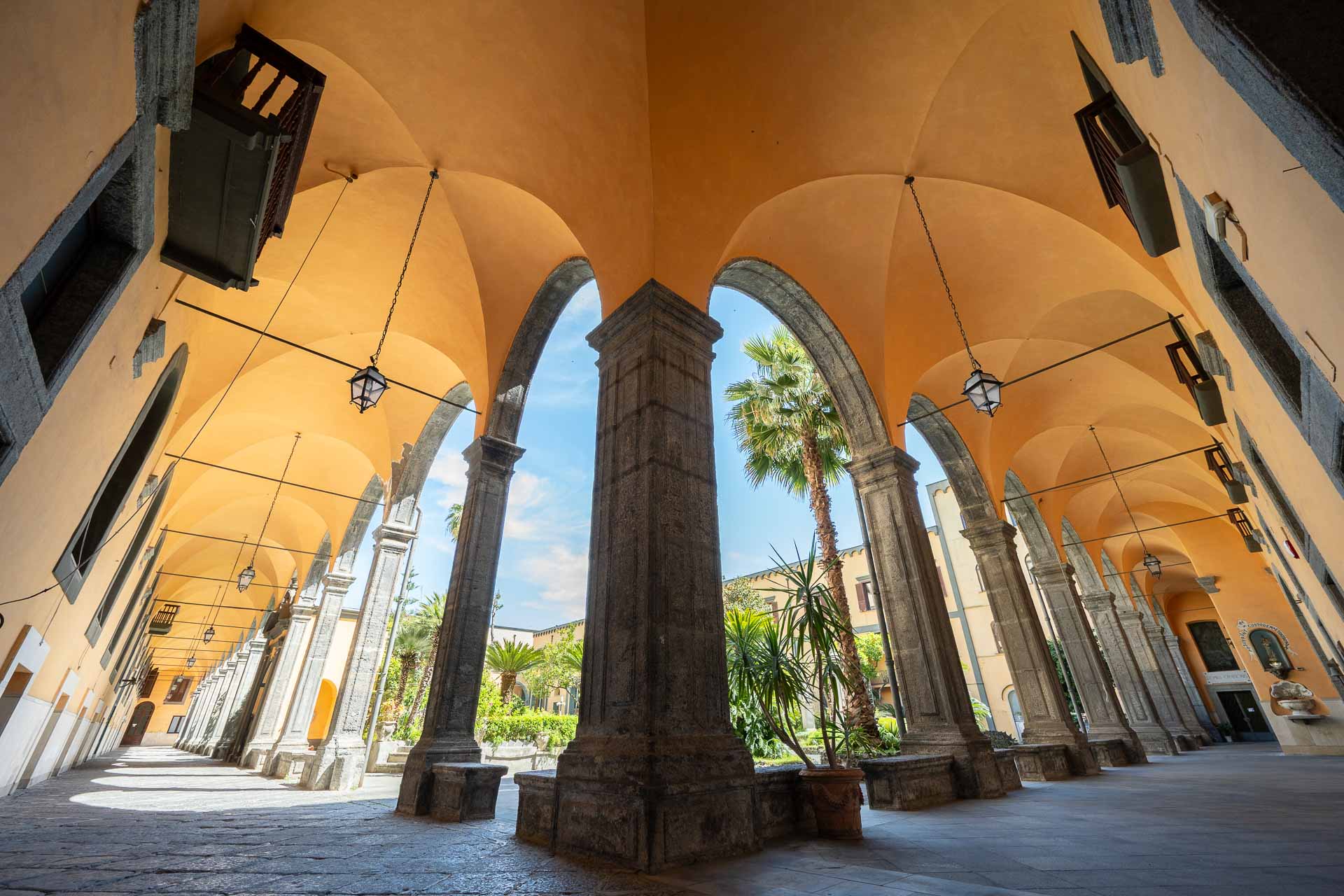
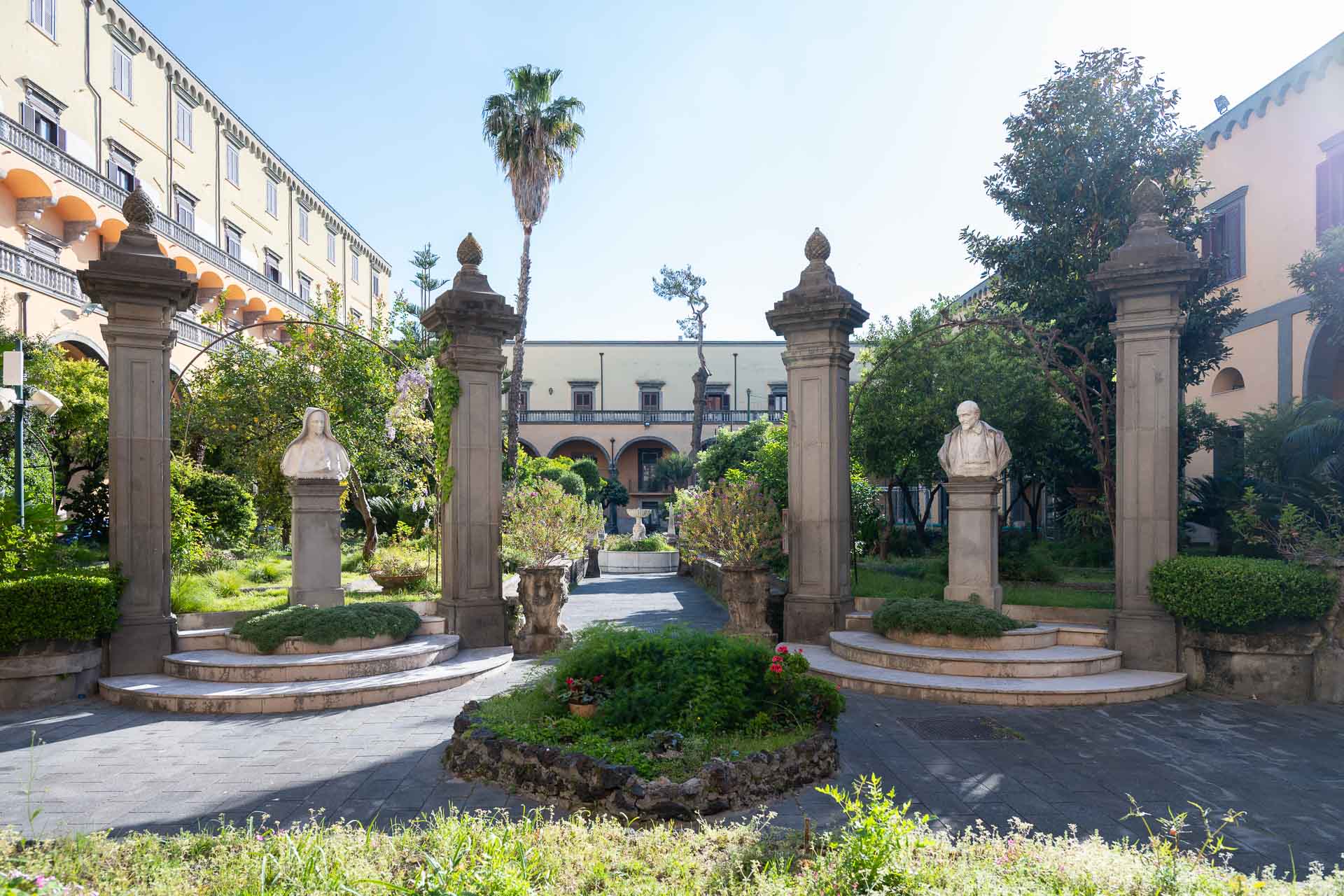
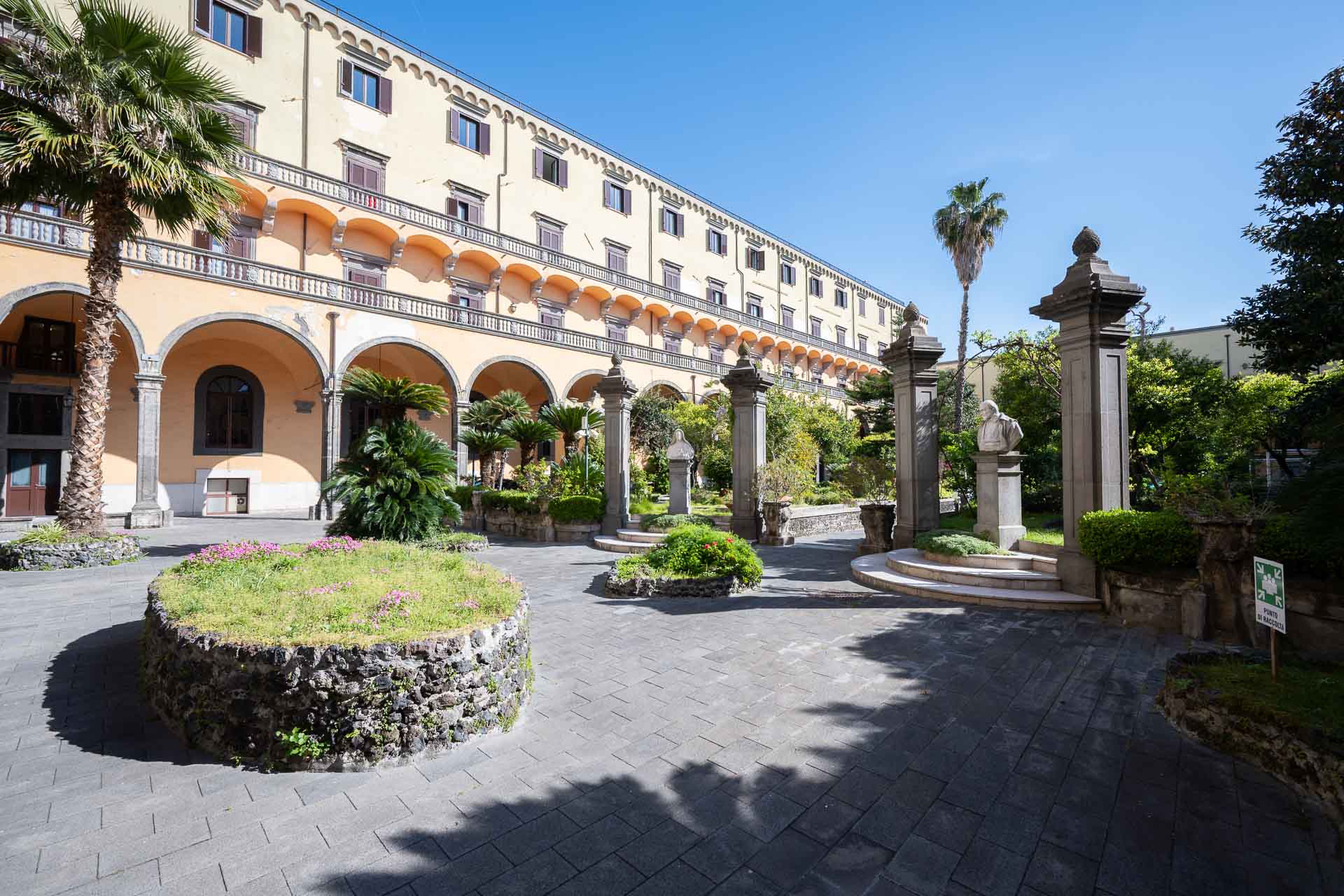
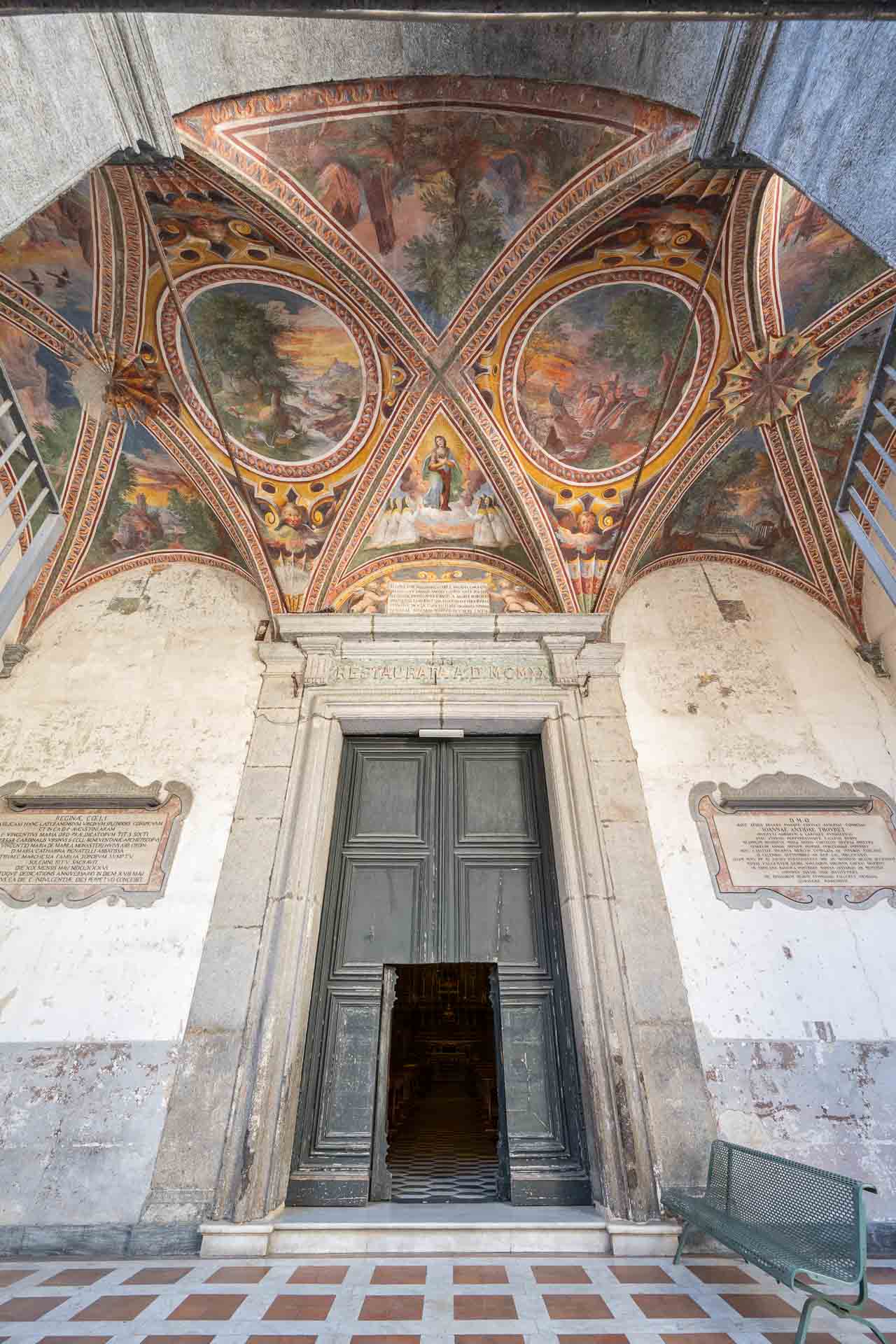
Stepping past the reception at the entrance of the complex, the bustle of Naples’ historic center suddenly gives way to an oasis of silence, art, and nature: the Cloister.
Created in the 17th century as the centerpiece of cloistered life for the Lateran Canonesses, the Cloister is today a place of gathering, culture, and hospitality—enjoyed daily by the religious community, the school’s students, visitors, and guests of our Guesthouse.
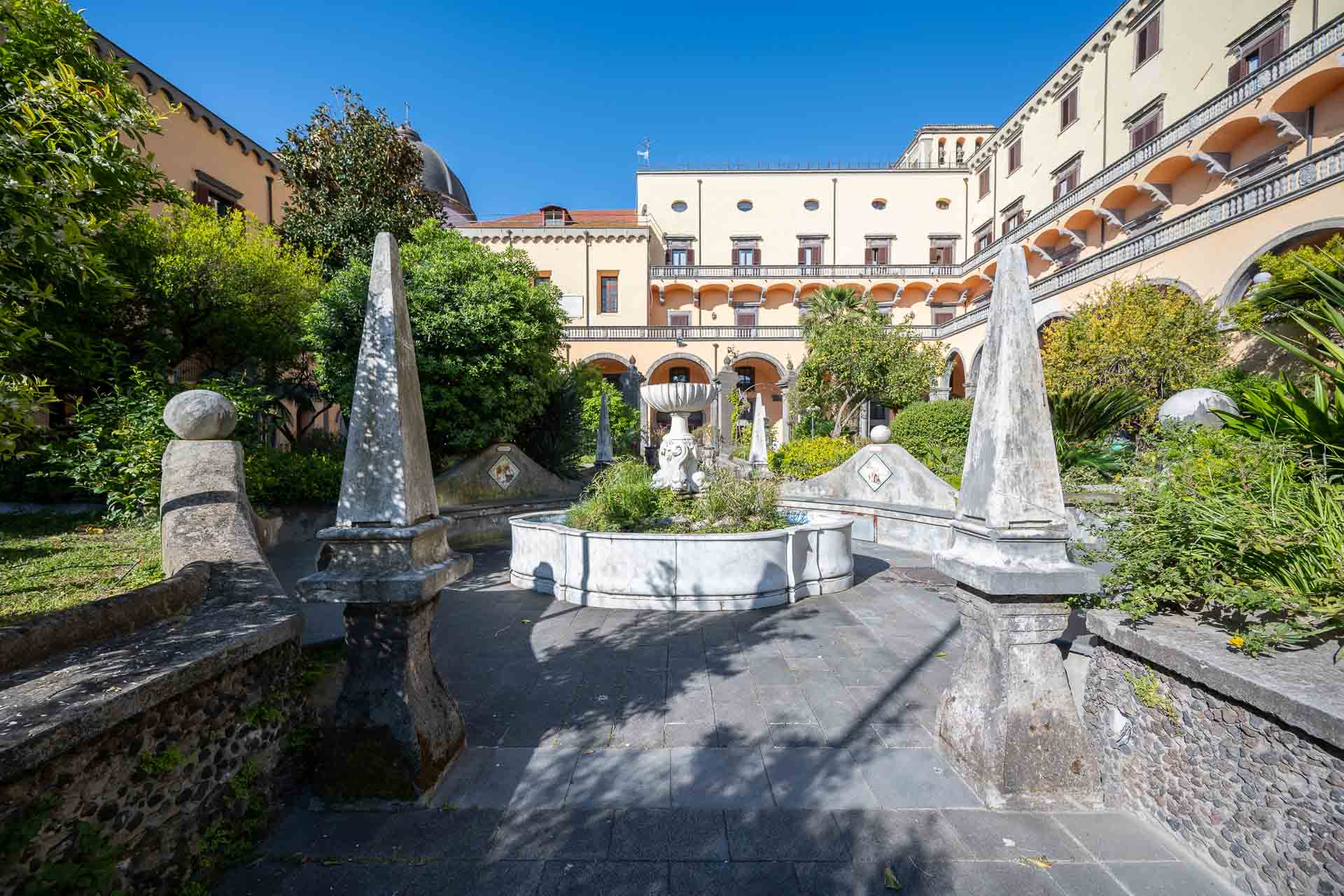
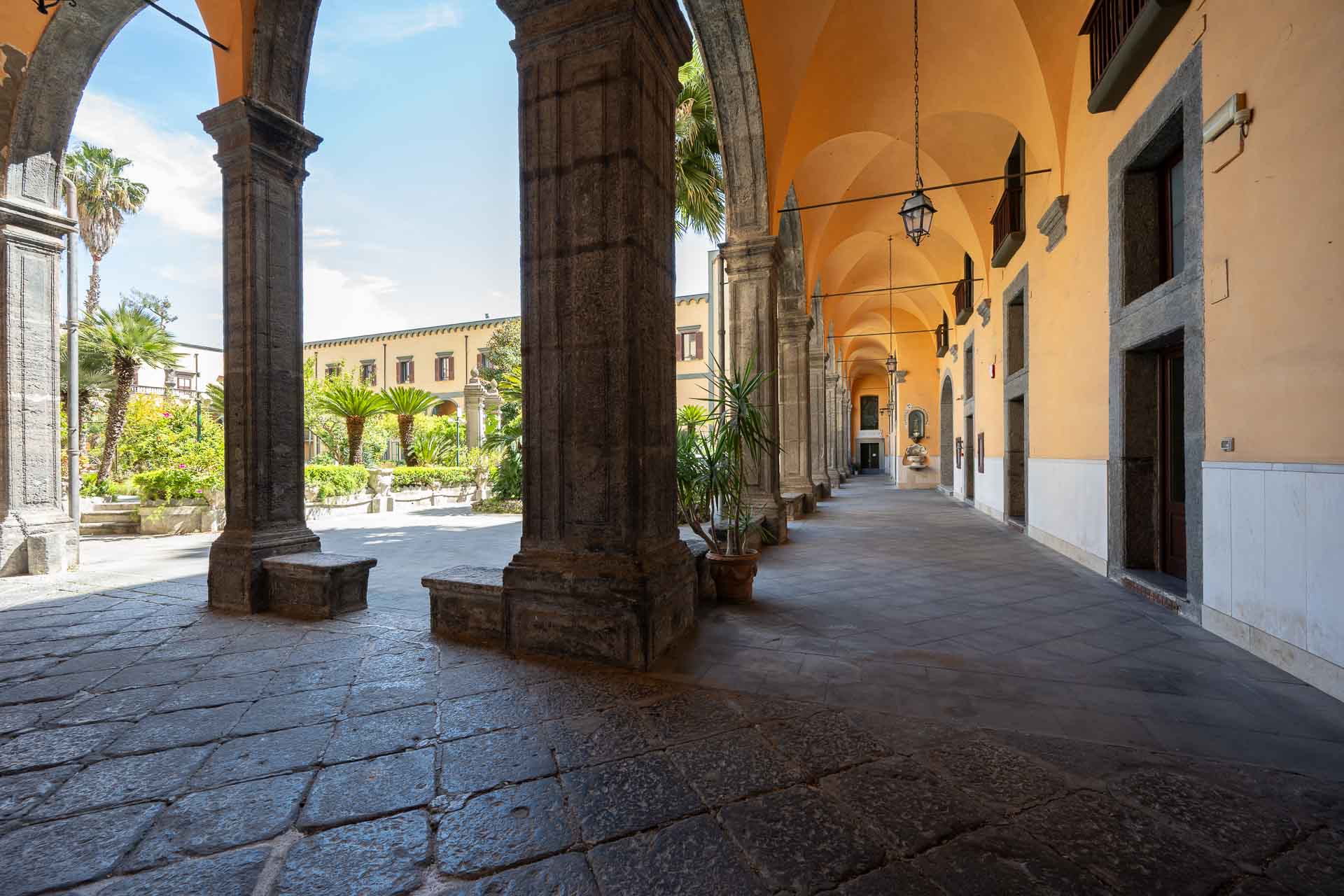
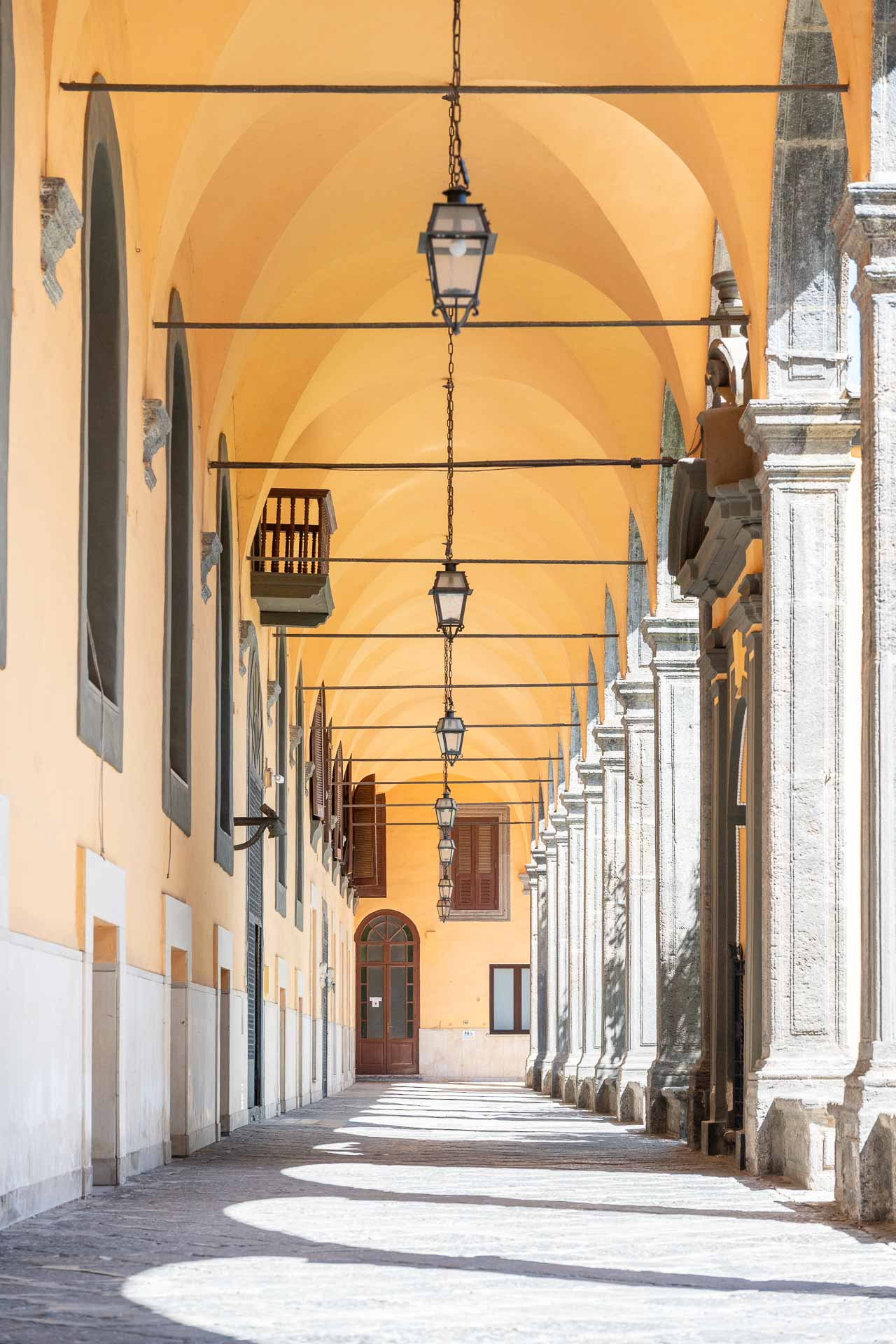
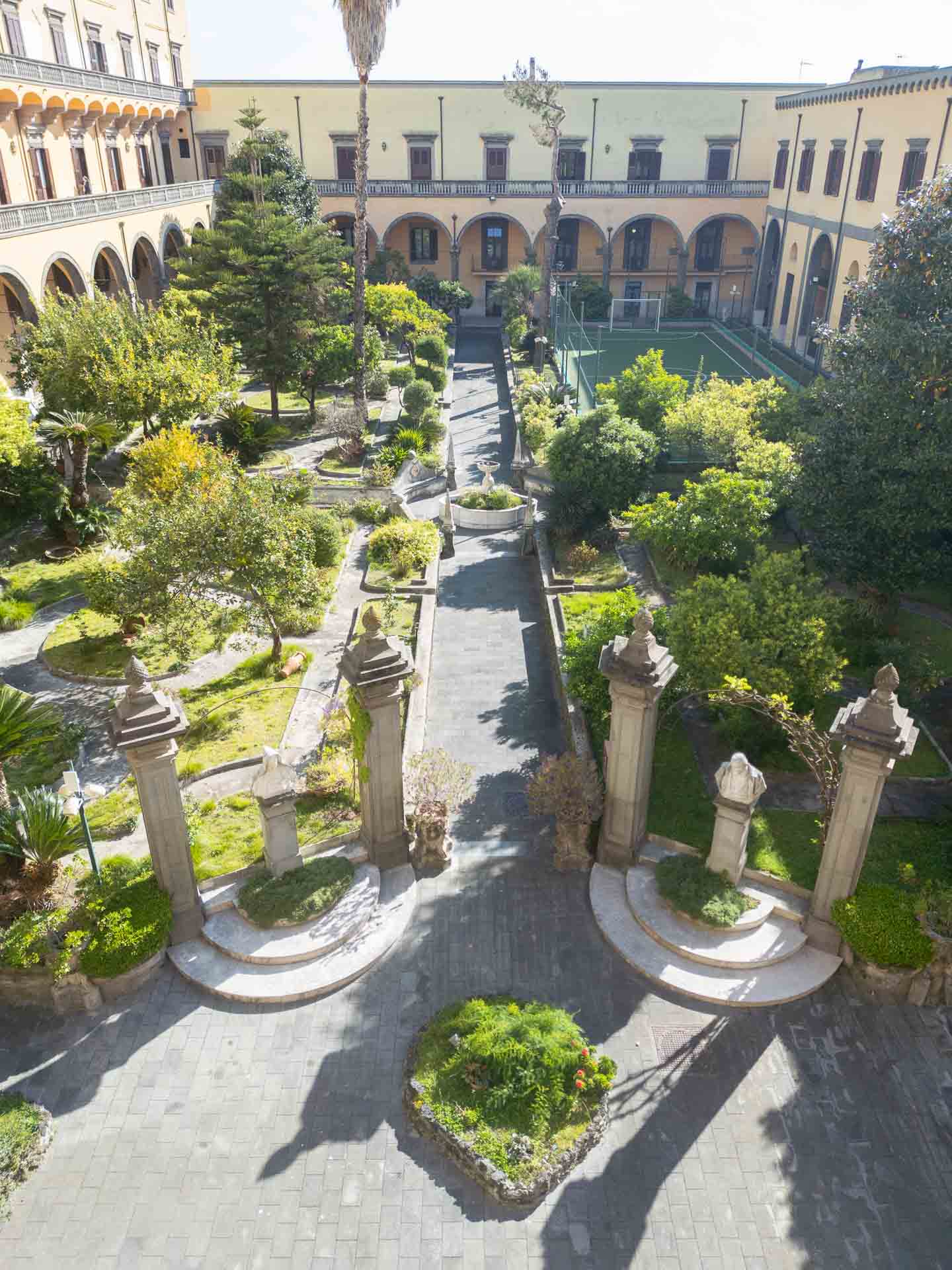
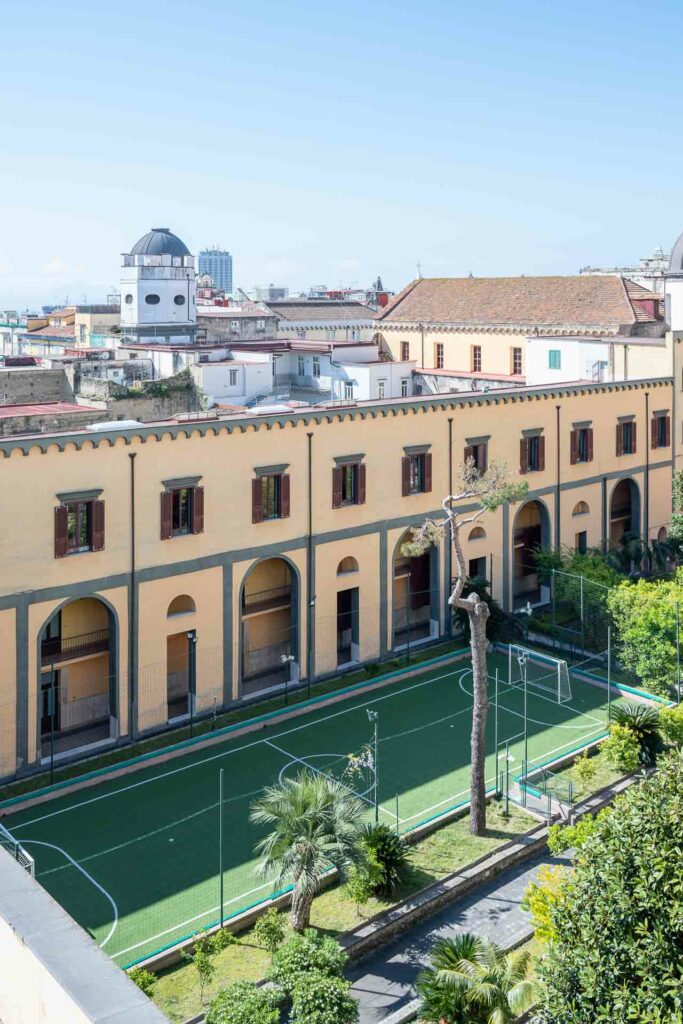
Its Baroque architecture, dating back to 1682, was designed by Francesco Antonio Picchiatti, one of the most distinguished architects of Neapolitan Baroque. The quadrangular structure is defined by grand arches supporting the monastery’s upper floors, which were initially built on only three sides of the cloister to keep the space open above for loggias overlooking the sea. The fourth facade of the complex was added only in the early 20th century, completing today’s structure, which still offers an enchanting view over the inner garden as well as panoramic vistas of the city, Mount Vesuvius, and the Bay of Naples.
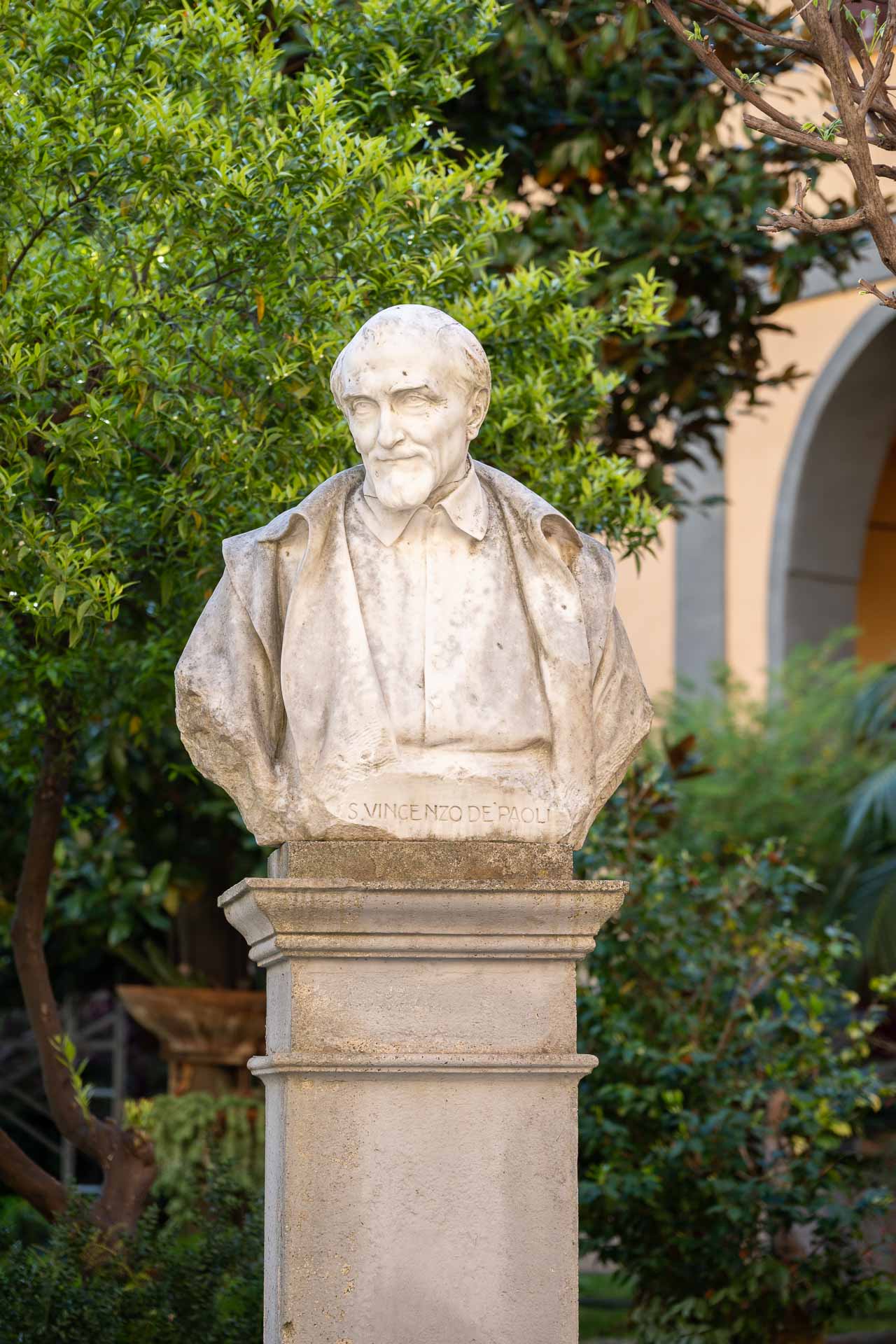
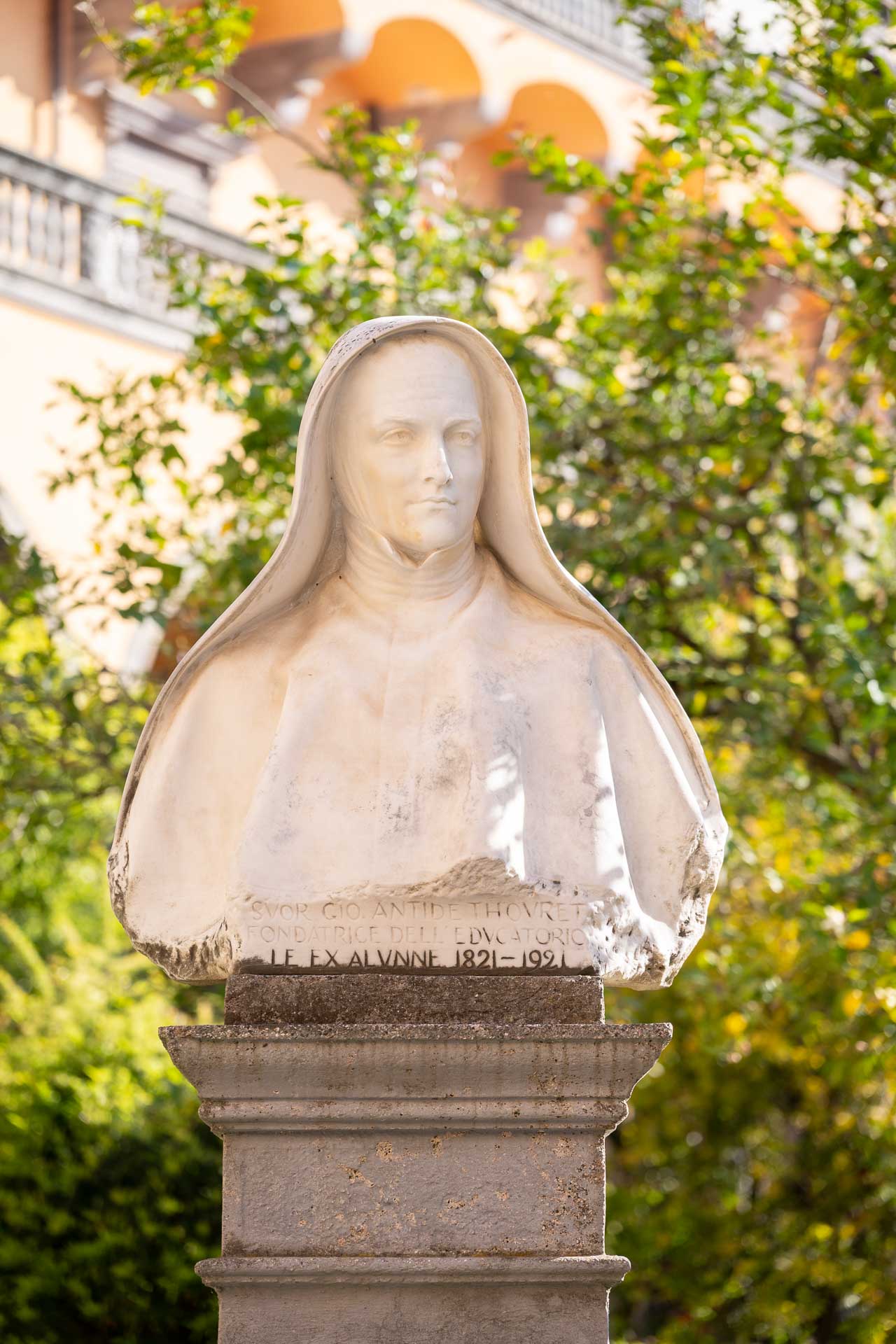
At the entrance to the garden stand the busts of Saint Giovanna Antida Thouret and Vincenzo de’ Paoli. They bear witness to the historical transition of the complex to the Sisters of Charity, which took place in the 19th century.
A garden that preserves the long history of care and assistance provided by the Sisters of Charity, initiated by Giovanna Antida in the 19th century with the creation of a botanical garden dedicated to growing medicinal plants. Used by the nuns to prepare ointments and remedies, these grounds served as a true scientific and humanitarian outpost for its era.
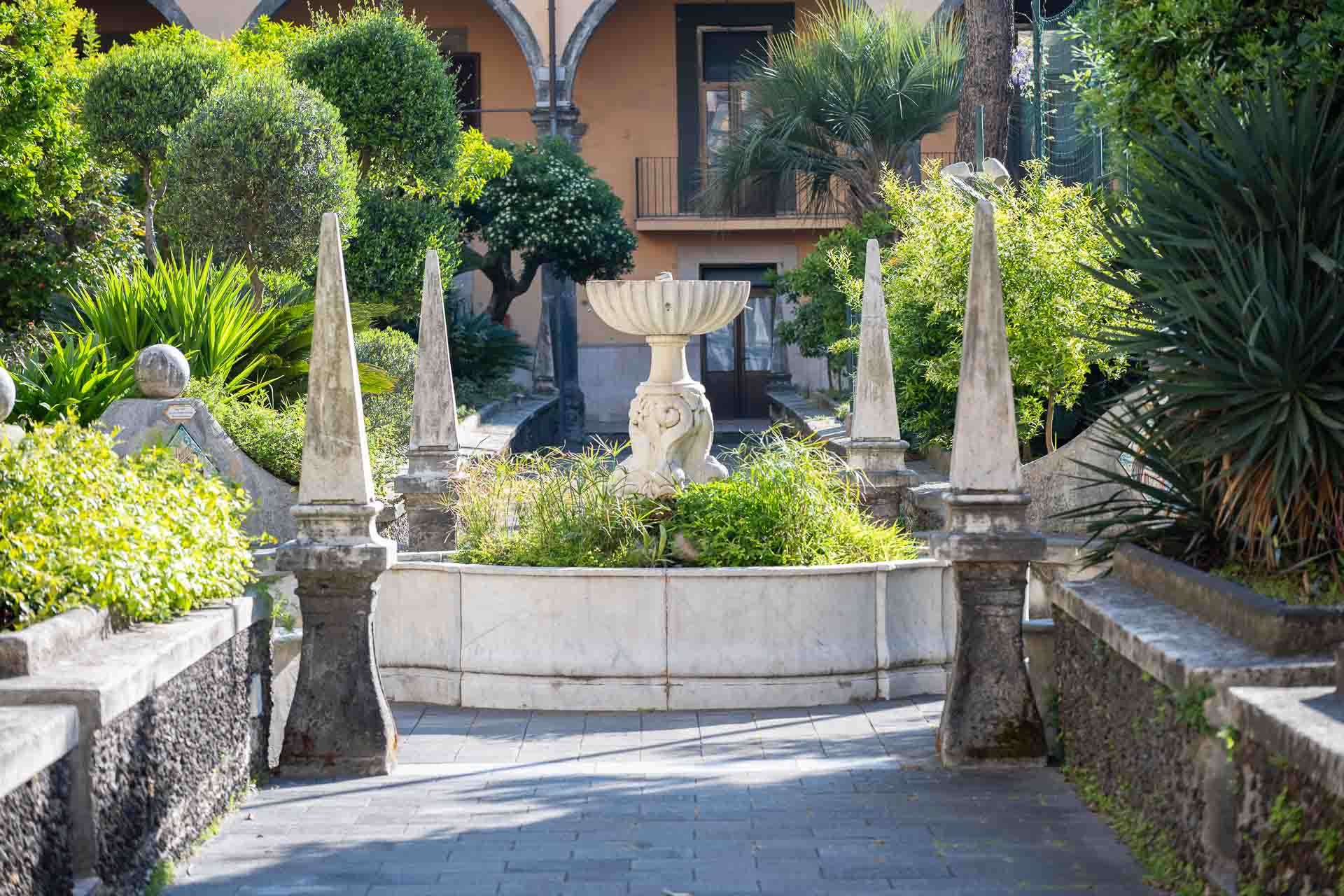
At the center of the garden—now featuring Mediterranean flora, exotic plants, and ancient palm trees—stands the striking well-fountain, a white marble masterpiece elevated by a few steps, encircled by four pyramidal obelisks and marble spheres
The Cloister, preserving its intimate and authentic character intact, is today accessible to guests of the Guesthouse, students, and visitors of the Complex.
The Imperial Parlor
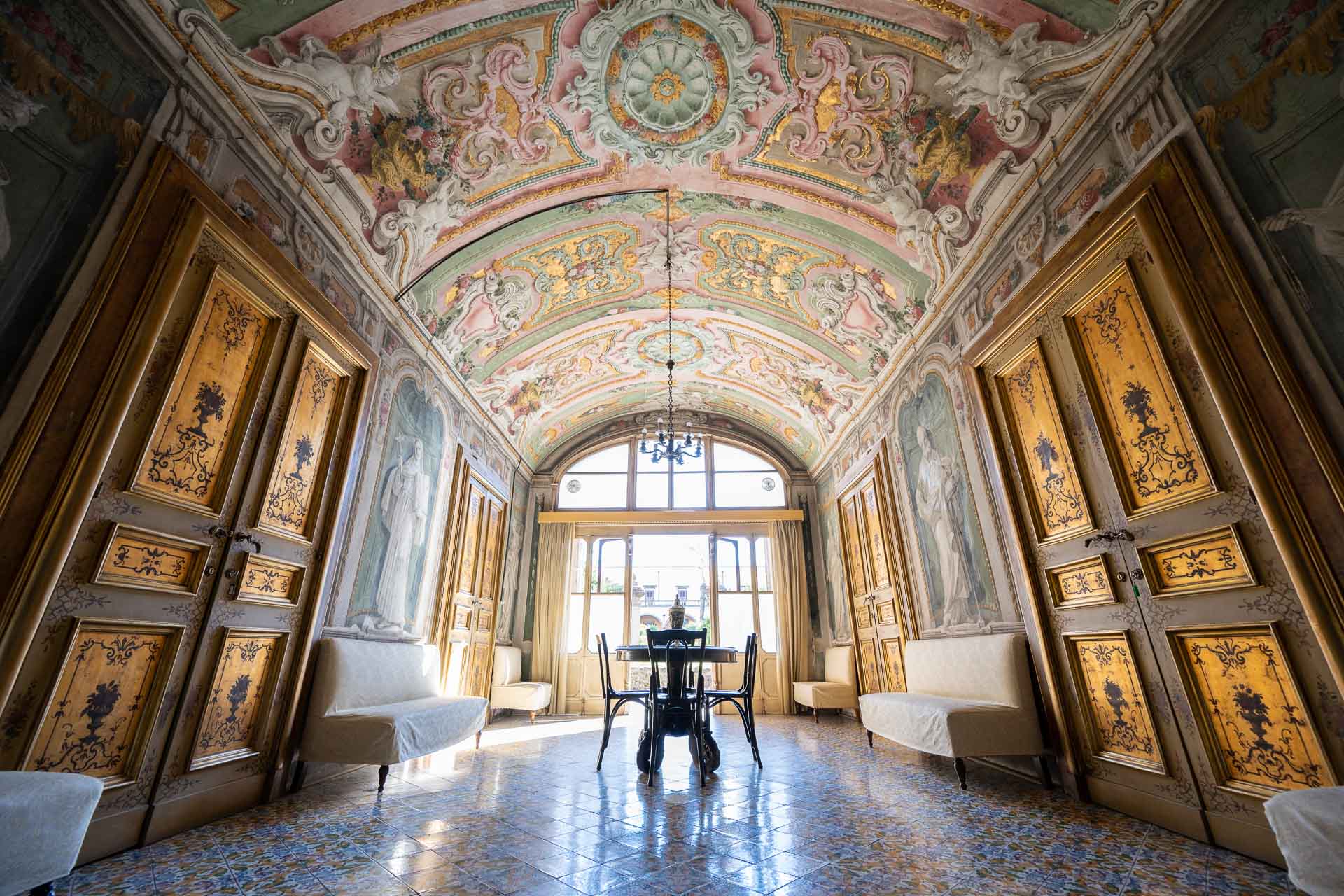
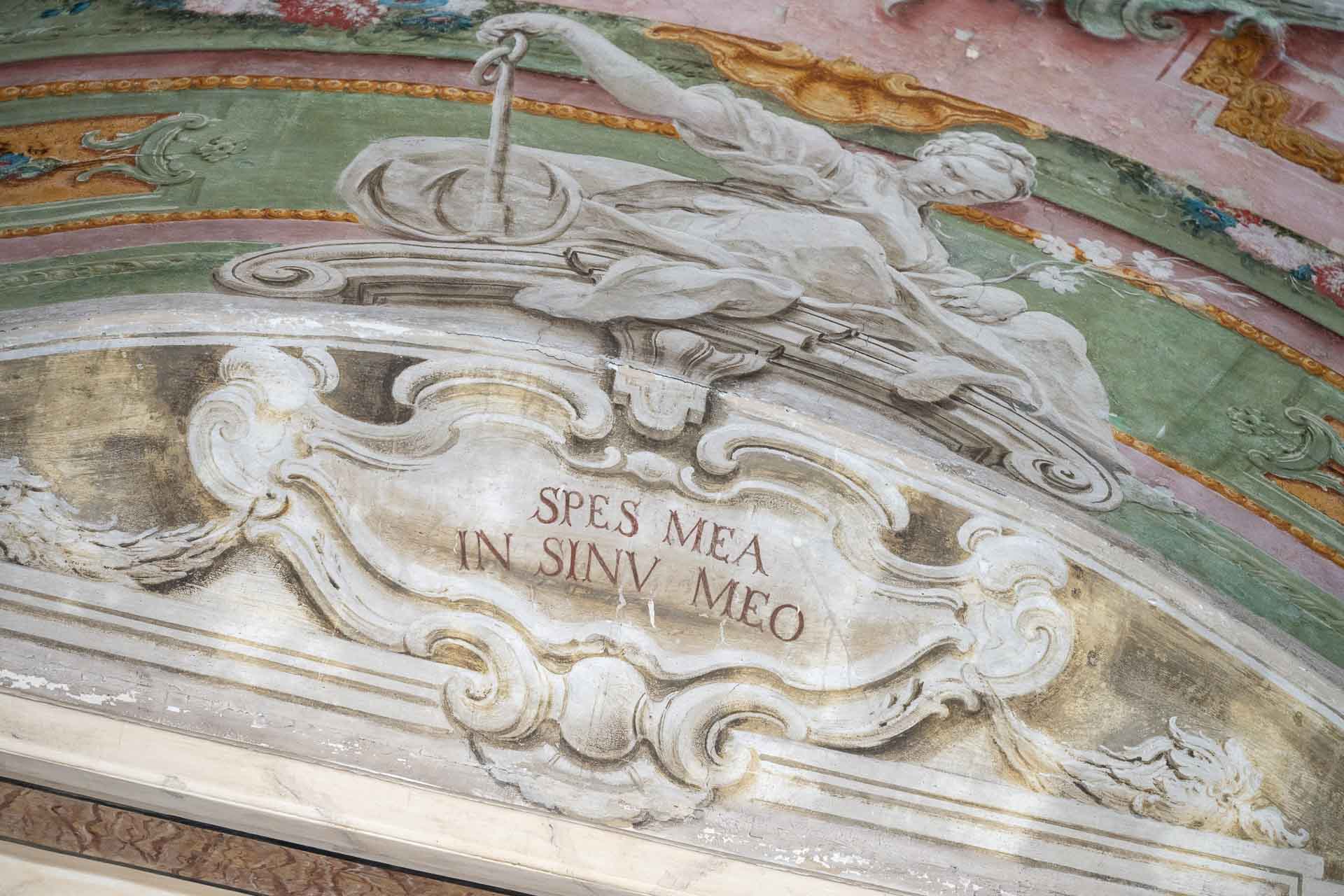
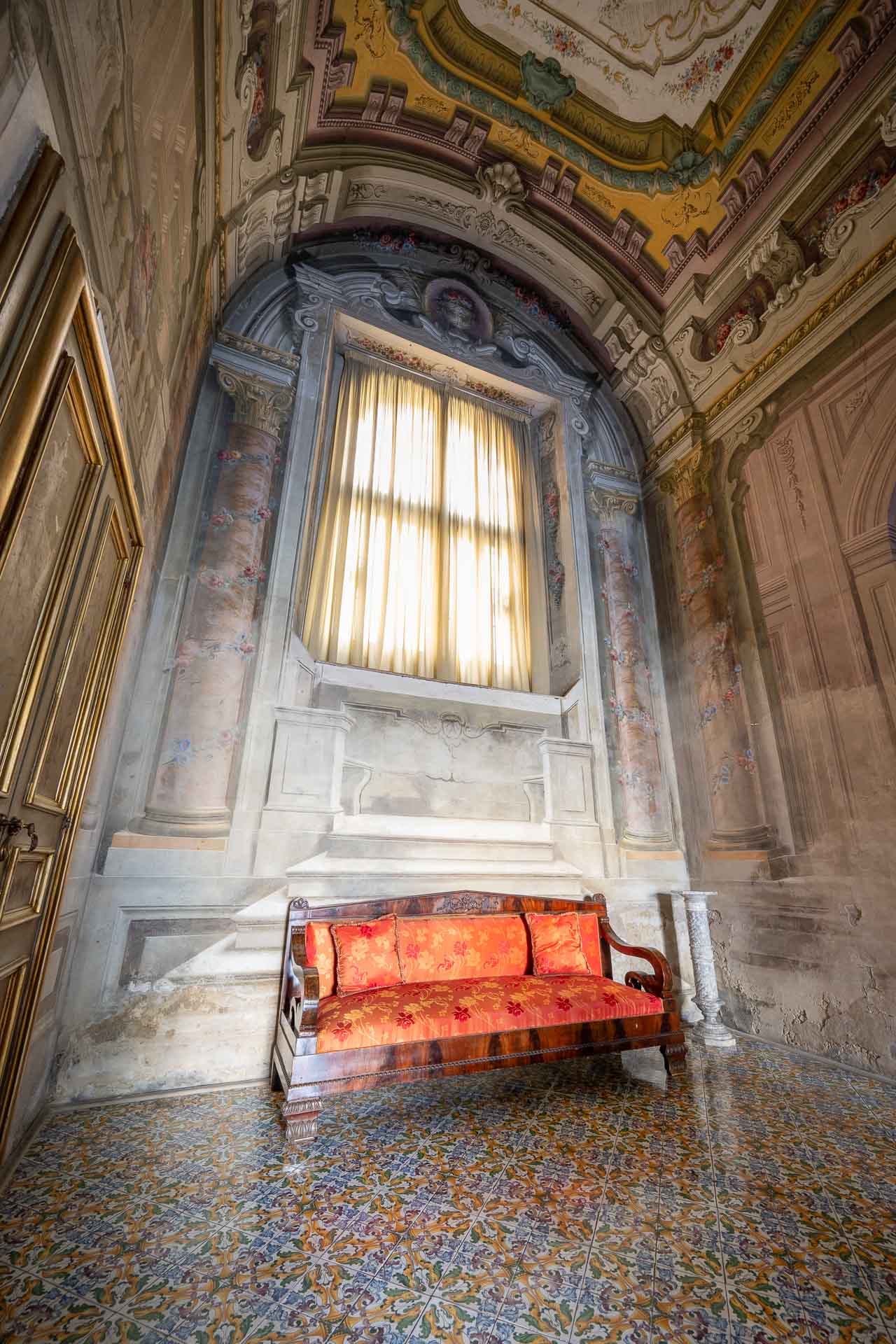
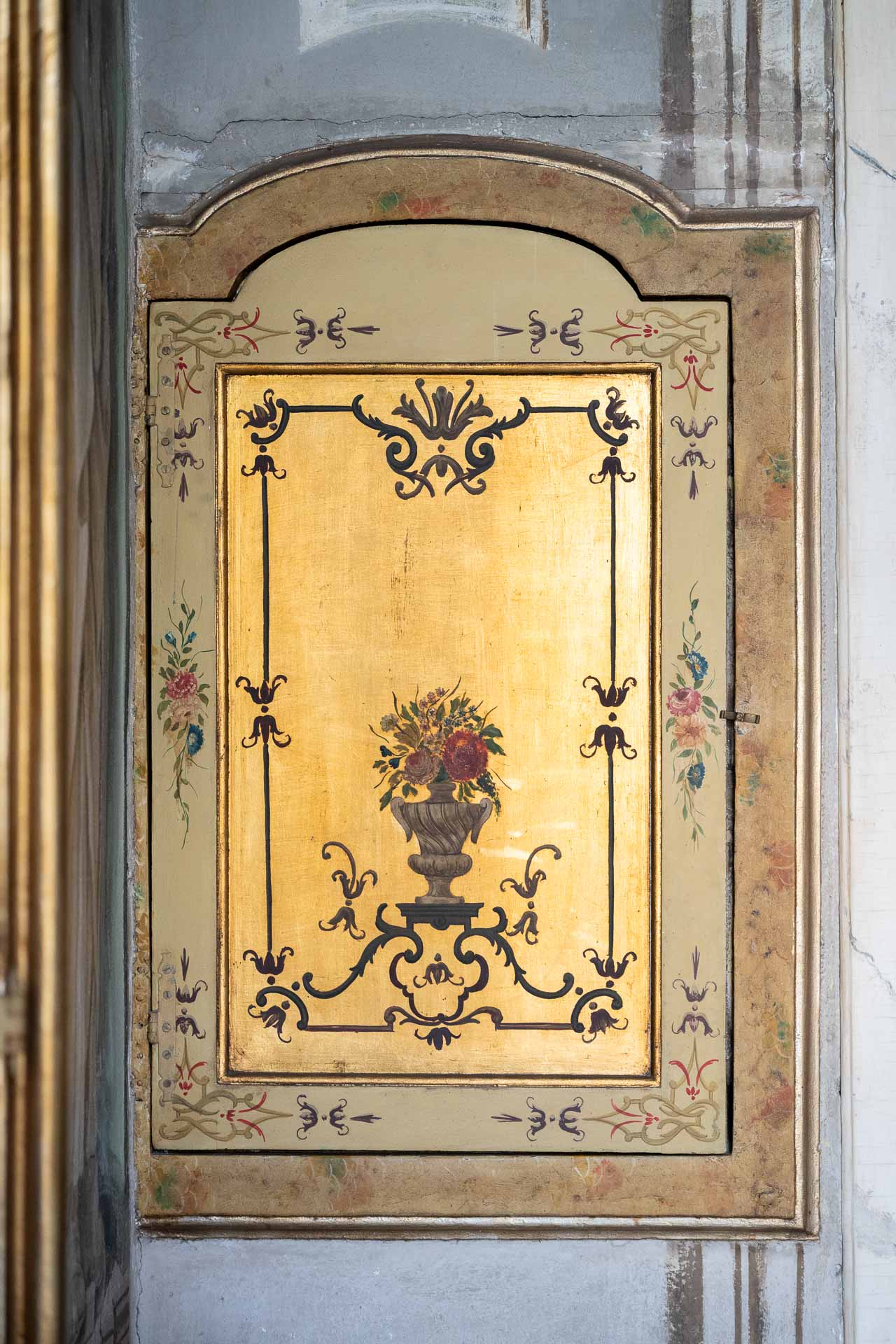
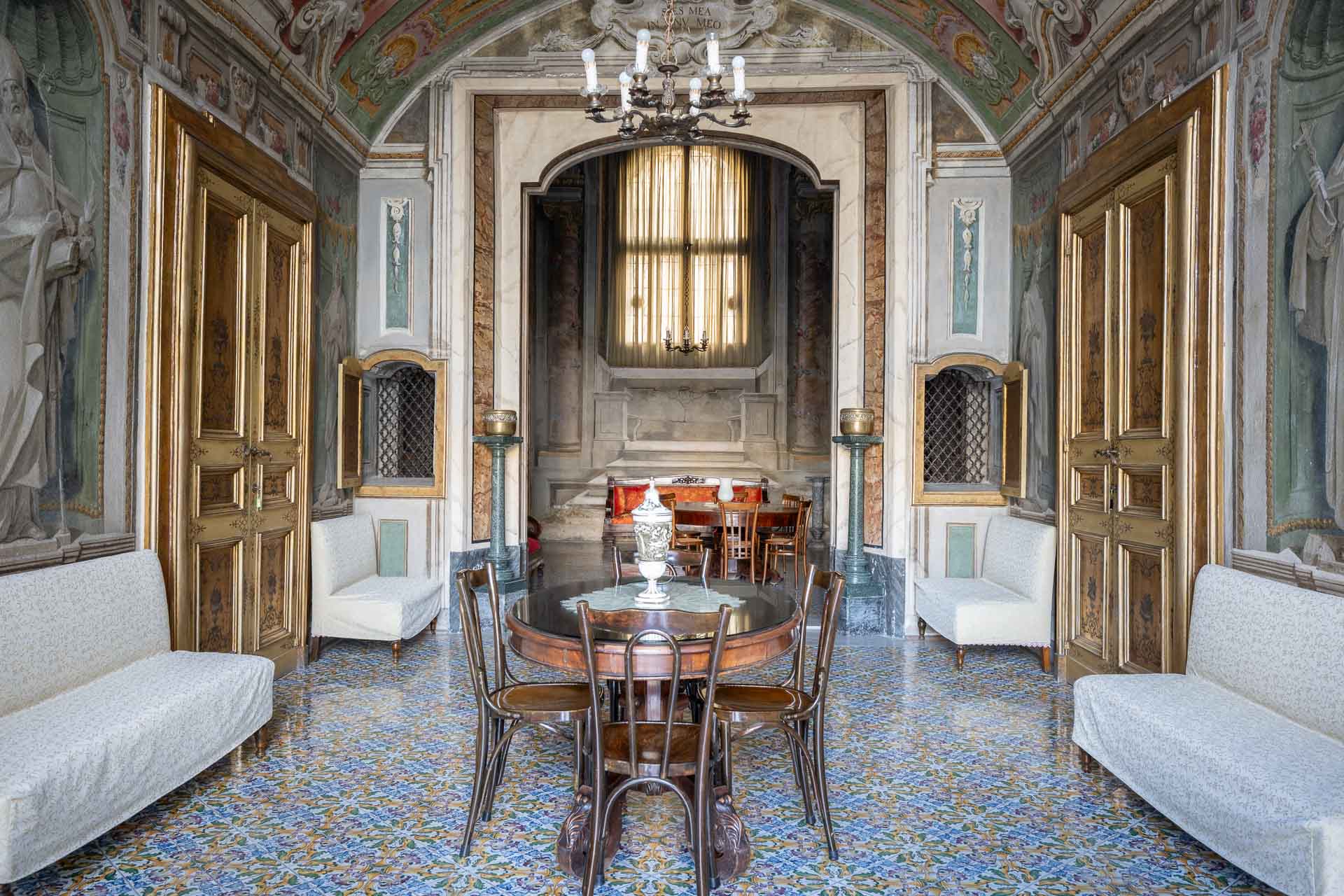
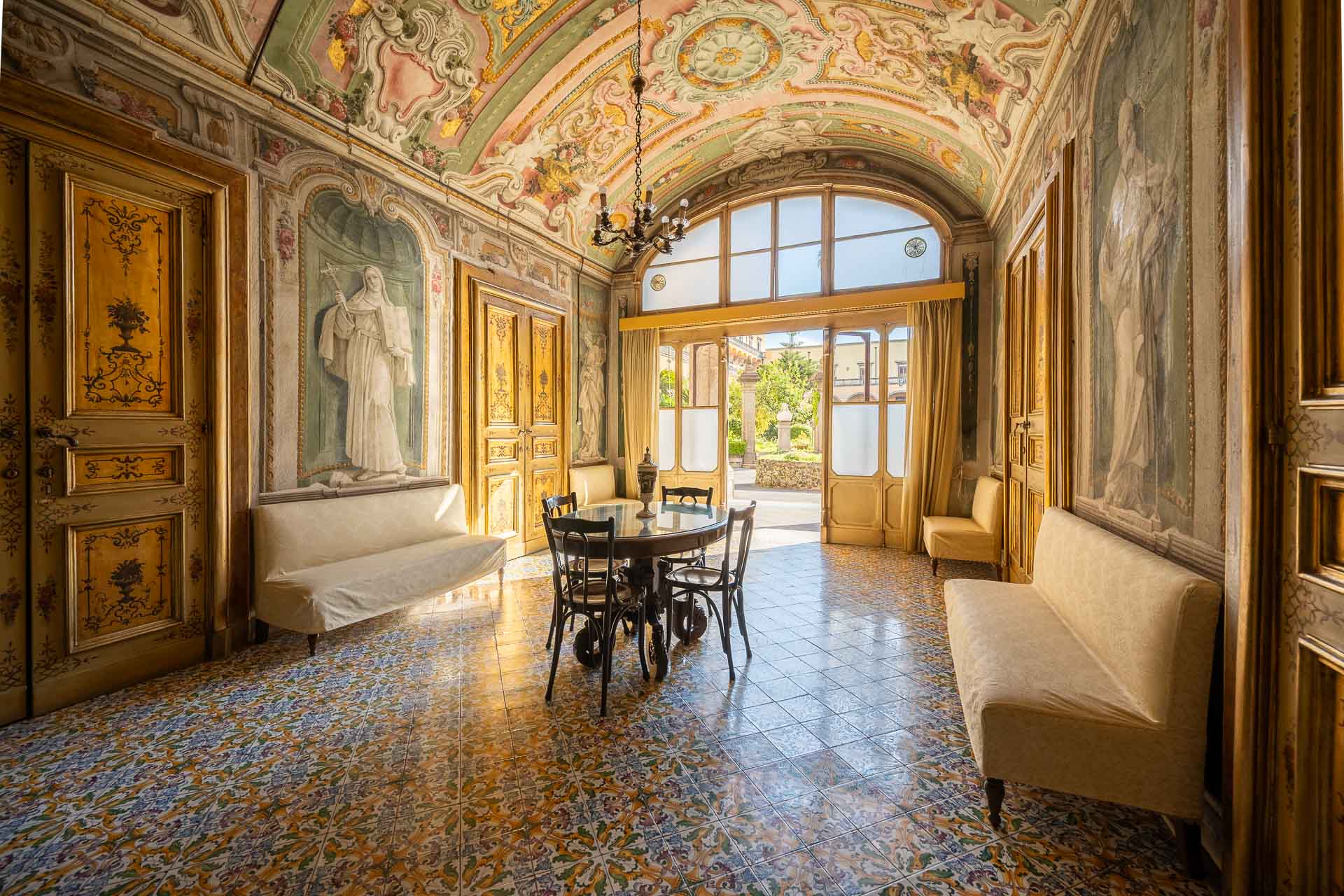
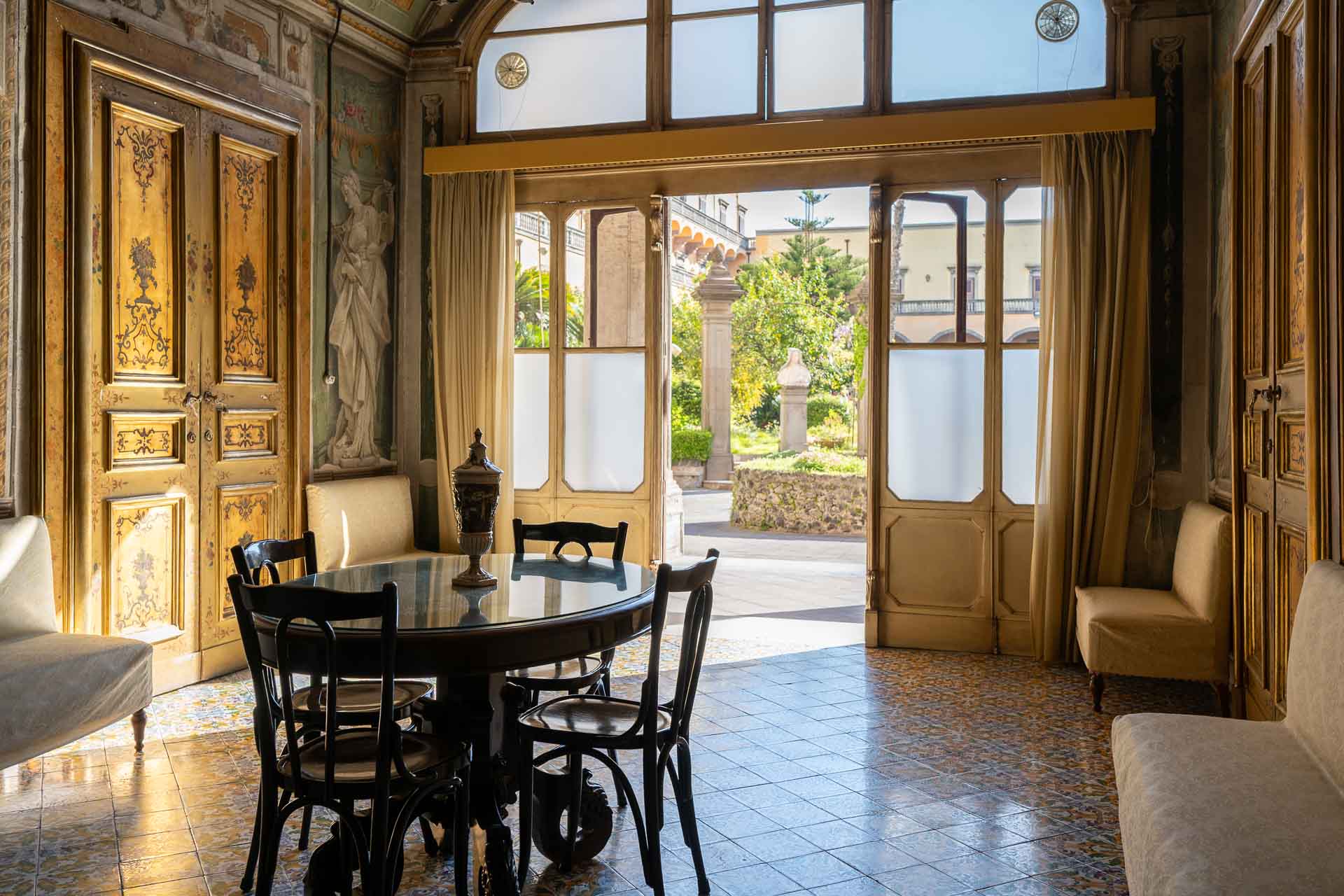
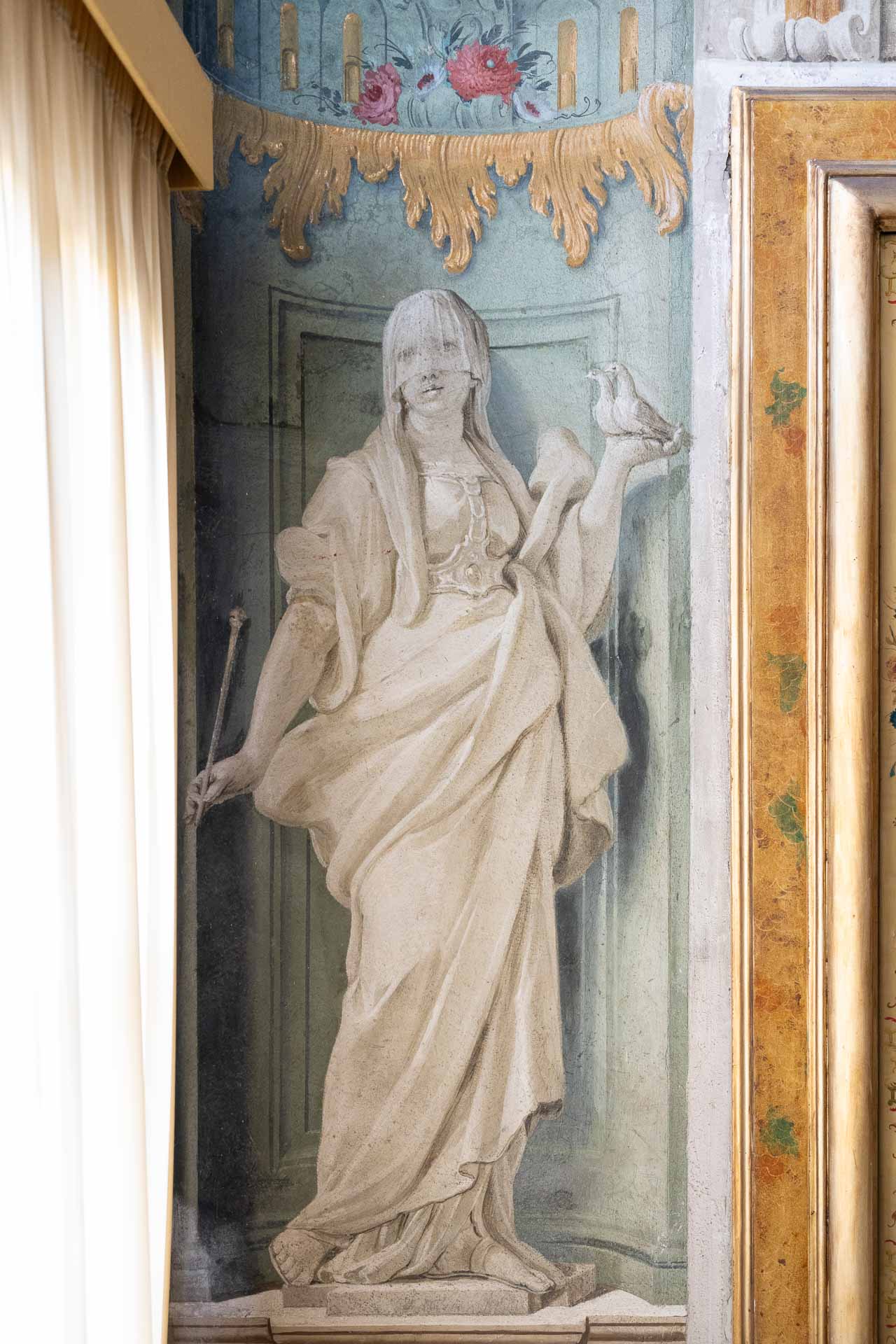
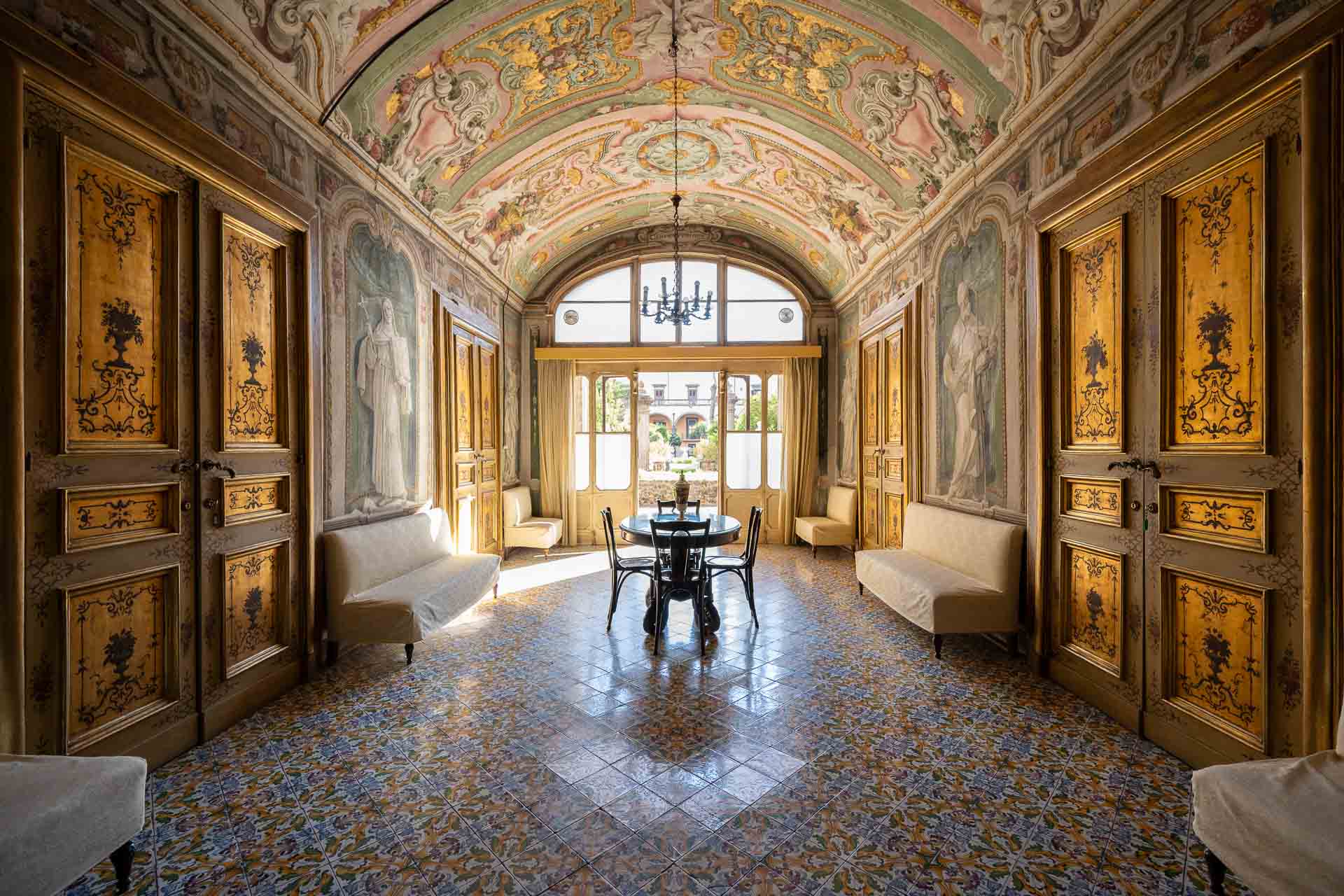
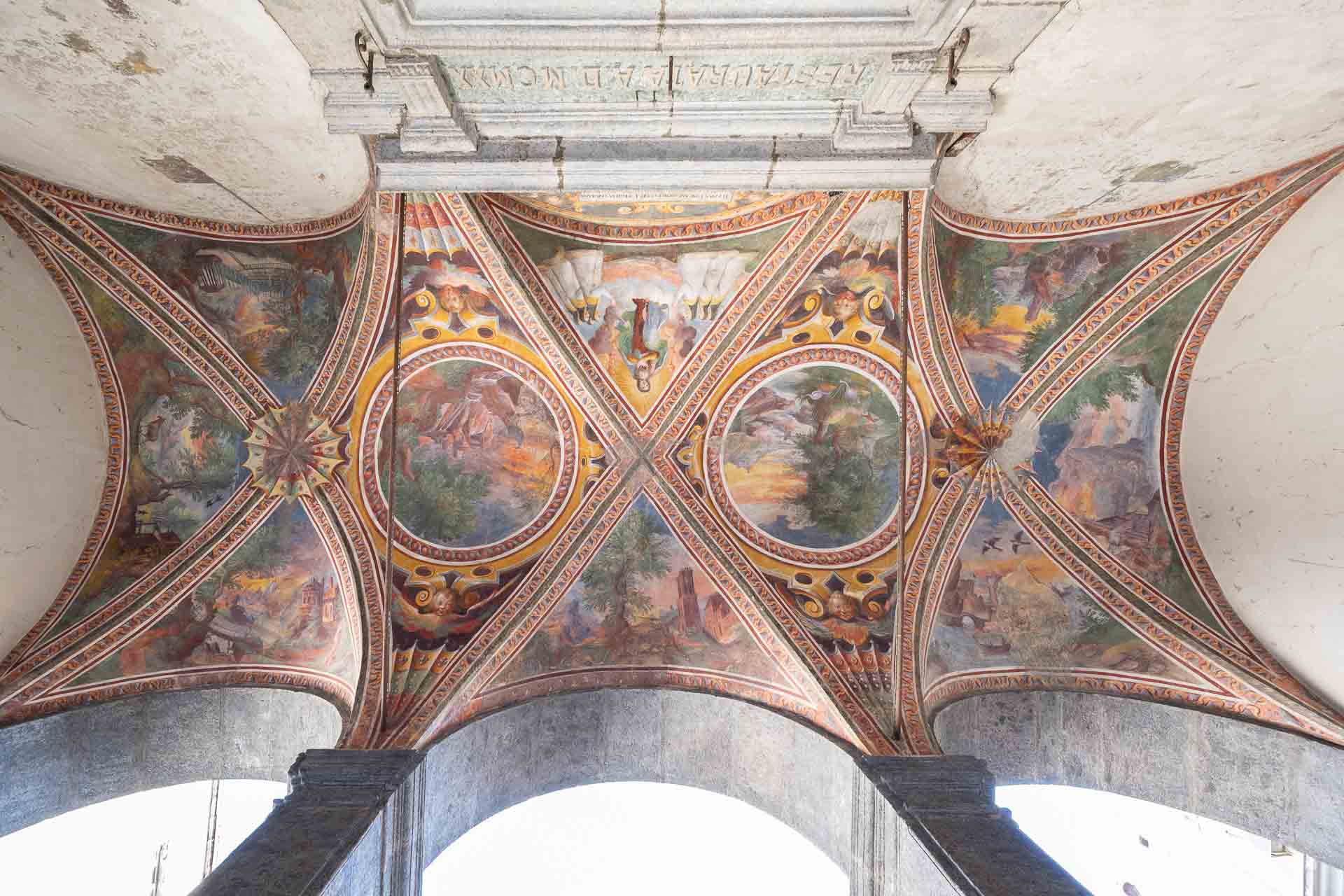
A true gem of eighteenth-century art, the Imperial Parlor features walls adorned with sophisticated perspective techniques and two-dimensional frescoes painted in the late 1700s by one of the set designers from the San Carlo Theatre, alongside doors embellished in pure gold leaf with delicate floral motifs.
On the ceiling and walls, one notes the use of the visaglie technique framing the central figures of Saint Augustine and Saint Monica, founders of the Order’s rule. In the four corners of the room are allegorical representations recalling the solemn vows taken by the nuns: poverty, obedience, chastity, and enclosure.
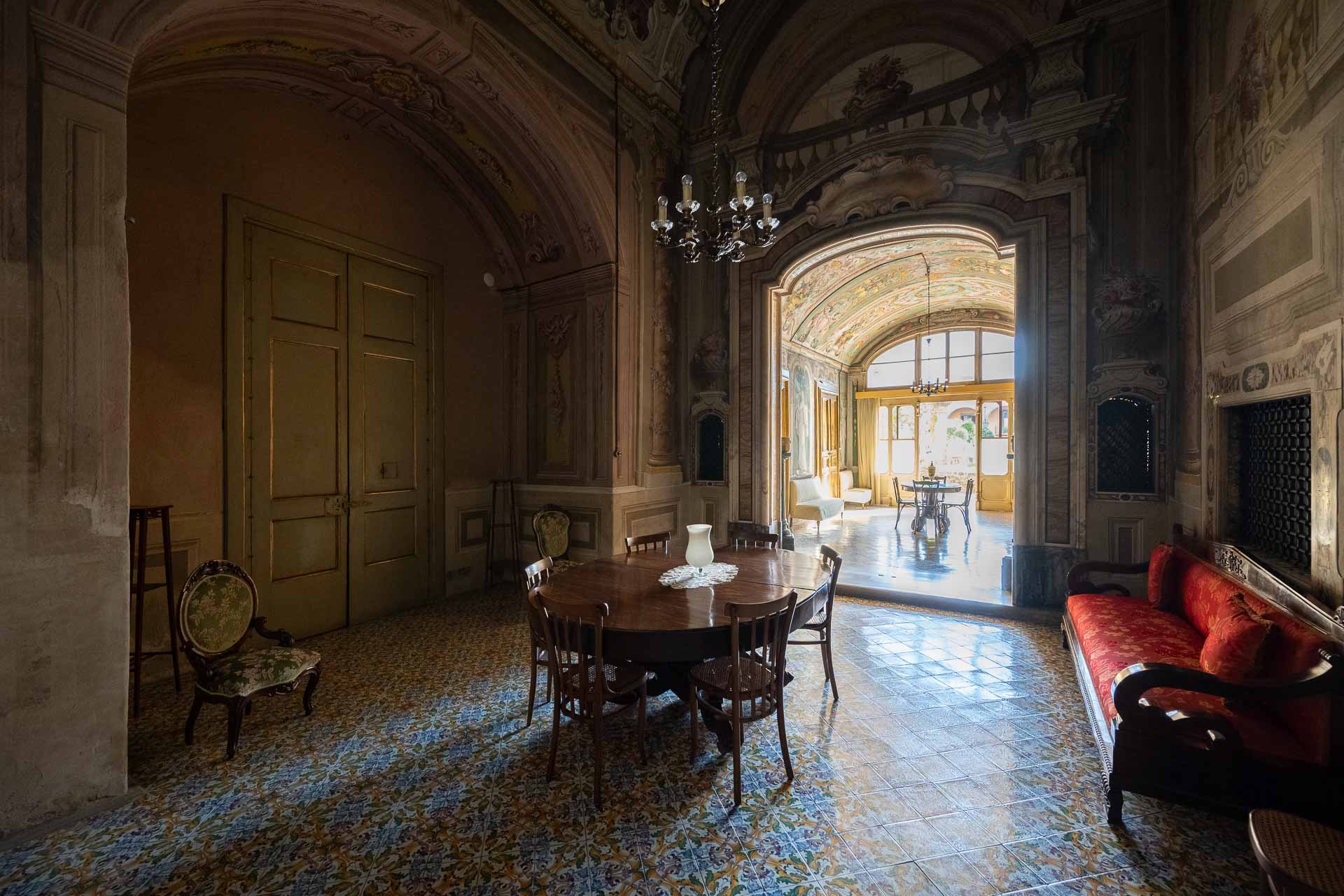
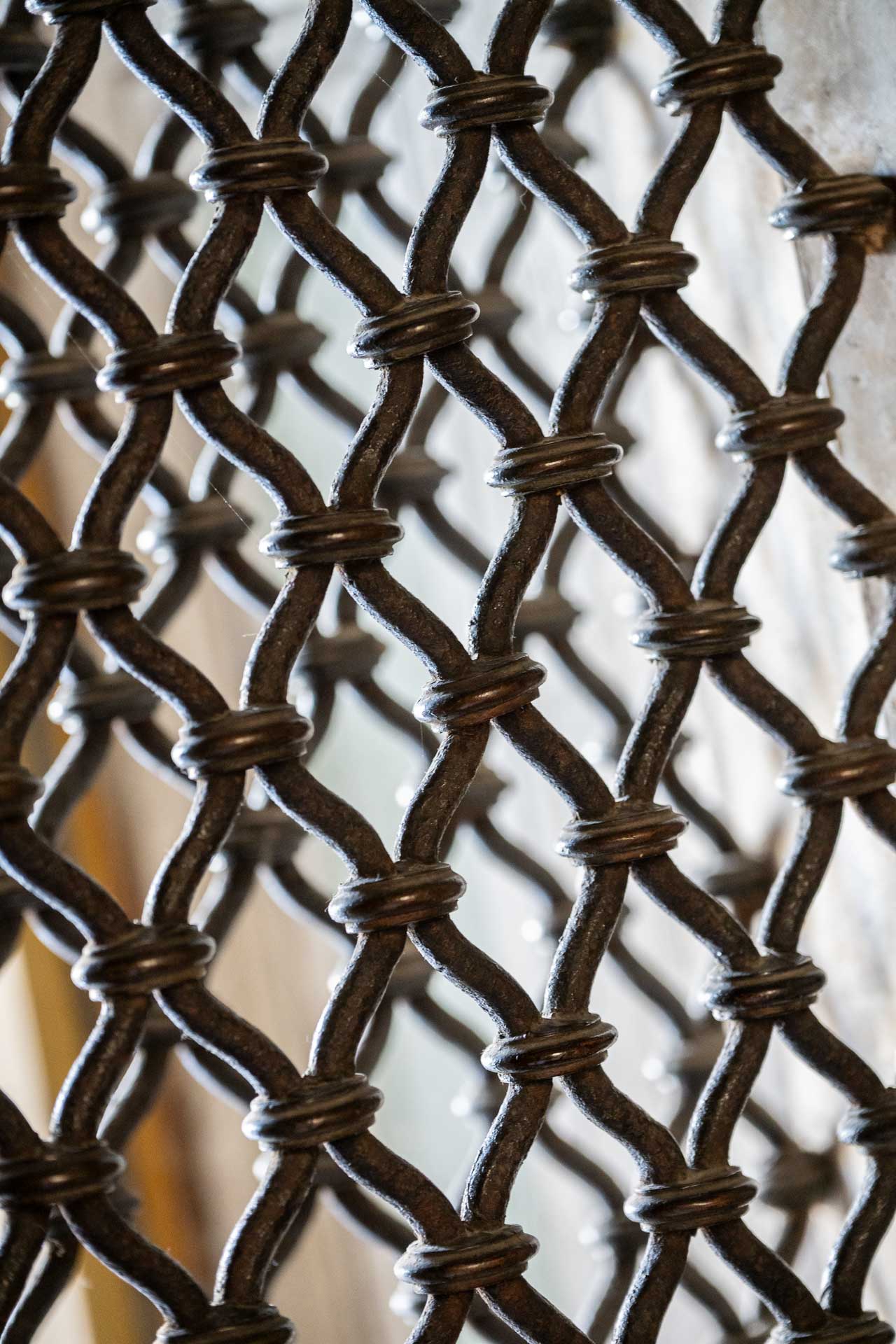
Choosing the cloistered life meant a complete departure from family and worldly affections. This space served as the sole channel of communication connecting the cloistered nuns with the outside world. It was therefore designed in strict accordance with Counter-Reformation decrees to guarantee total physical separation between the sisters and their visitors: a dual-chamber arrangement dividing an elegant waiting room from the room where the cloistered nuns sat, separated by two grilles made of a dense, double wrought-iron lattice still perfectly preserved today.
The harshness of its function seems to dissolve before the beauty of its ornaments made possible by the generous donations of the noble families of the Lateran Canonesses (who followed the Augustinian Rule), all hailing from the highest ranks of Neapolitan aristocracy.
The Ancient Pharmacy
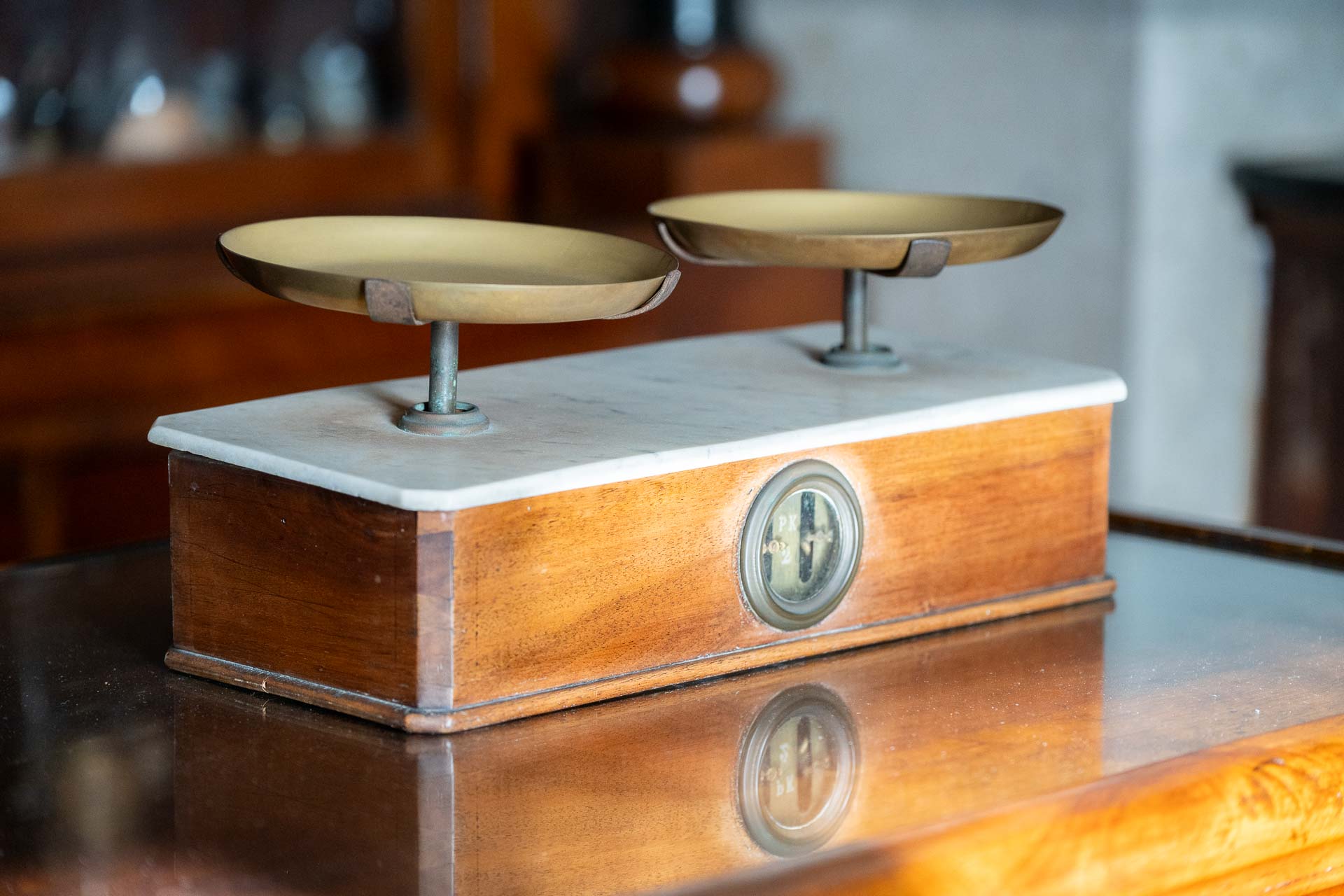
The Historic Ancient Pharmacy of the Regina Coeli Complex was built in the nineteenth century by order of Saint Giovanna Antida Thouret to process medicinal plants grown in the Cloister’s botanical garden. The pharmacy was essential for preparing and distributing remedies to those in need throughout Naples’ working-class neighborhoods.
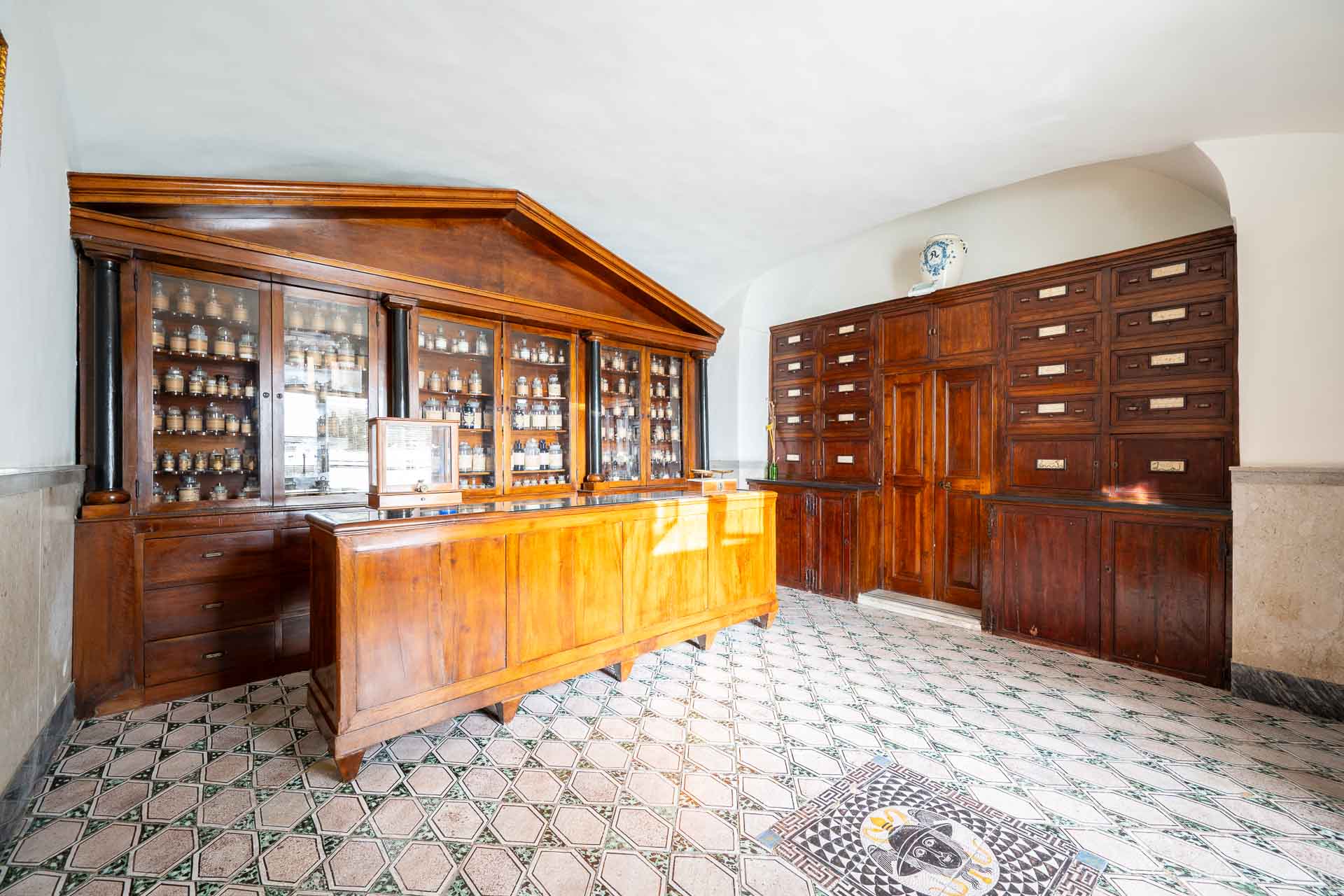
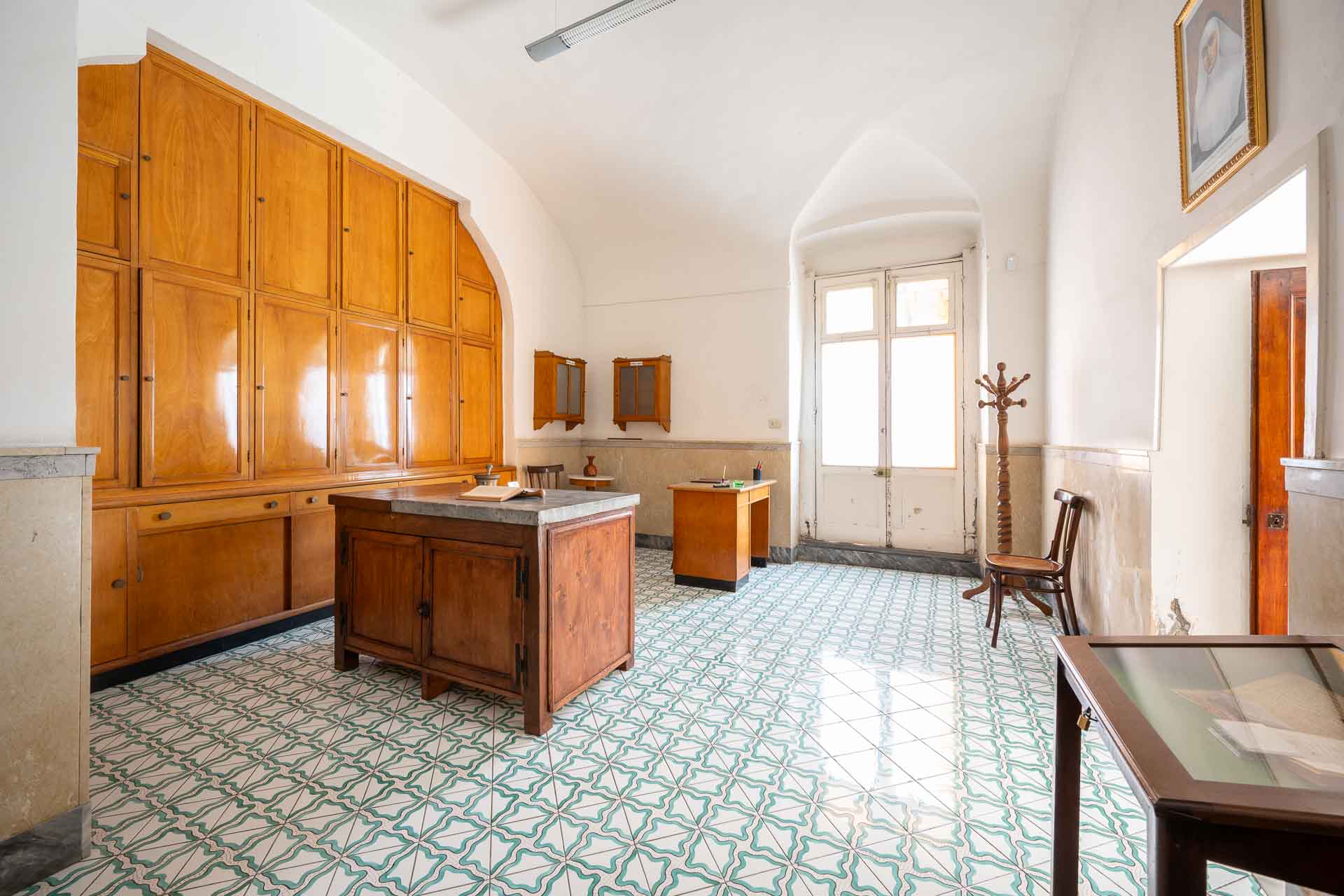
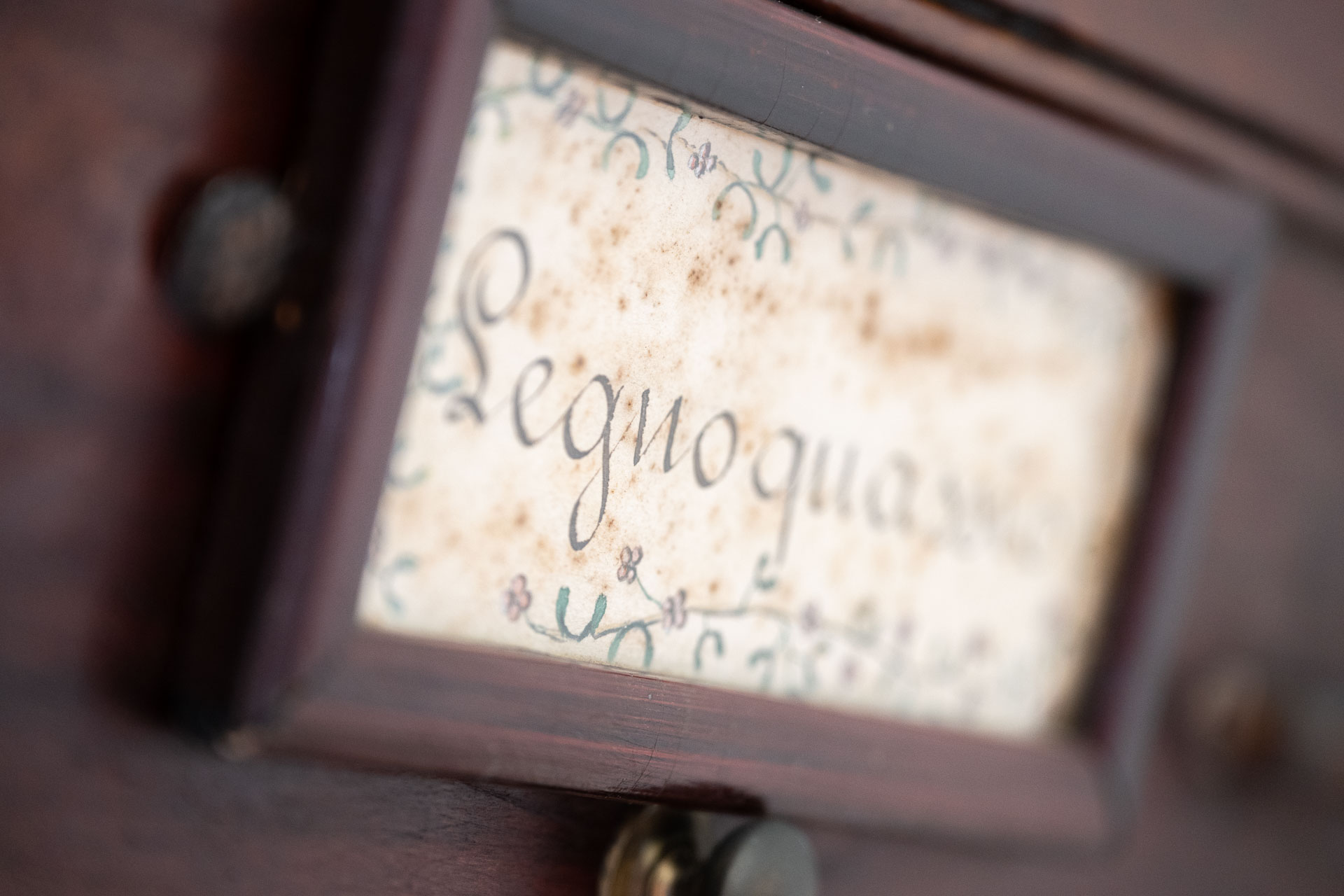
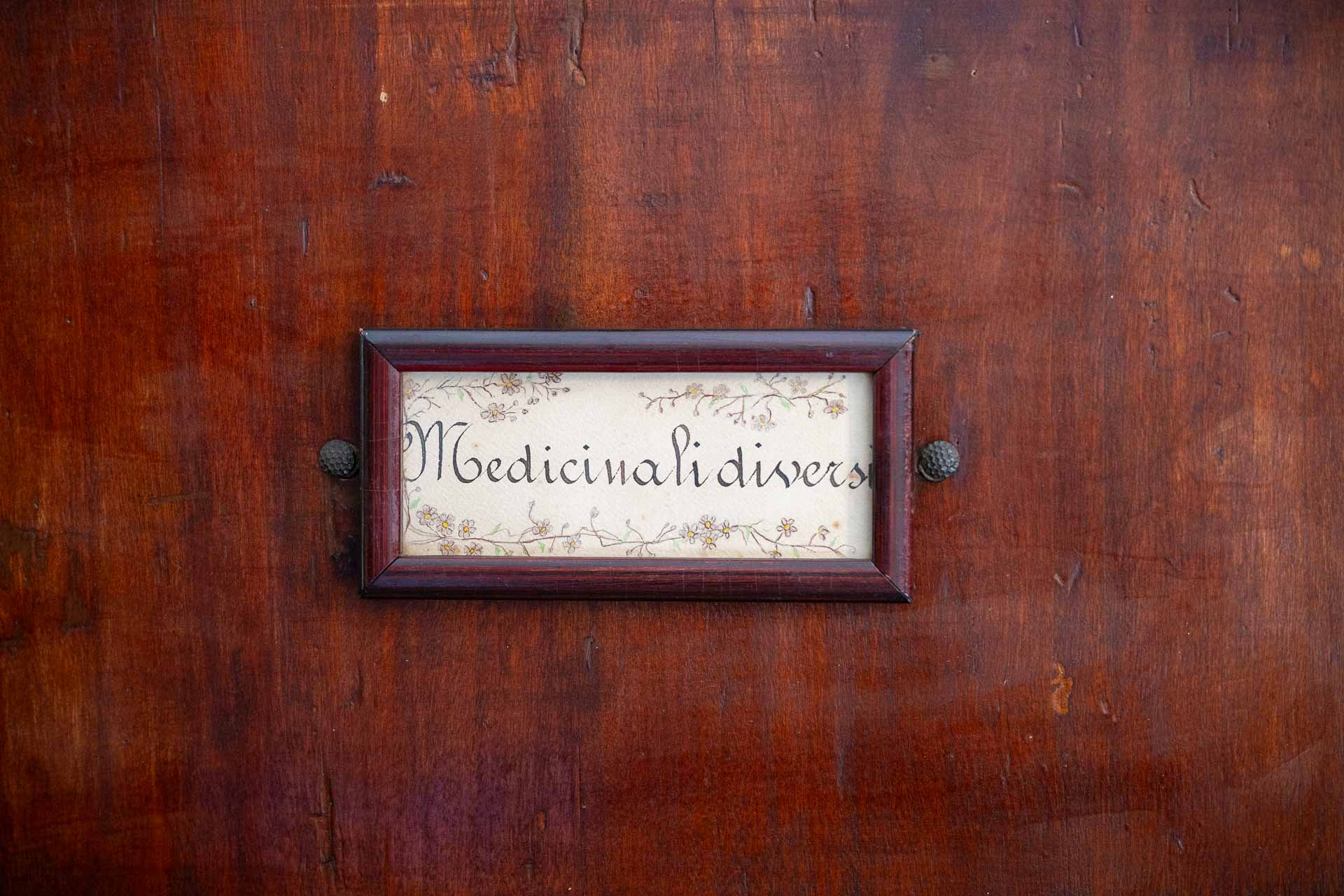
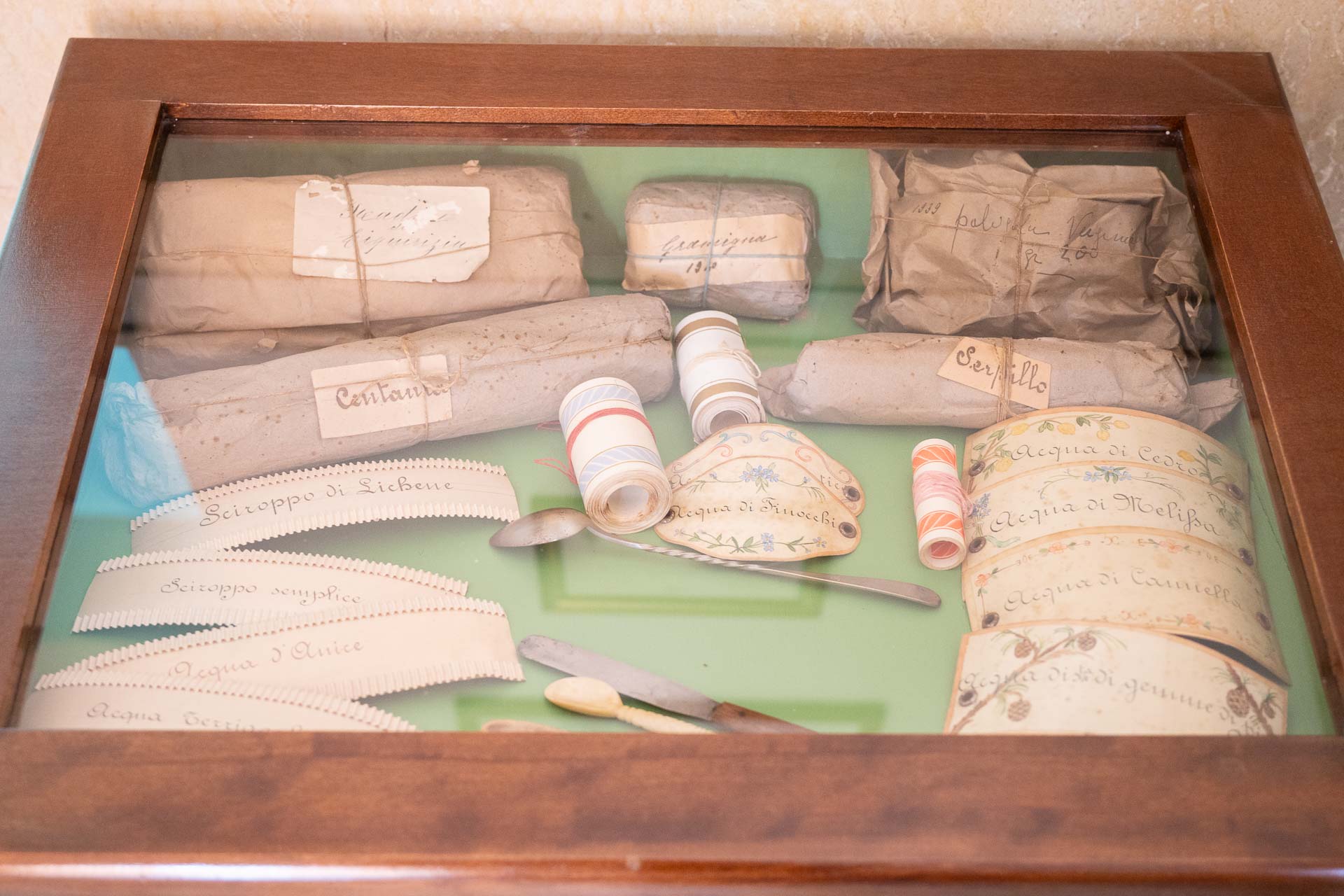
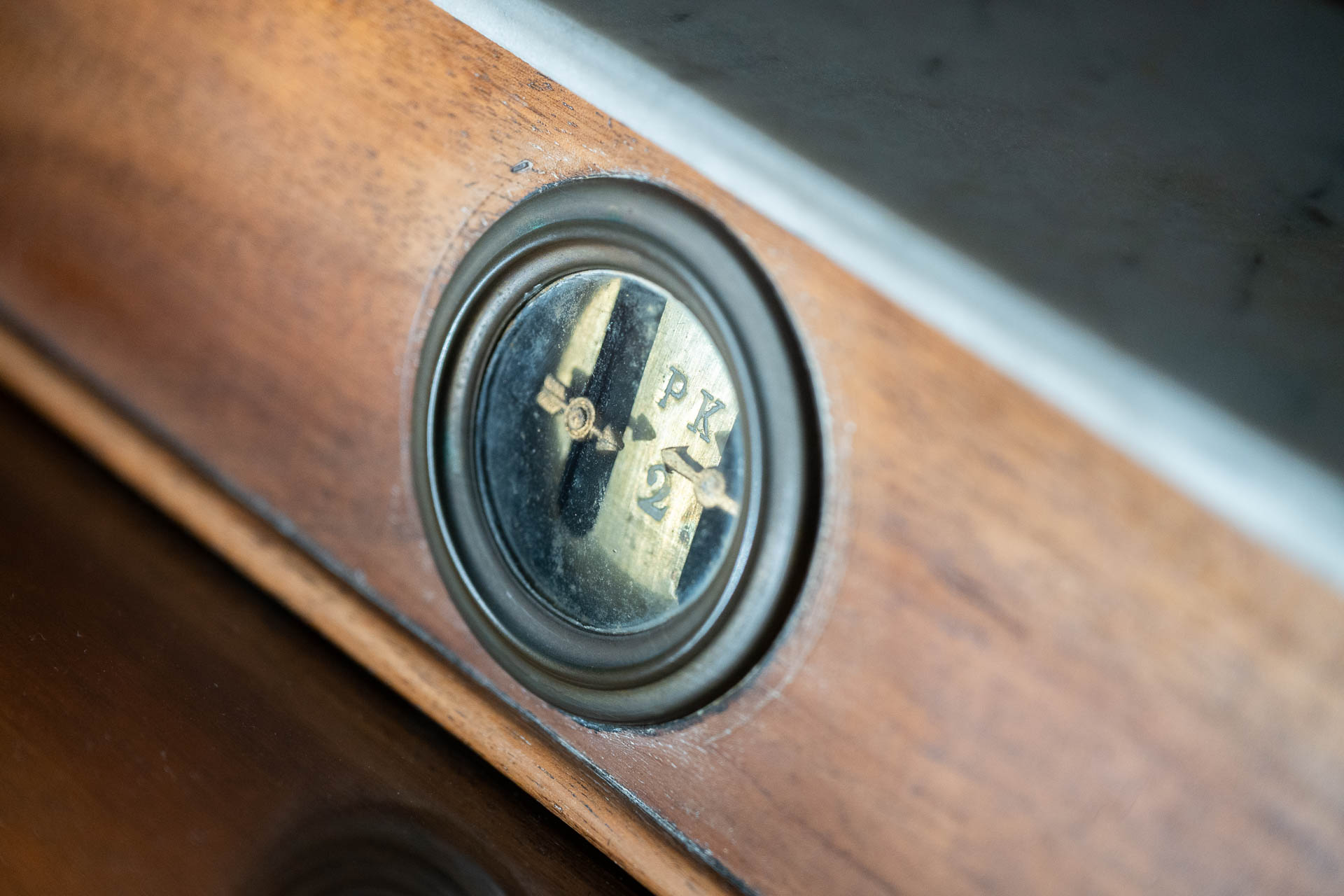
“For processing these remedies, a large custom wooden counter topped with marble was crafted surviving intact to this day. During restoration work in the 1990s, remarkable artifacts were discovered inside its drawers and are now displayed in dedicated glass cases: vintage medicine packages still prepared for delivery and unused pre-printed labels.
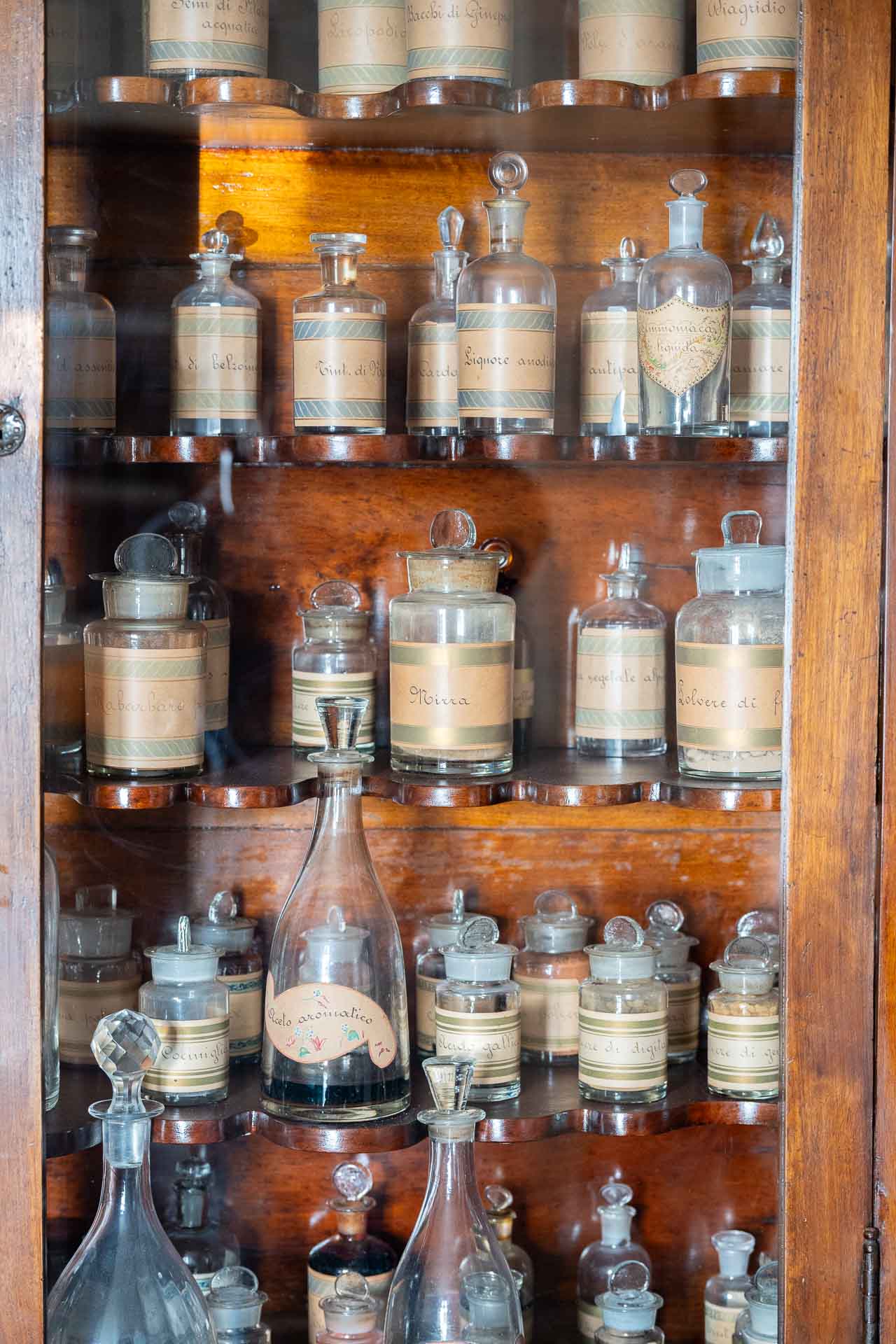
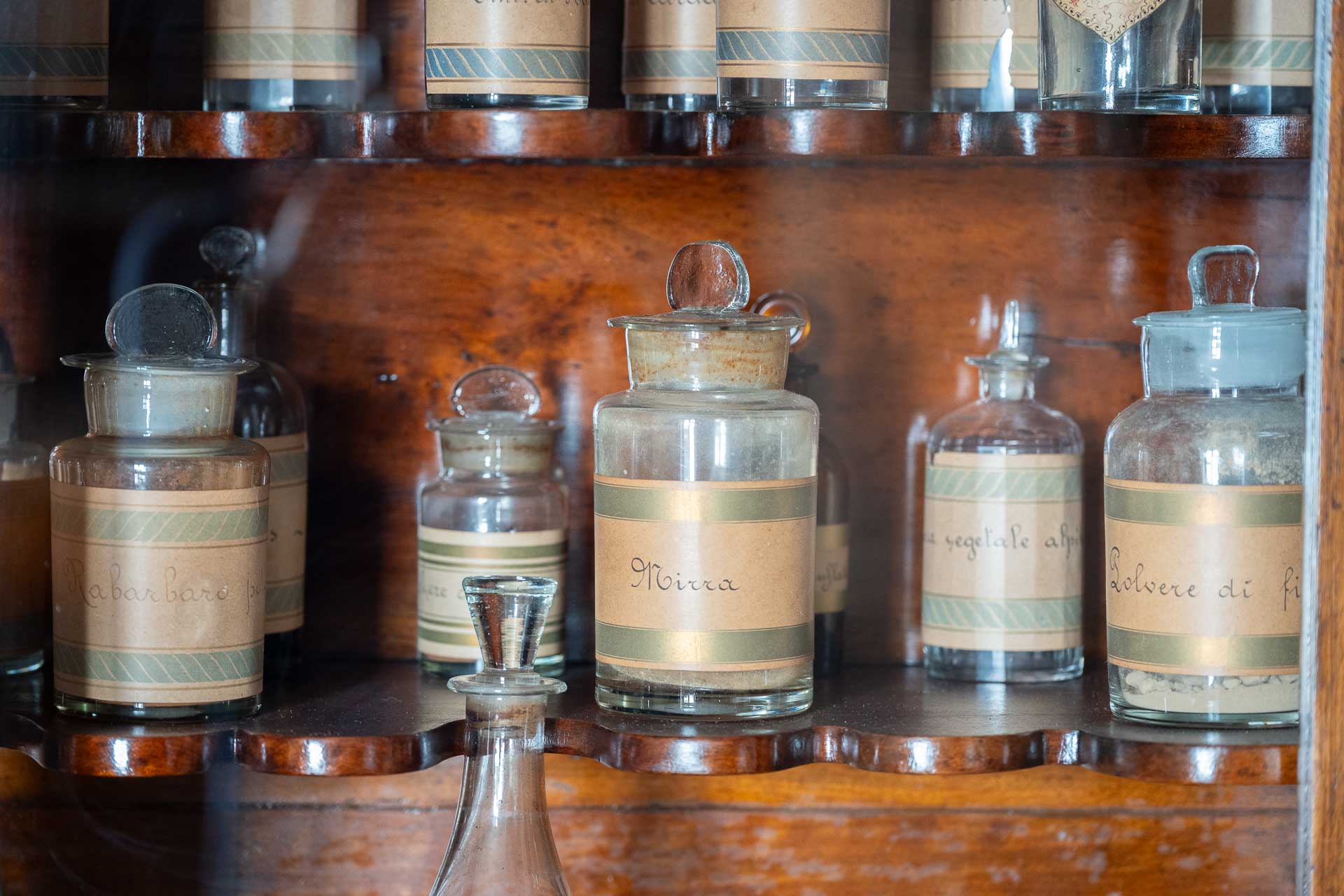
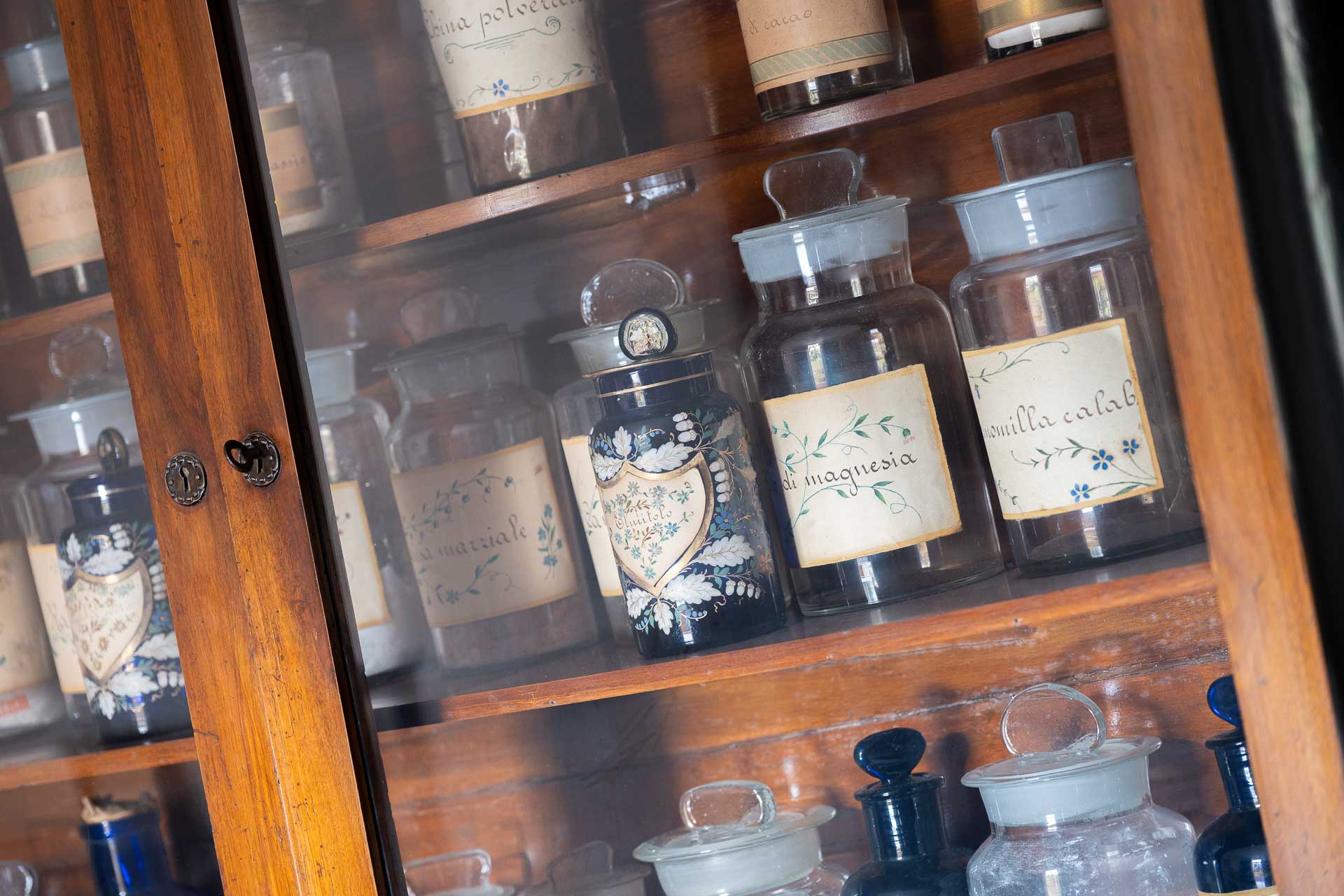
The room retains its original atmosphere completely intact, featuring a beautiful wooden cabinet that houses vials, jars, and bottles with their original handwritten labels marked with graphic symbols such as serpents, poppies, and leaves. Among the various historical preparations and powders, the bottles of medicinal poisons stand out.
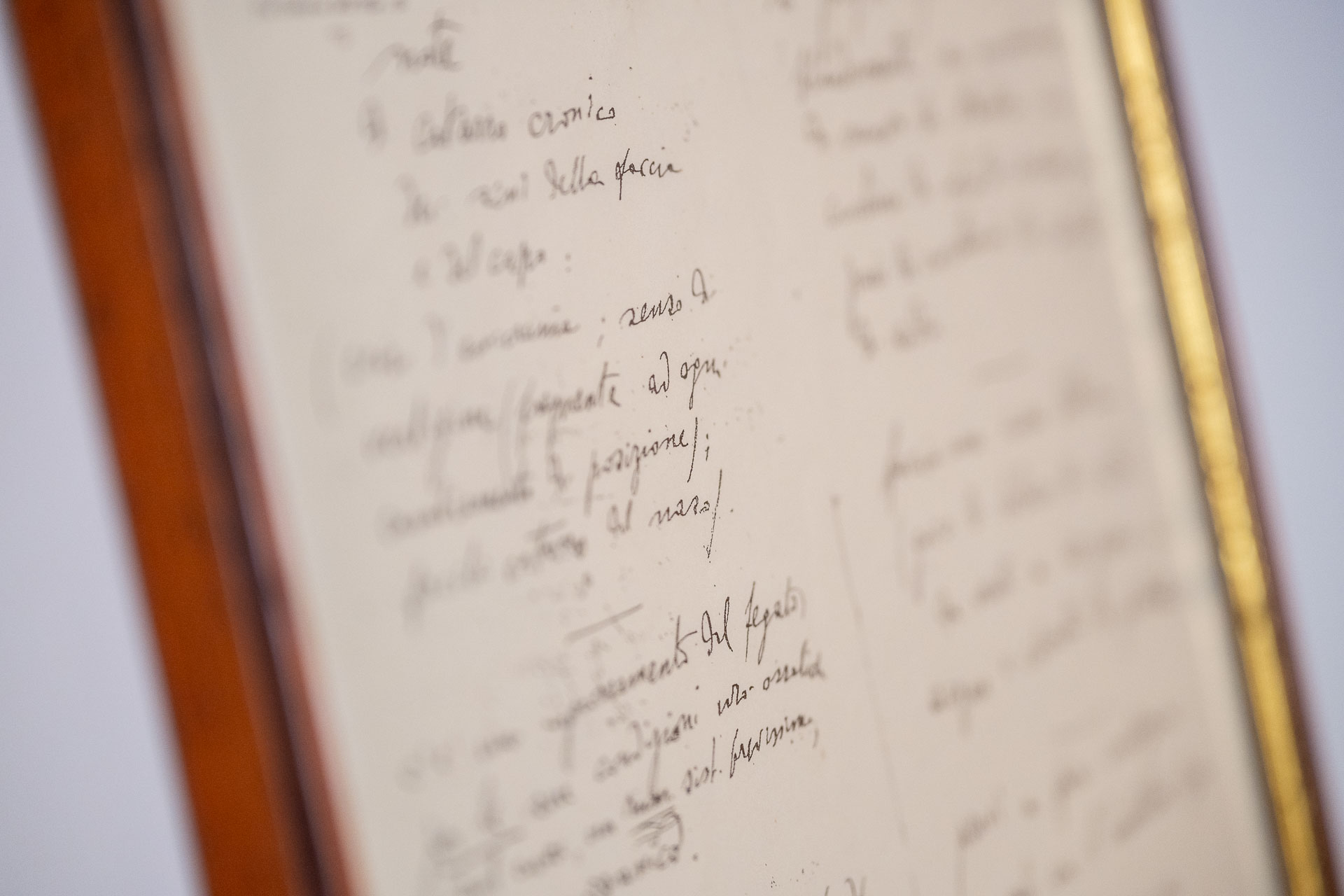
Among the display cases, the “Manuale delle Dame di Carità” (Manual of the Ladies of Charity) is still preserved—a true handbook that guided the sisters during home visits, teaching them how to perform bloodletting, dress wounds, and handle medical emergencies directly in patients’ homes. Also on display are handwritten medical notes penned by Saint Giuseppe Moscati himself, Naples’ celebrated ‘doctor of the poor’.
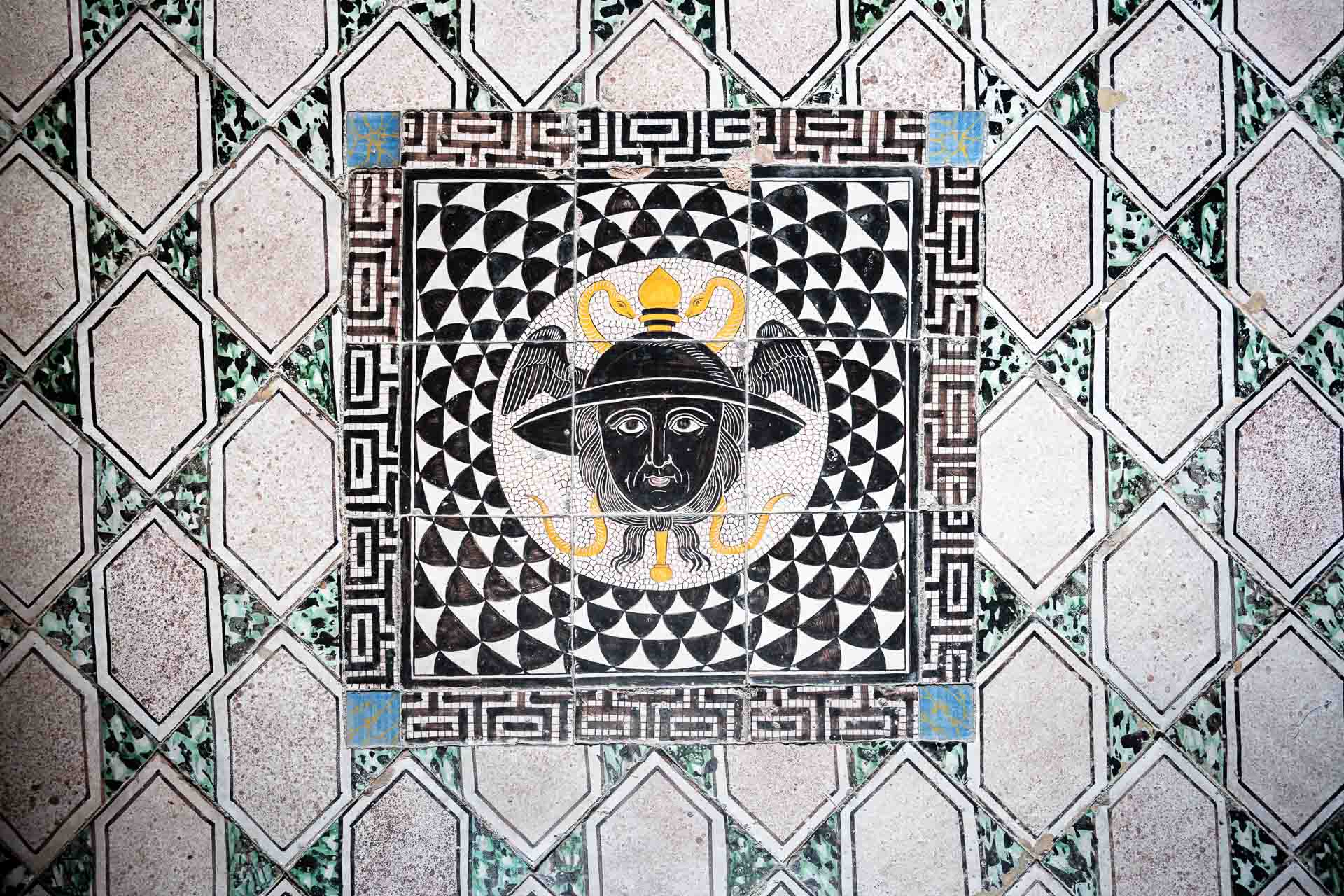
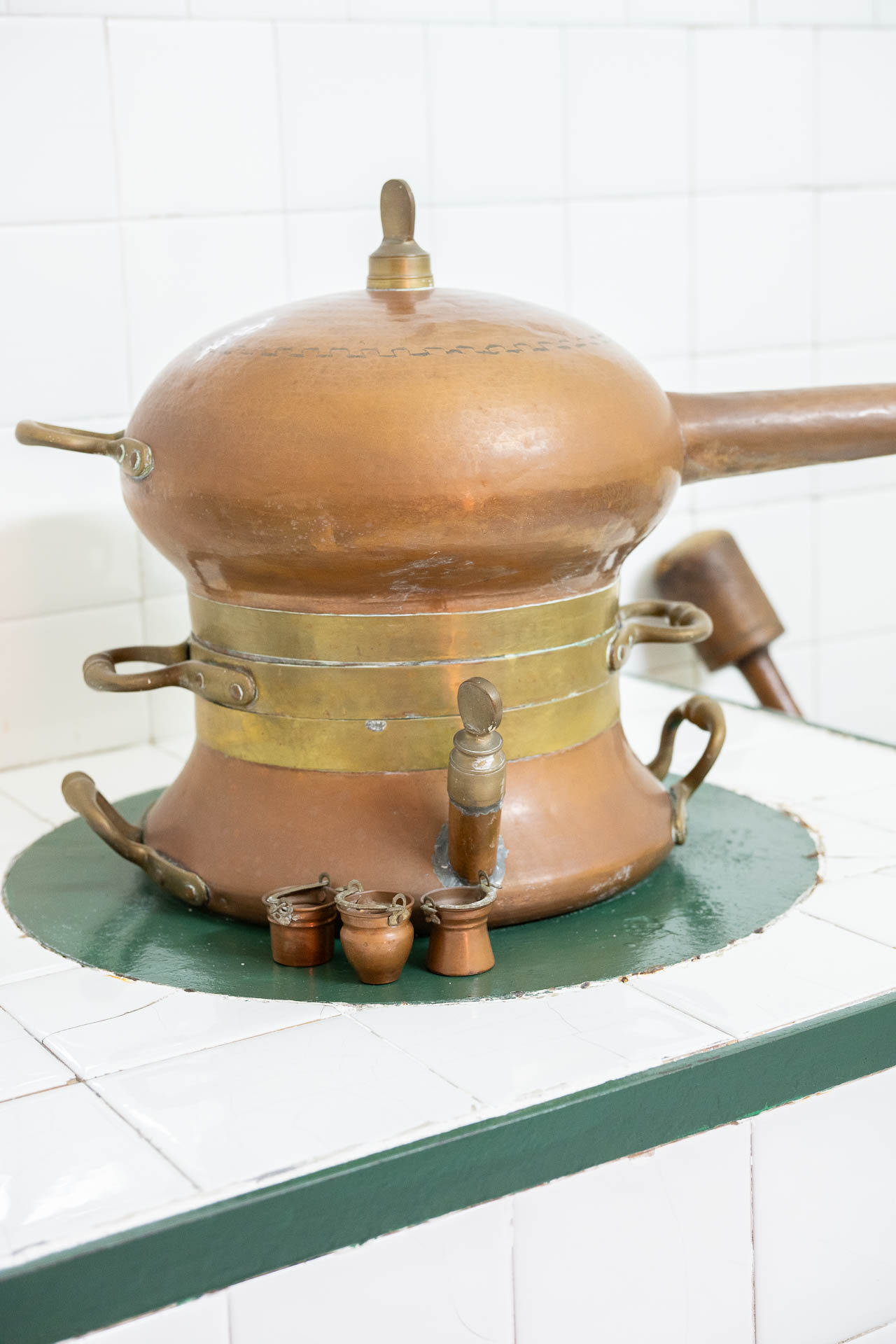
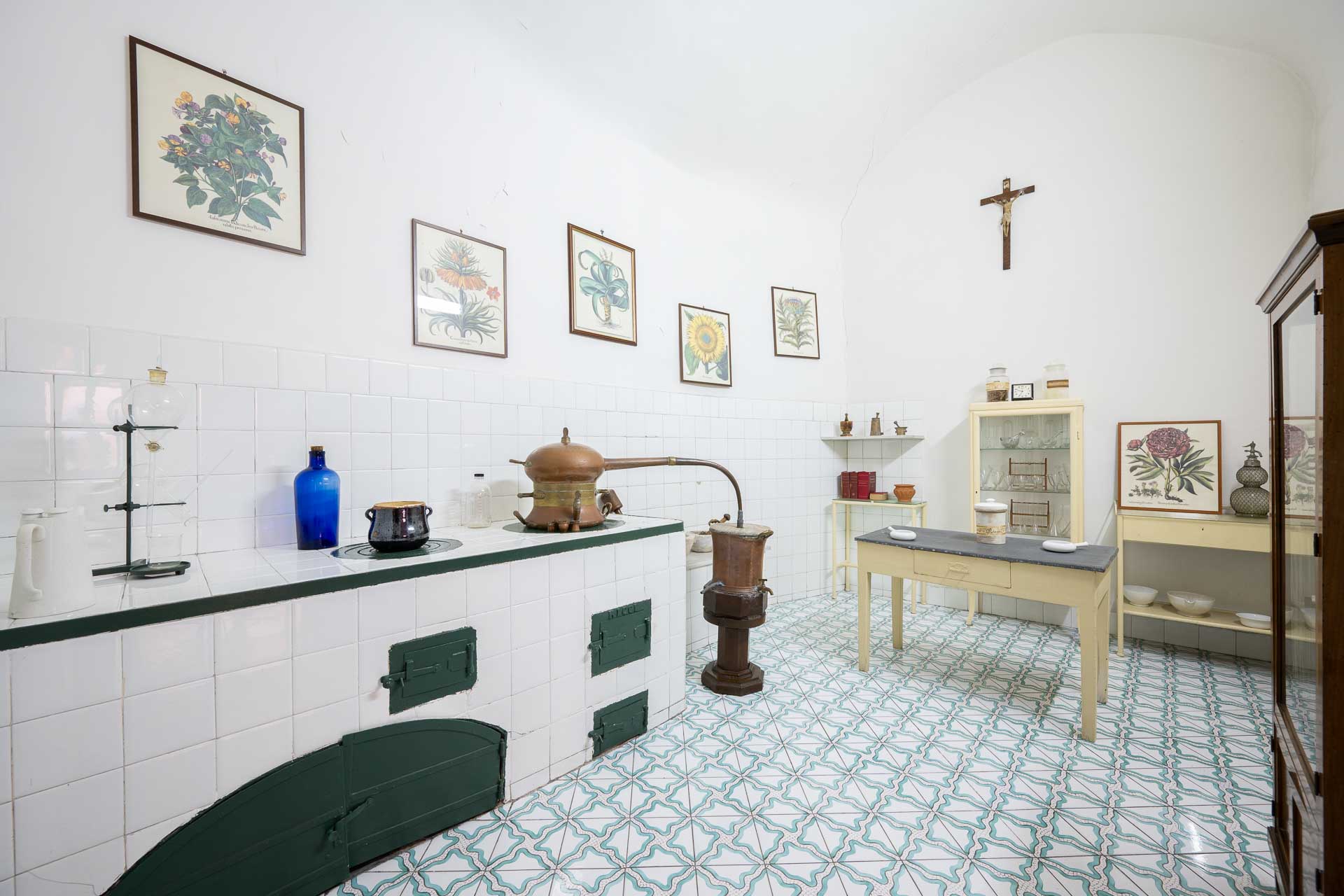
The floor features exquisite Neapolitan riggiole (traditional majolica ceramic tiles) crafted at the turn of the nineteenth century by the renowned Giustiniani family of ceramicists, centered around a central depiction of Asclepius, the God of Medicine. Meanwhile, in the back room of the pharmacy, the charming historical kitchen remains perfectly intact, complete with its cast-iron hotplates and copper stills.
This historic pharmacy remained active for centuries, with the last nuns continuing to prepare galenic solutions and remedies here well into the 1970s.
Thanks to the continuous care of the site by the Sisters of Charity, it is possible today to visit and admire its extraordinary state of preservation and the timeless charm of its furnishings.

The Refectory
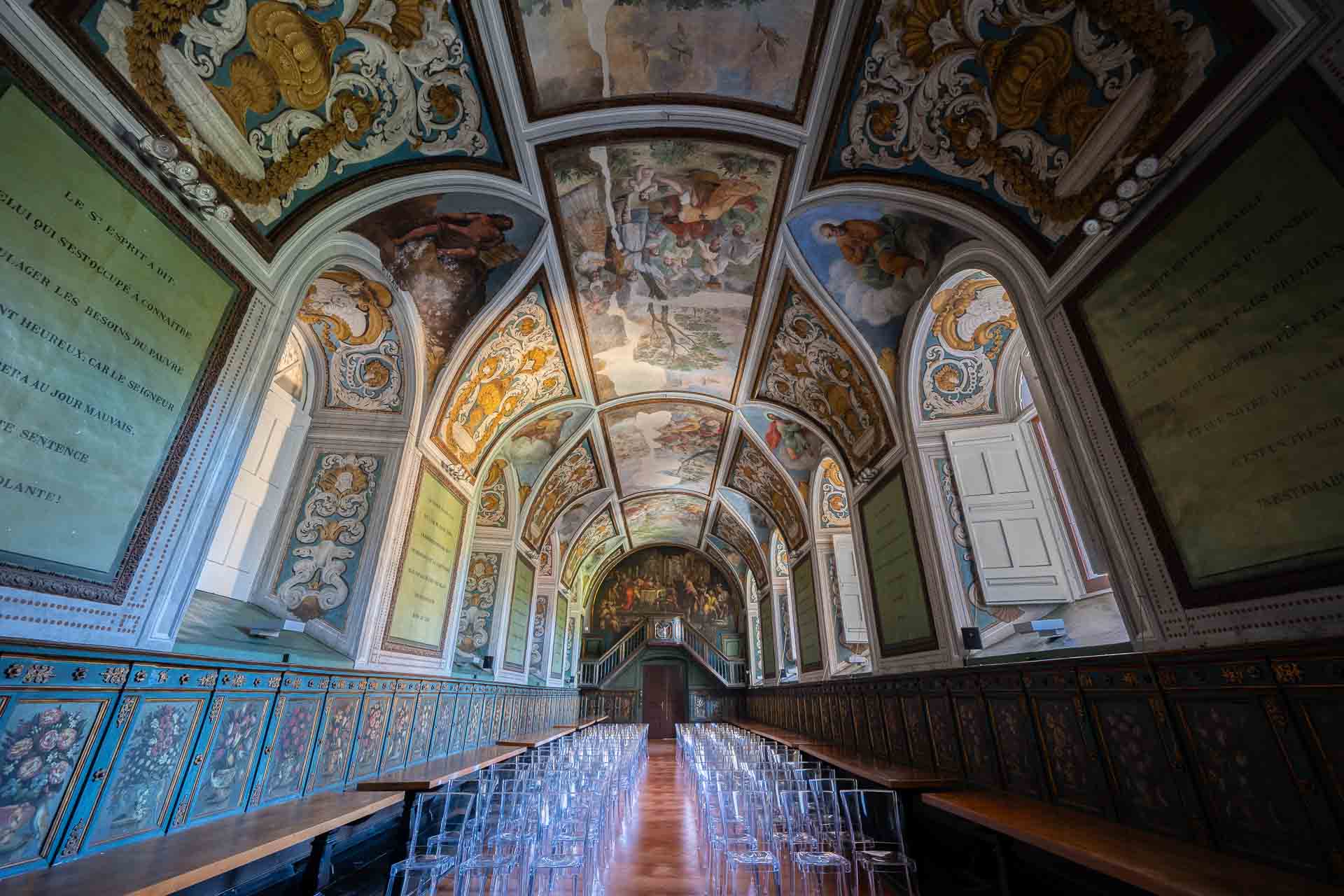
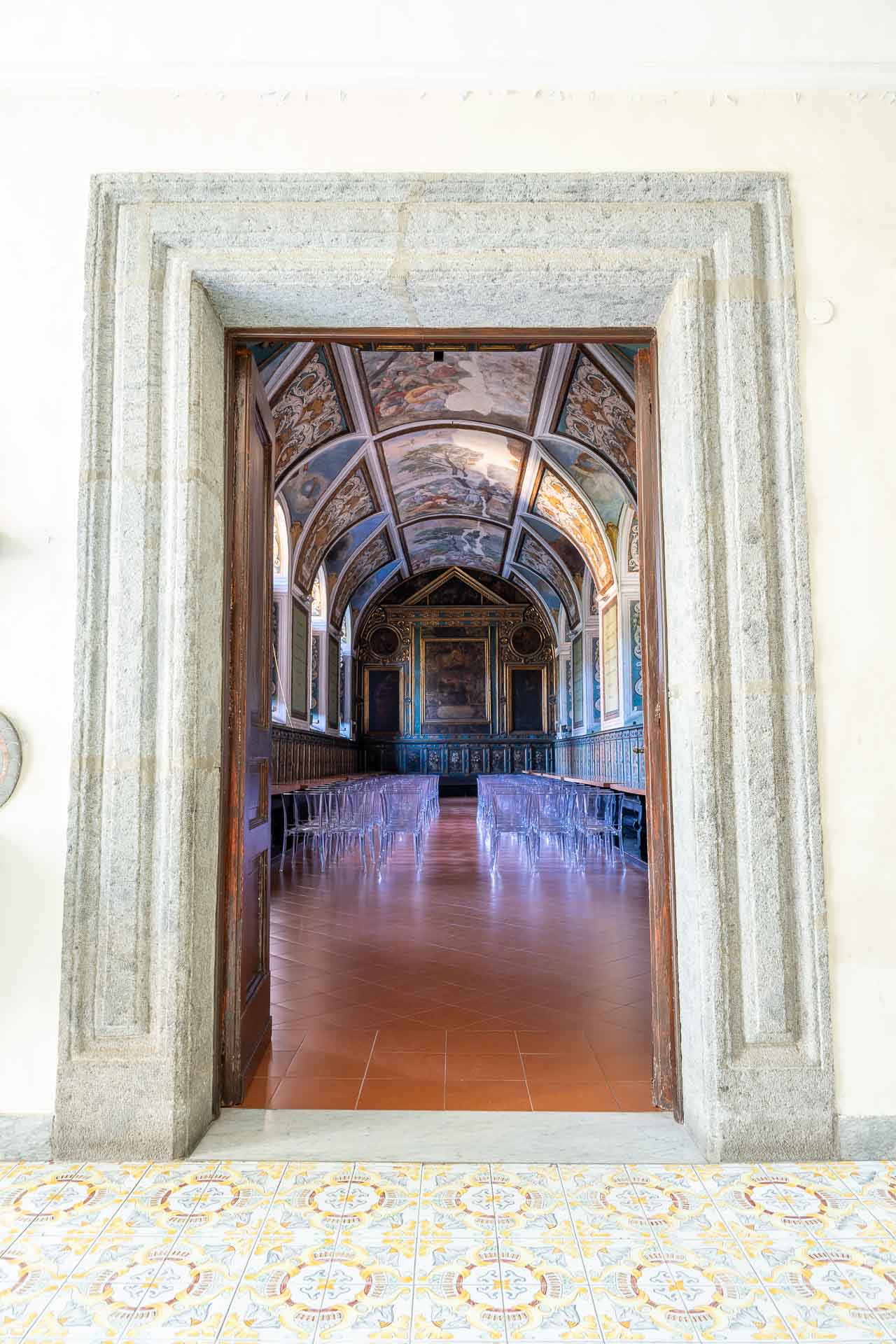
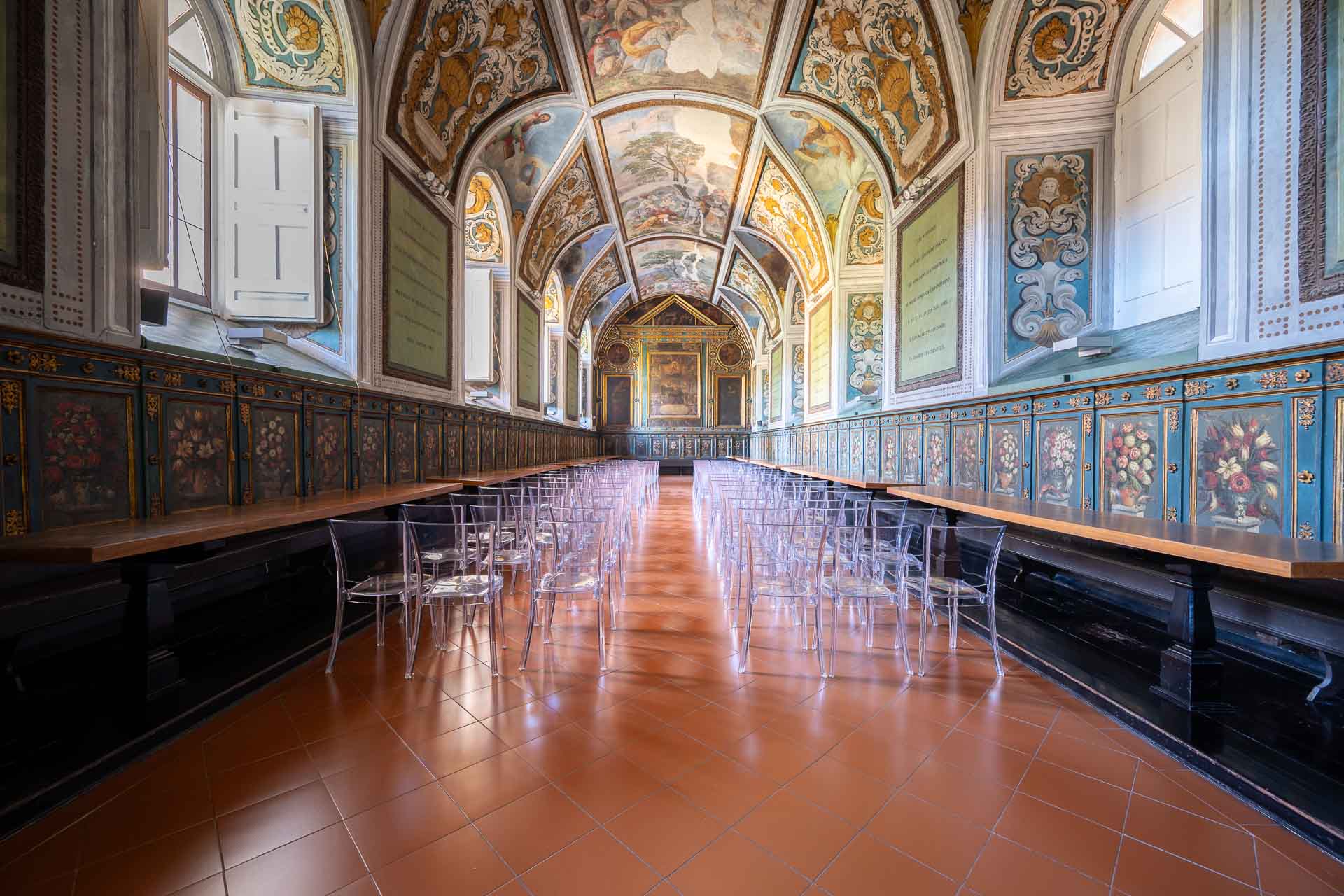
The Ancient Refectory of Regina Coeli, built in the early seventeenth century, served for centuries as the place where the nuns ate their meals in silence—a tradition and purpose it maintained continuously until 2023.
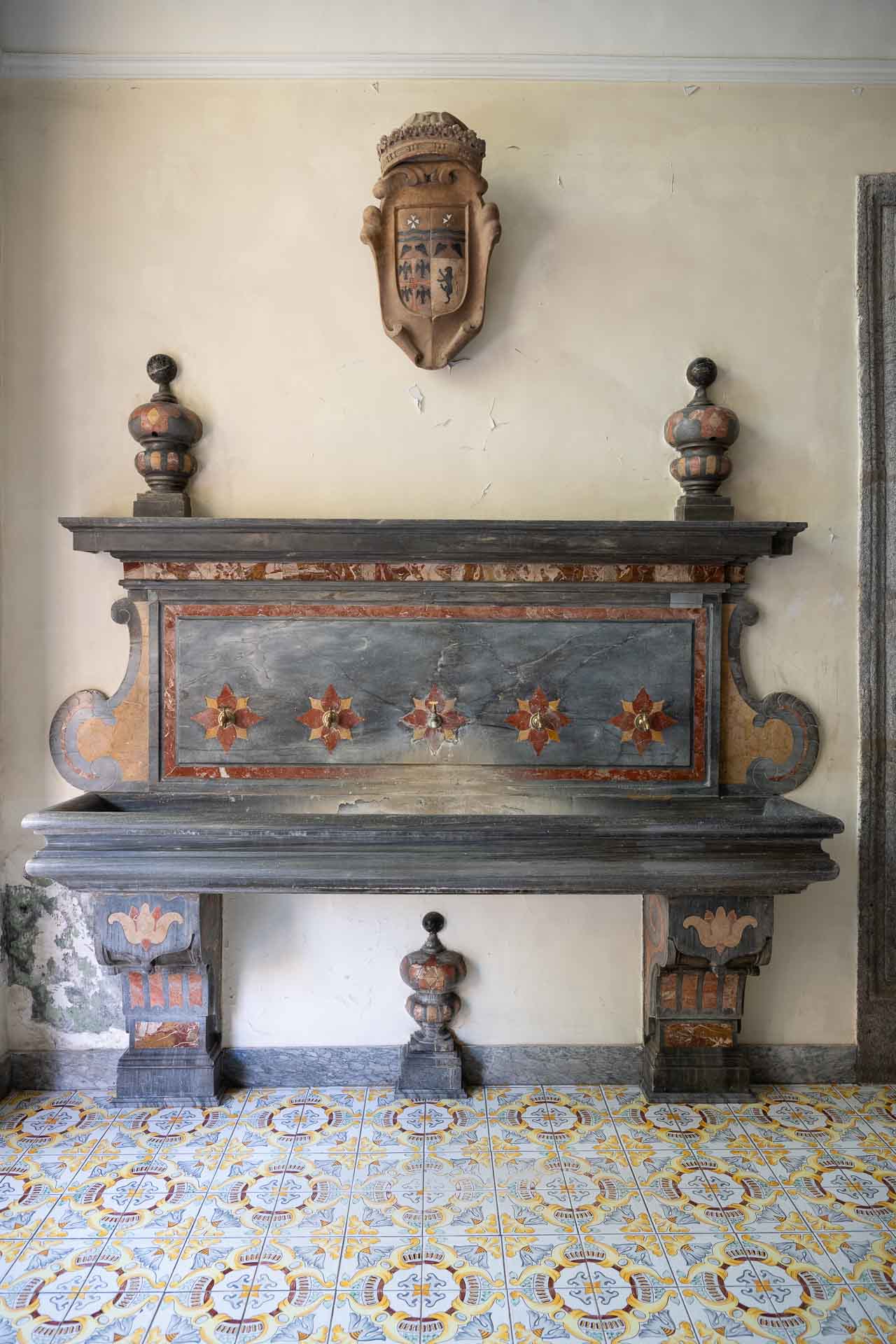
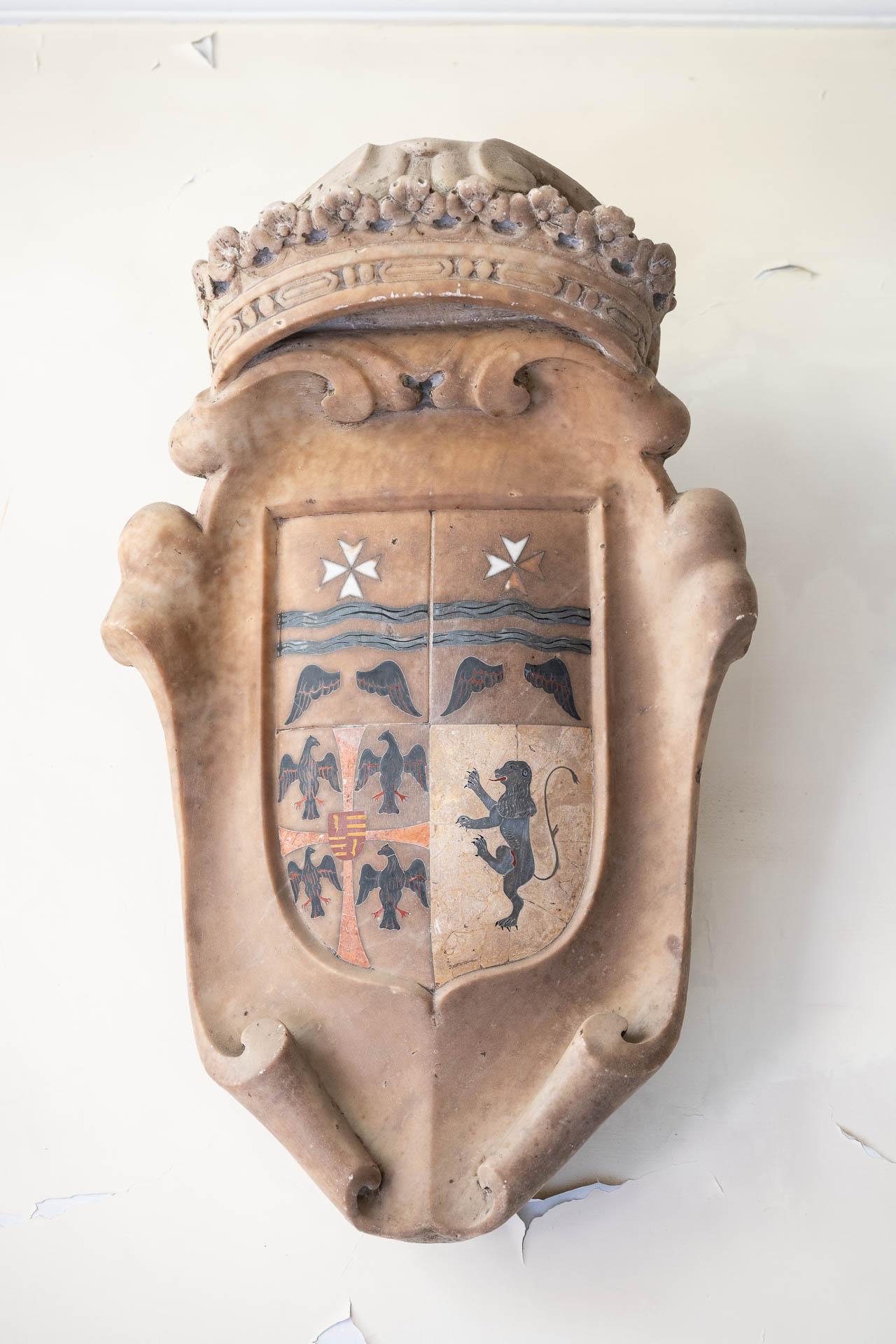
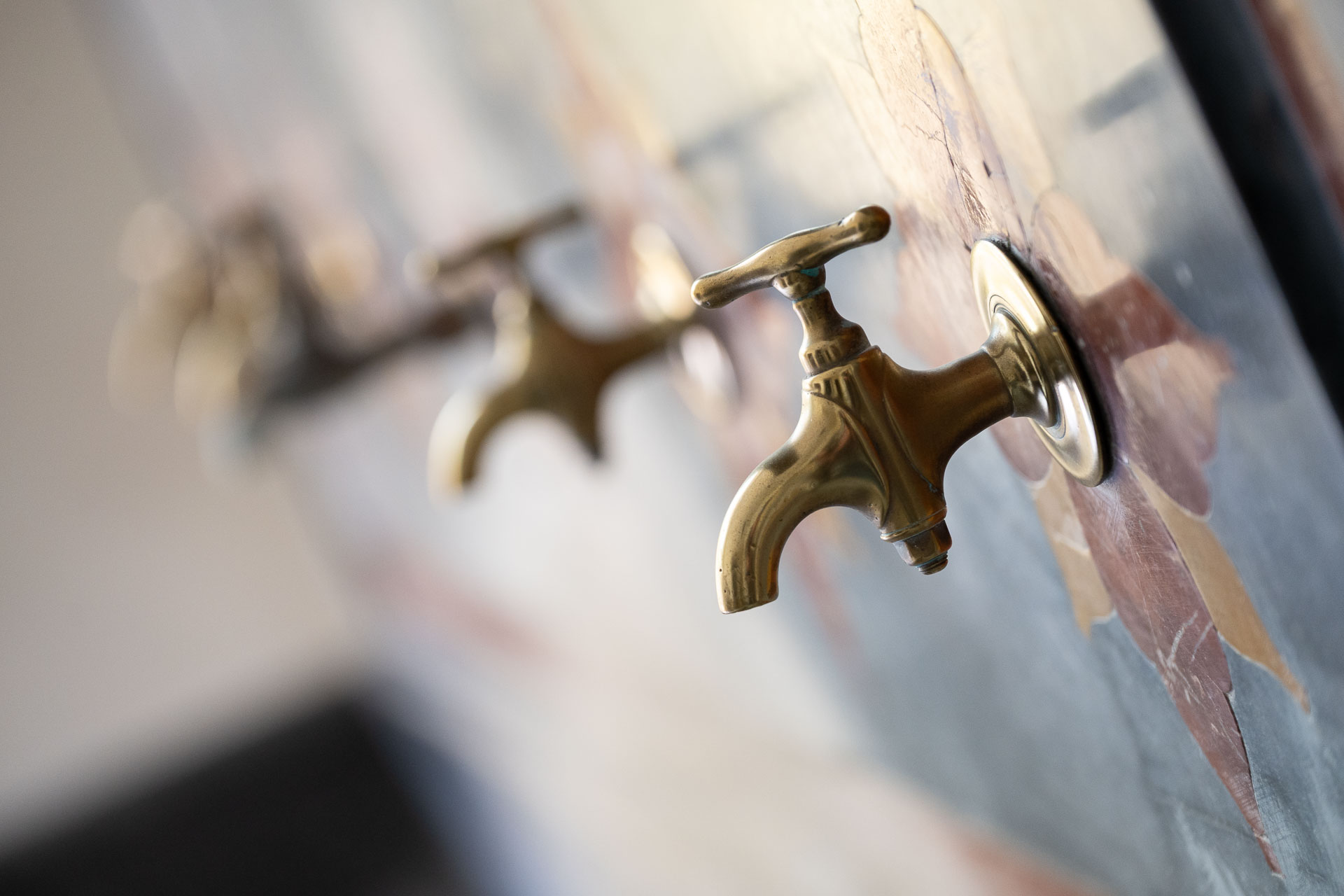
Before entering, at the doorway, stands an elegant marble lavabo fountain bearing the coat of arms of the noble Gambacorta family.
A place of extraordinary beauty uniting painting, music, and culture, it is now open to the public for guided tours, conferences, and cultural events.
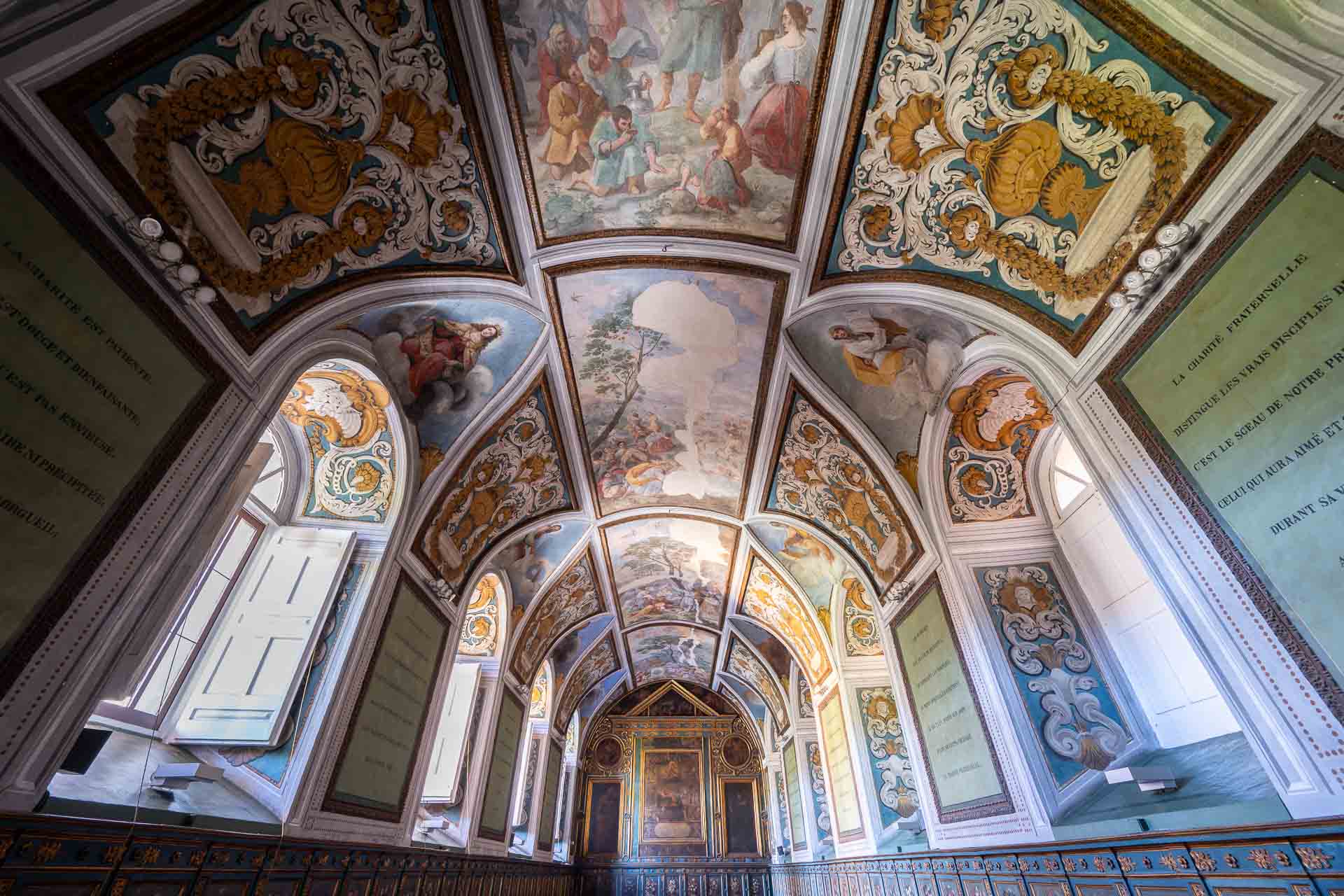
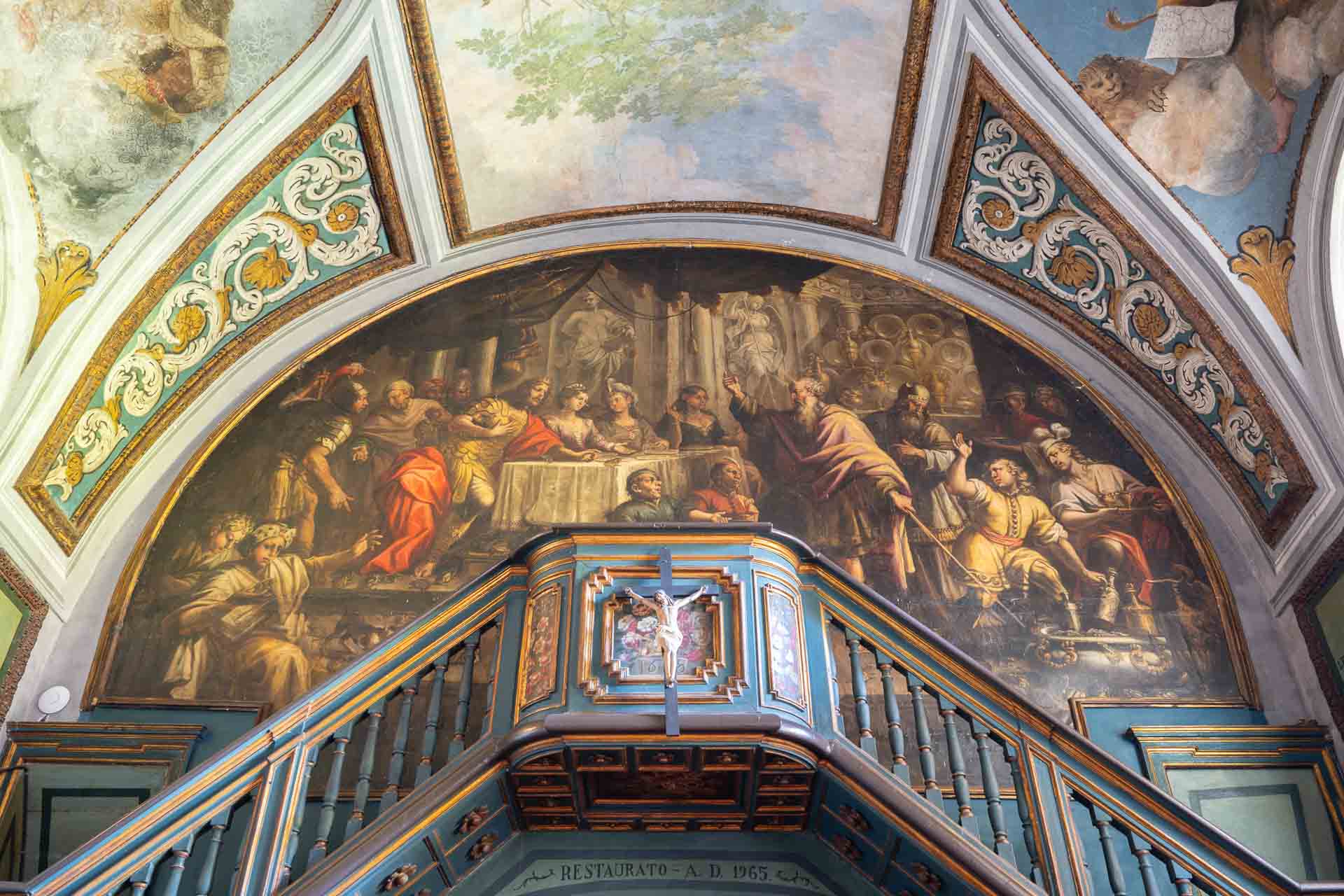
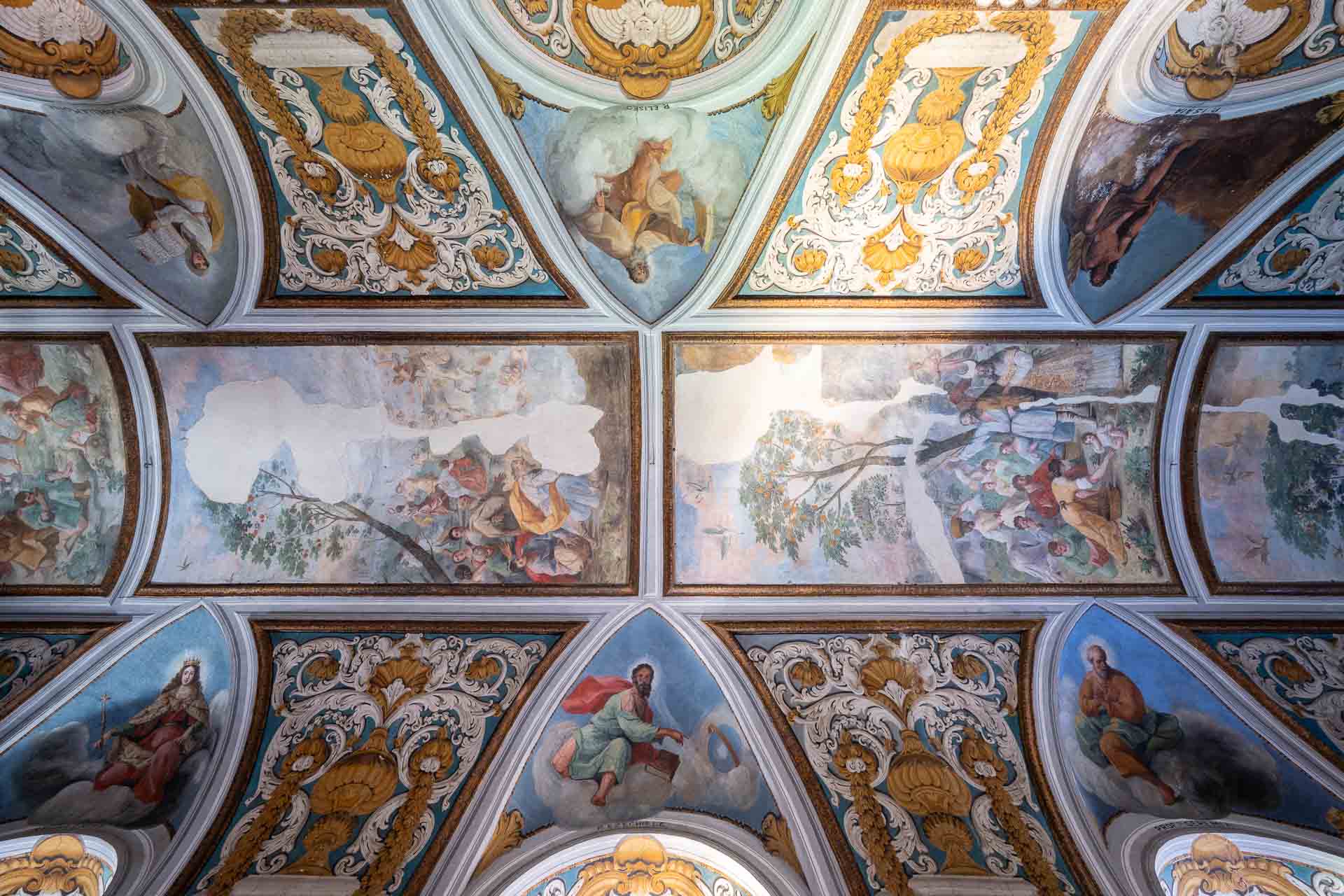
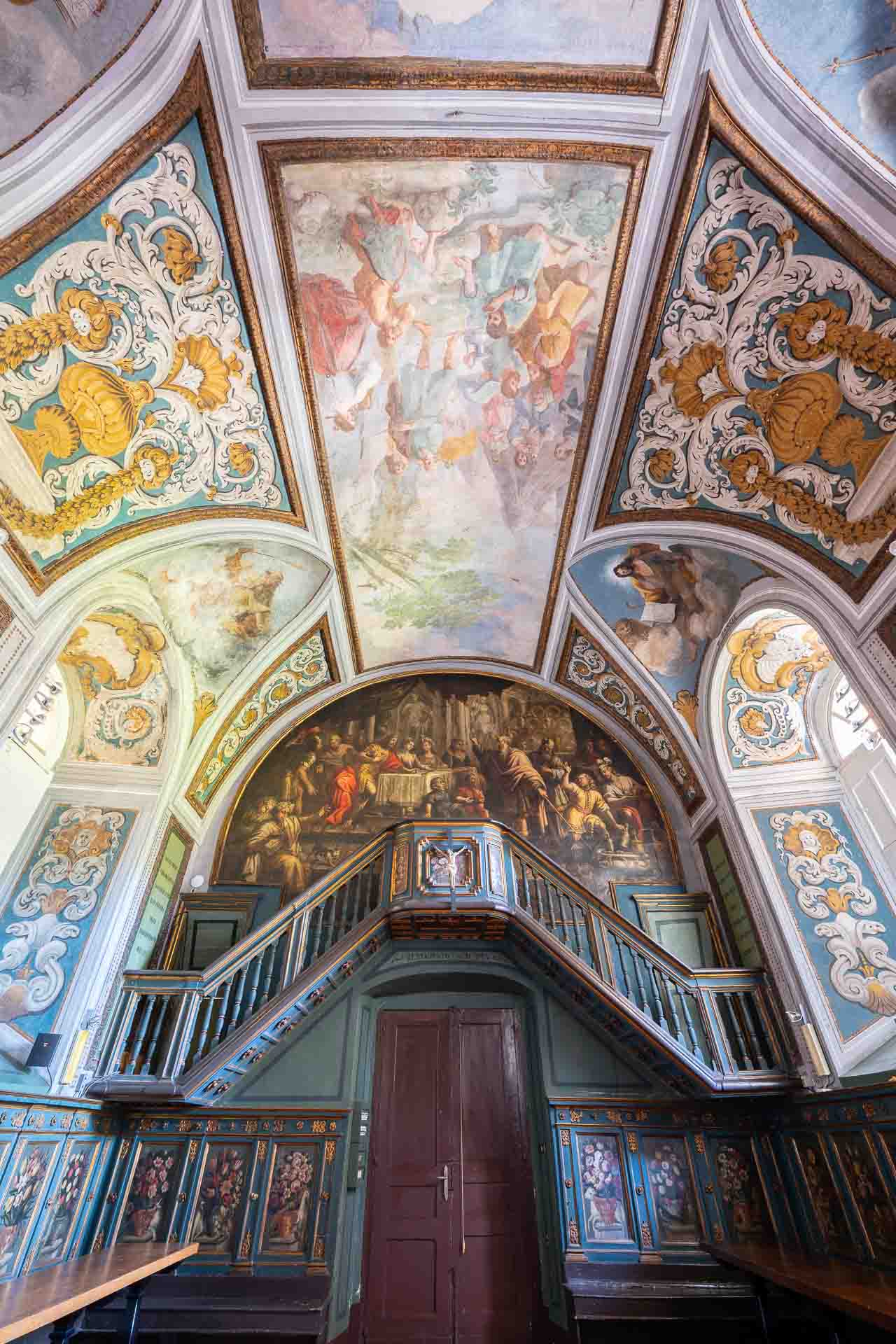
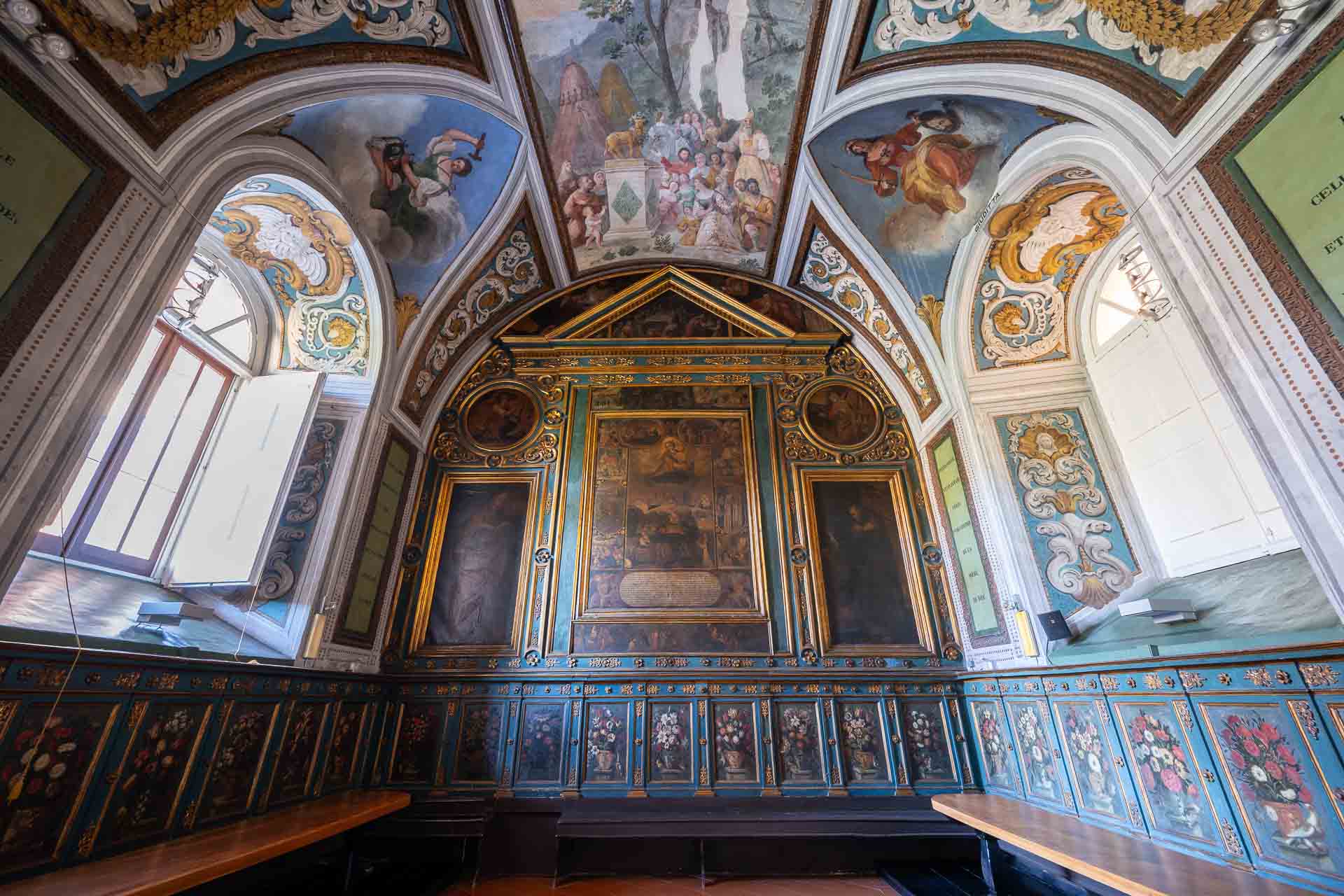
The grand barrel vault features an impressive 17th-century fresco cycle dedicated to the Old Testament, painted by Michele Ragolia, centered on the dramatic scene of Moses before Pharaoh during the plague of frogs. Gracing the far wall is a fine 16th-century panel painting depicting the Miracle of the Holy House of Loreto.
Along the walls run 85 unique 17th-century wooden stalls carved by Domenico Viola, which originally designated each nun’s assigned seat. While sharing a core motif, a vase of flowers paired with a unique bird, the artist skillfully carved a different animal into every single stall, including cats, dogs, and lambs.
In the nineteenth century, when the cloistered nuns departed the monastery, they took the framed wall paintings with them, leaving the walls completely bare. Upon their arrival, Saint Giovanna Antida and the Sisters of Charity decided to decorate those blank white walls by having quotes on charity from the Epistles of Saint Paul painted directly onto them. These inscriptions, perfectly legible to this day, were written in French, the Saint’s native language.
This hall also preserves a connection to music with noble roots. Thanks to its natural acoustics, considered flawless, celebrated Maestri di Cappella passed through its doors. Among them were two pillars of Italian music: Domenico Cimarosa (from 1795 to 1799) and, later, Saverio Mercadante for another five years. This tradition of excellence endures today, as ongoing care and public access have transformed the space into a splendid venue for baroque music concerts, conferences, and cultural events.
The Council Chamber
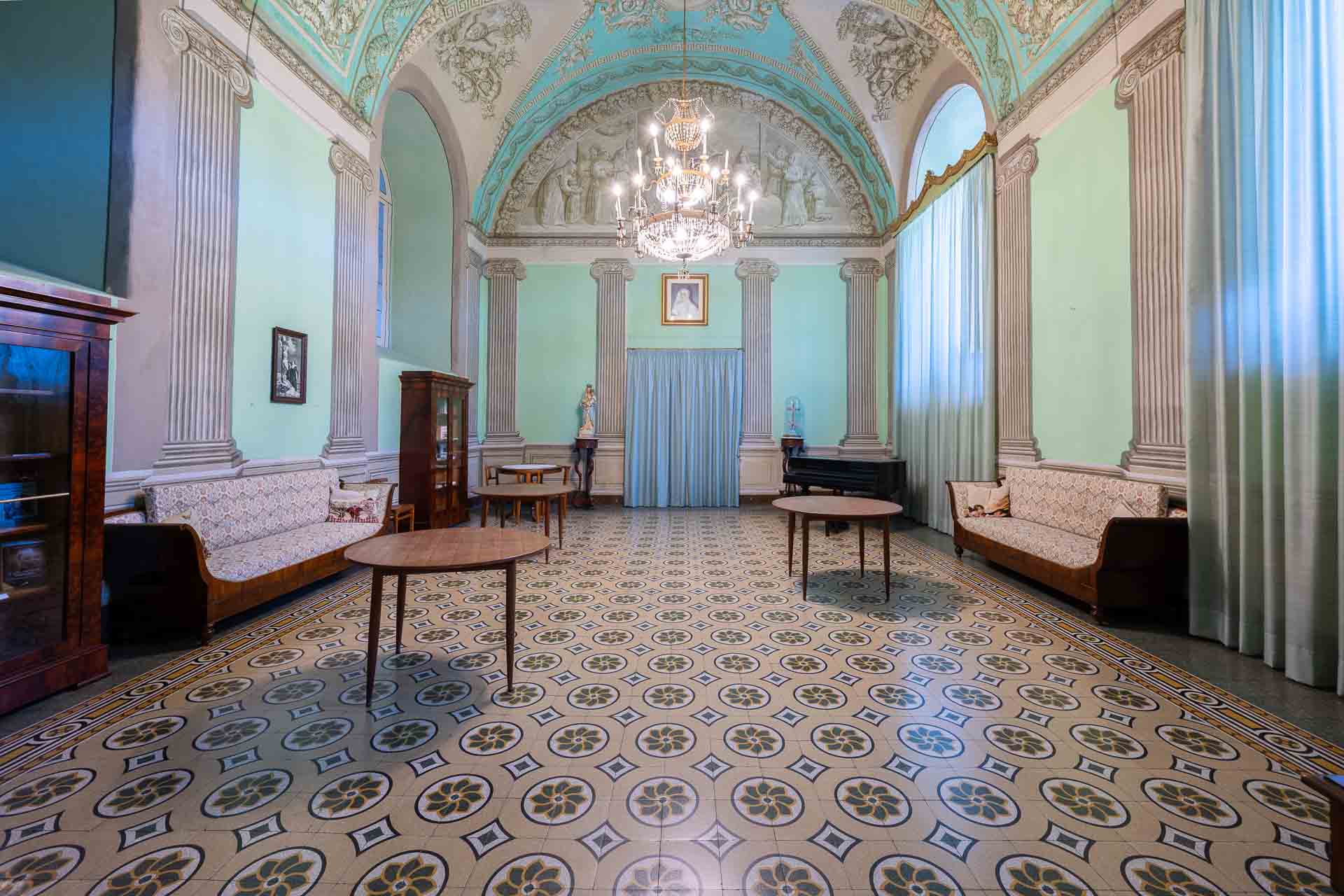
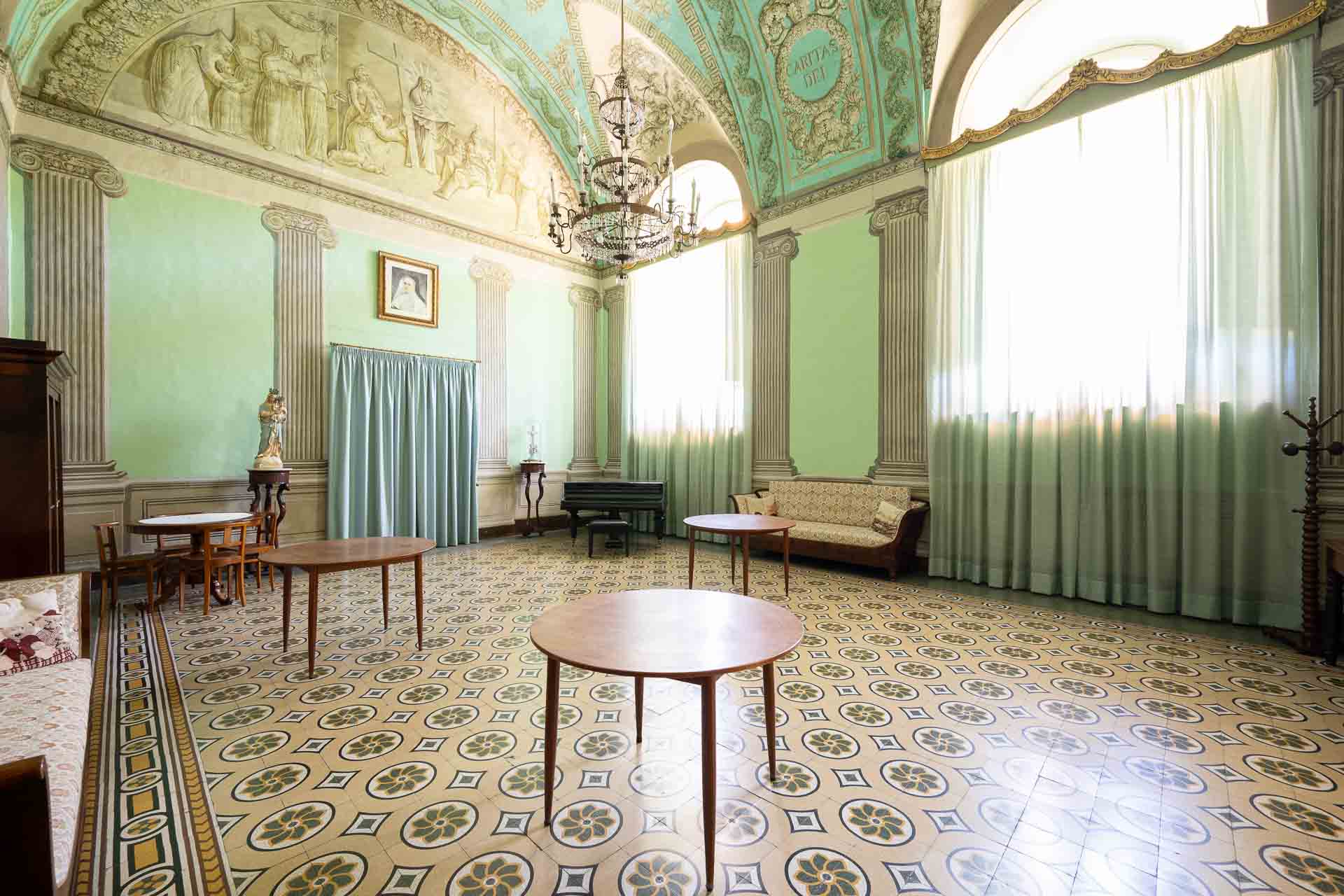
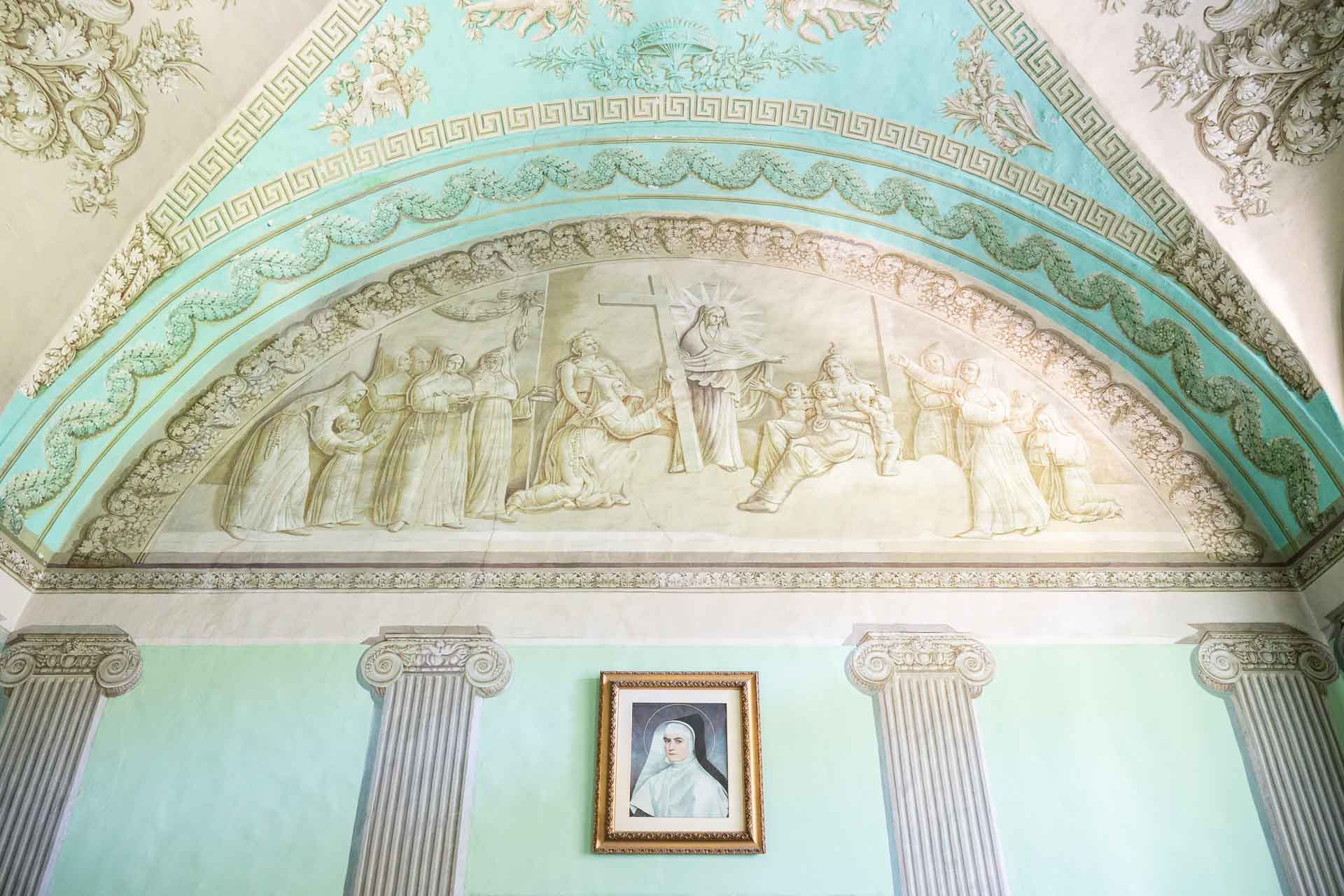
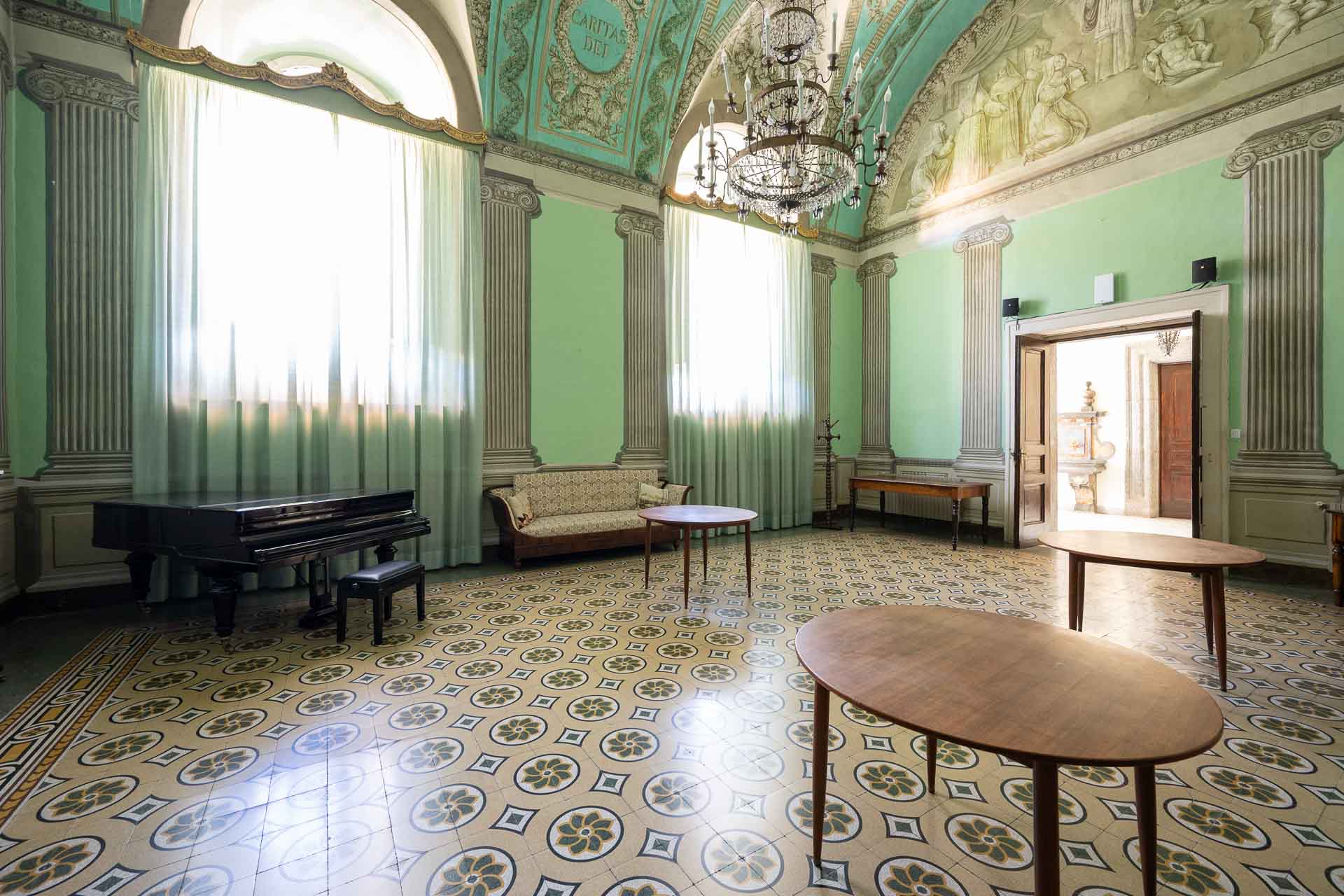
The Council Chamber, or Chapter House, located directly opposite the Historic Refectory, is another space rich in history and spirituality. A spacious, charming hall in soft green tones, it was where the nuns gathered to define duties, assign internal roles, and make the most crucial decisions governing monastic life.
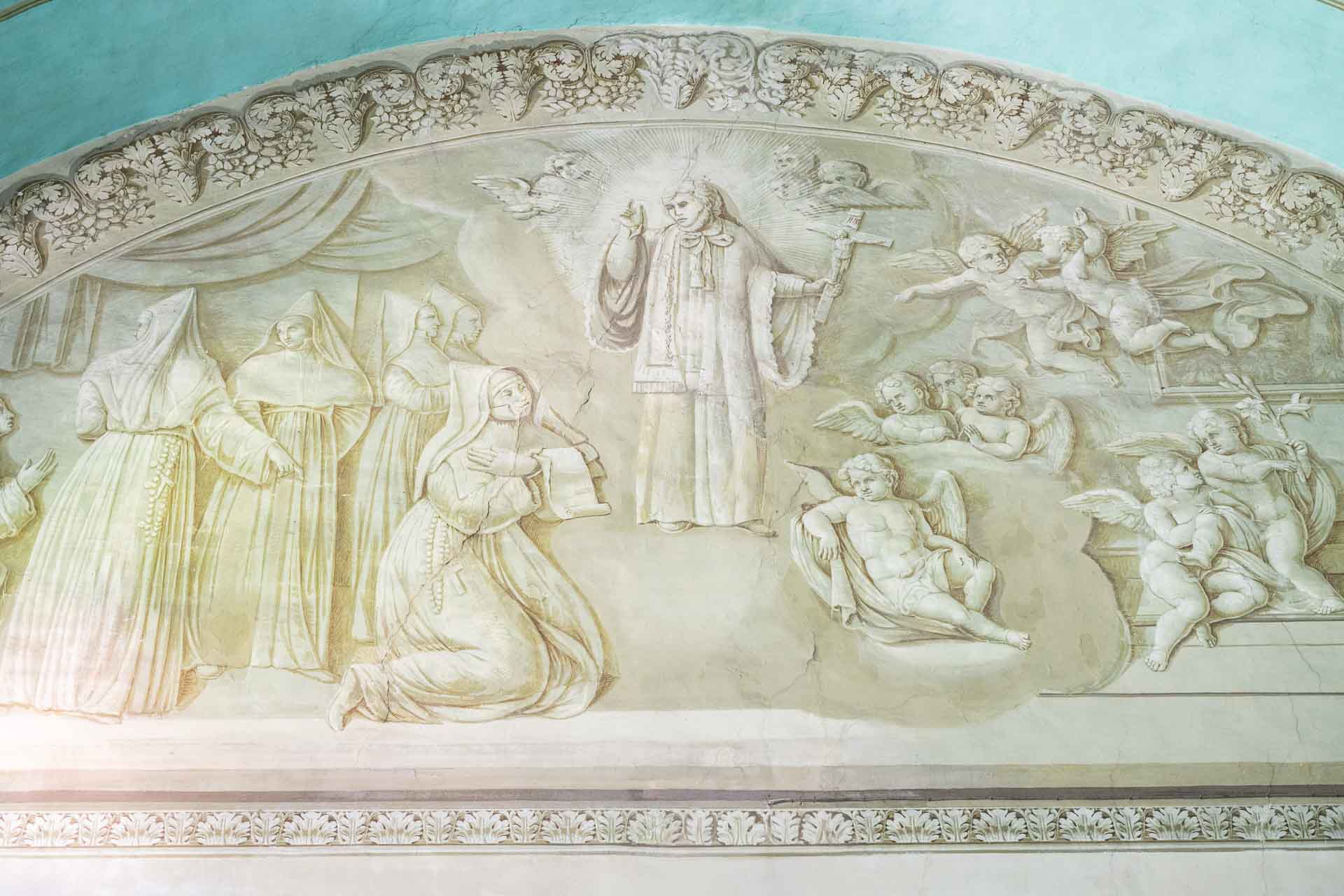
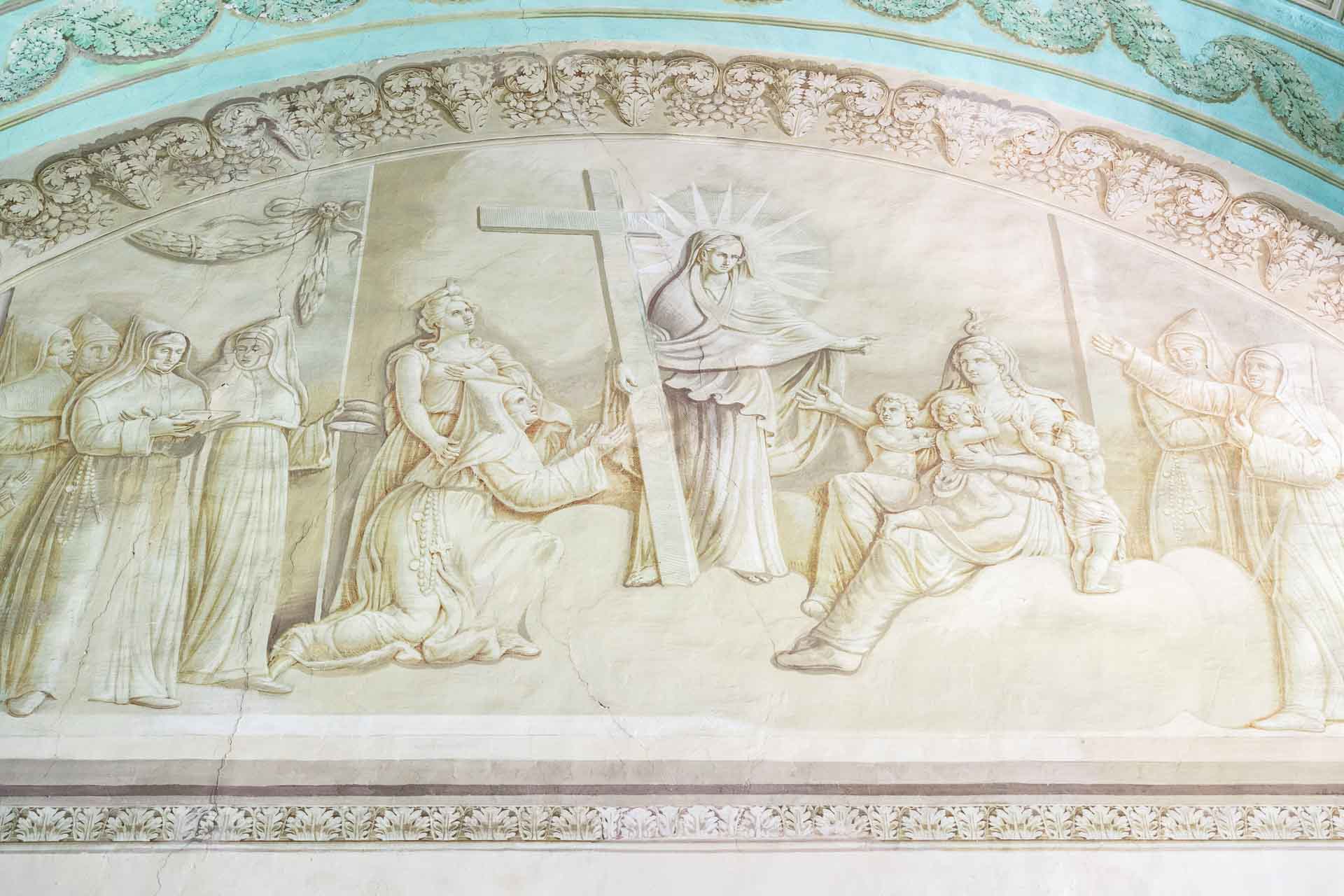
The room’s deep spiritual significance is reflected in the fresco cycle decorating its walls, highlighted by representations of the three Theological Virtues: Faith, Hope, and Charity. Facing them, marking the historic transition to the Sisters of Charity, hangs a striking painting depicting the Founder, Saint Giovanna Antida, in the solemn moment of receiving the Institute.
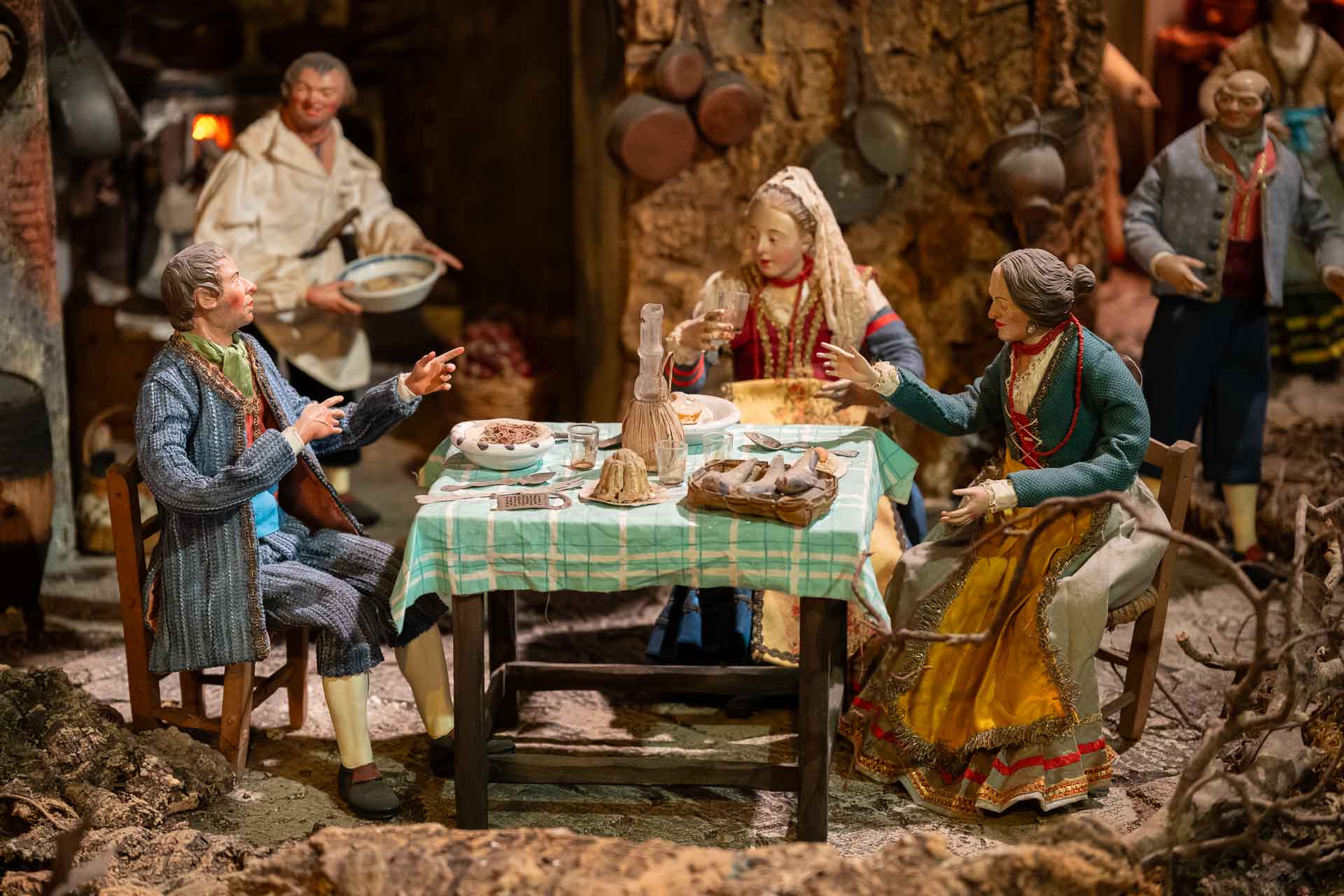
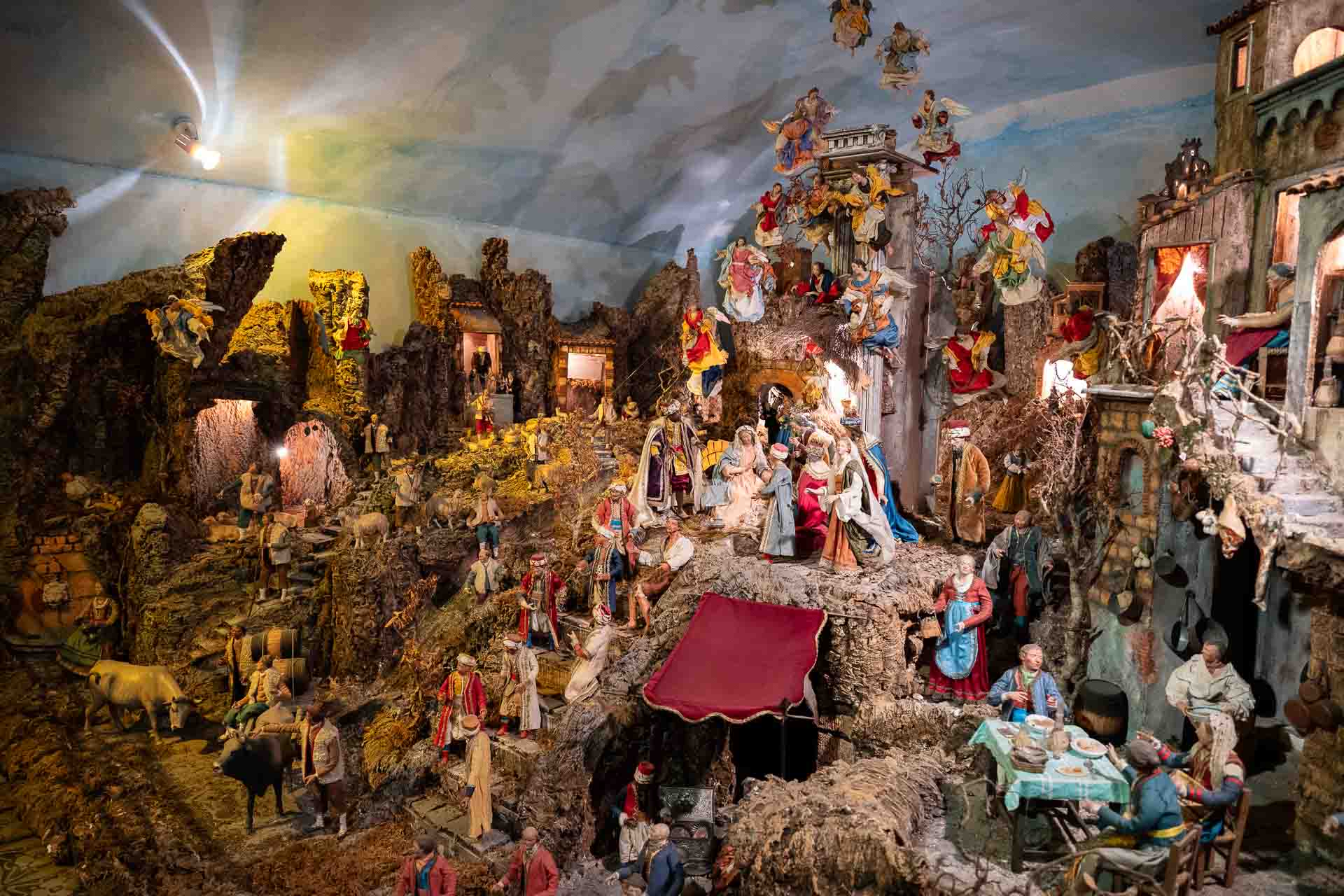
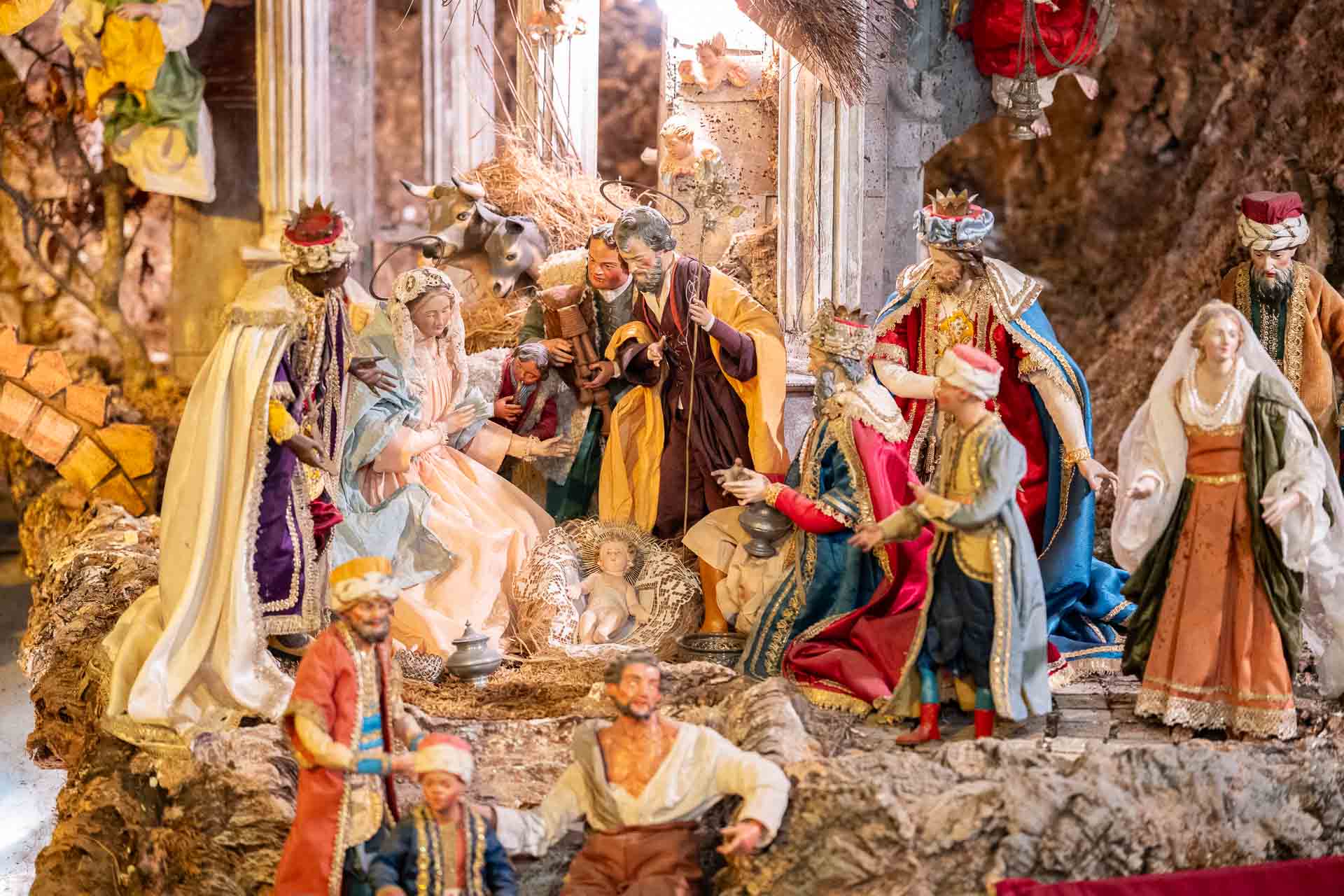
This room preserves one of the most beloved traditions of Neapolitan sacred art: an ancient monumental nativity scene dating back to the 19th century, beautifully restored in 2007.
Church of Santa Maria Regina Coeli
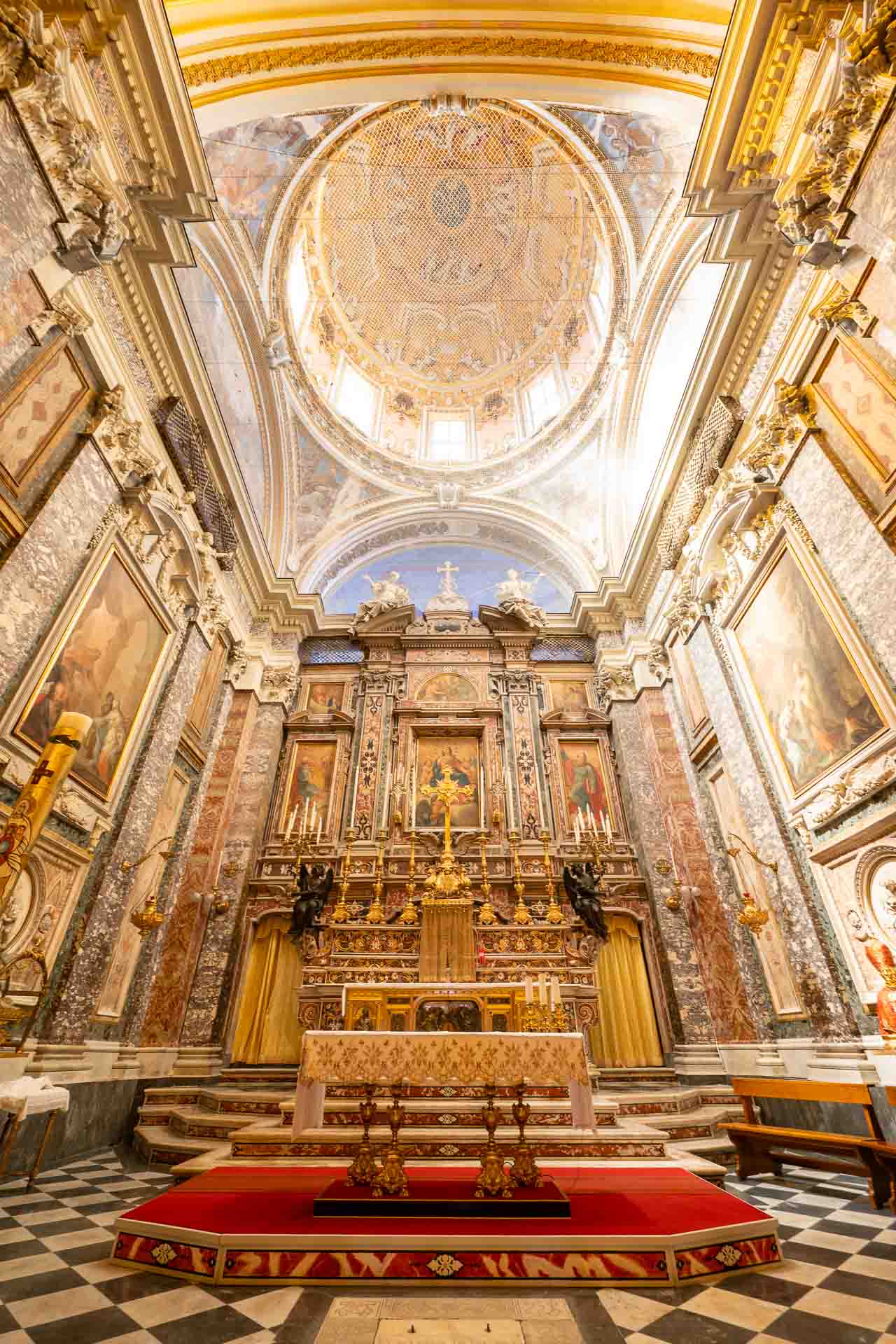
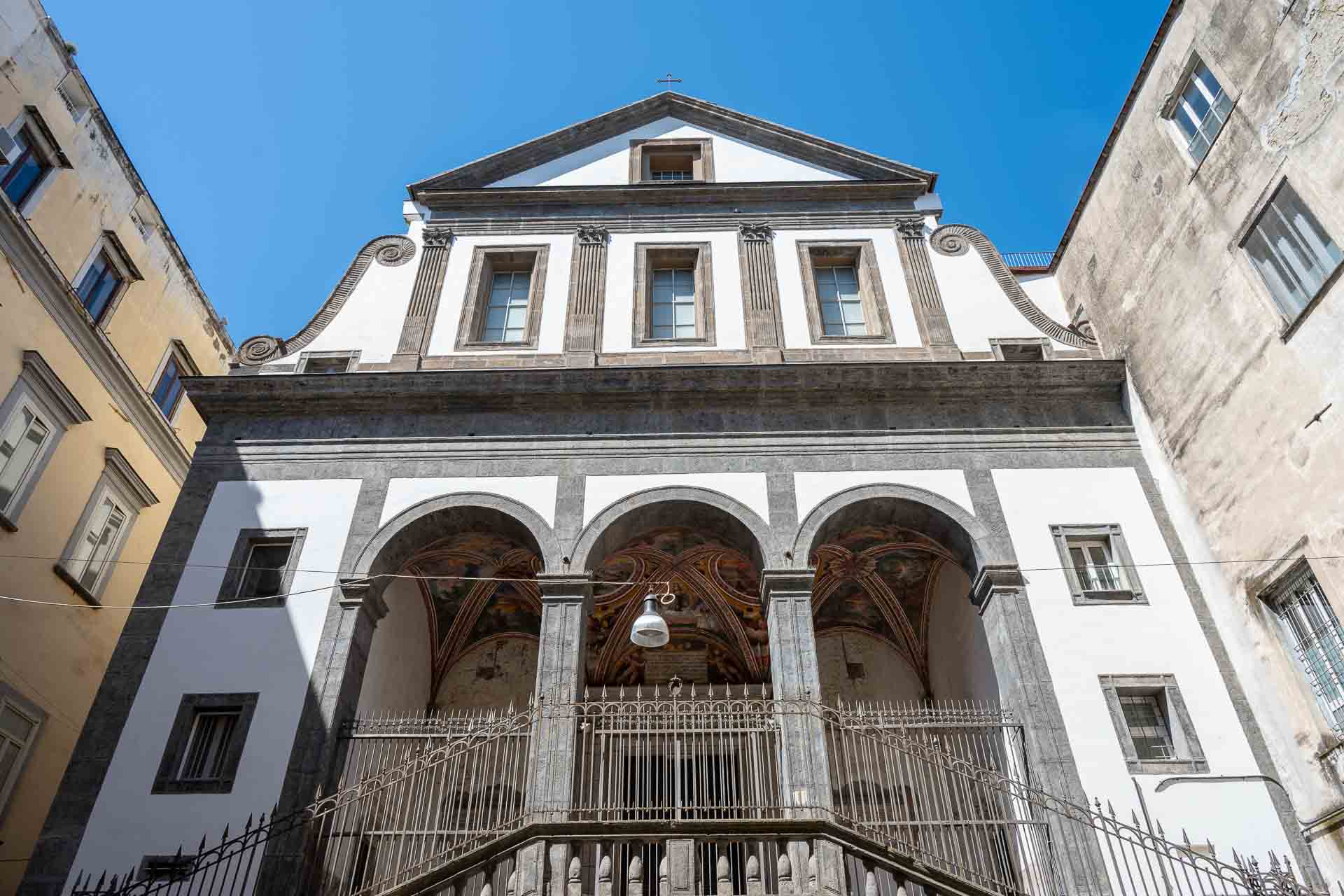
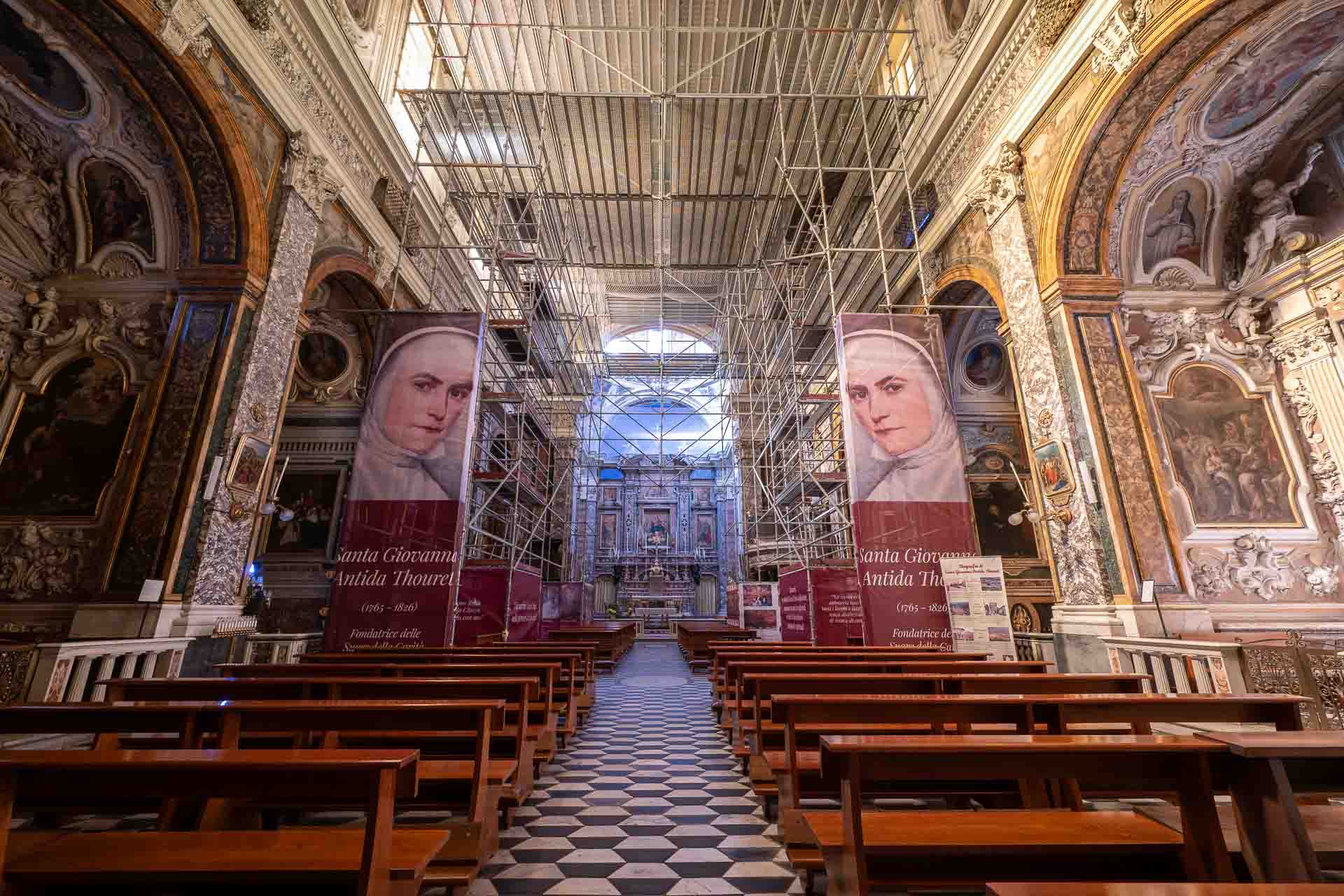
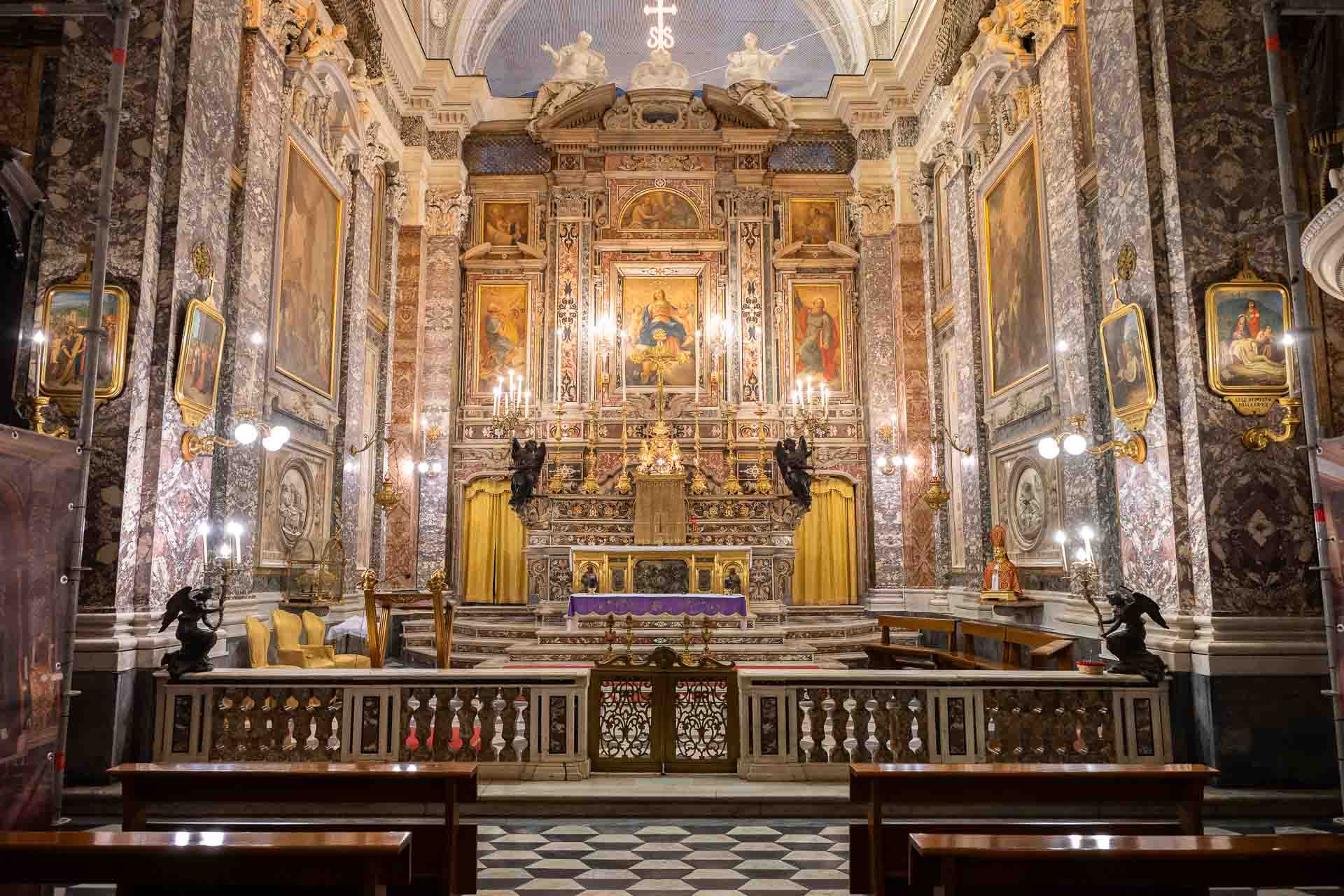
The Church of Santa Maria Regina Coeli is among the most beautiful and best-preserved churches in the historic center of Naples. Its construction began in 1590 and was completed in 1594 under the direction of the architect and master builder Luciano Quaranta.
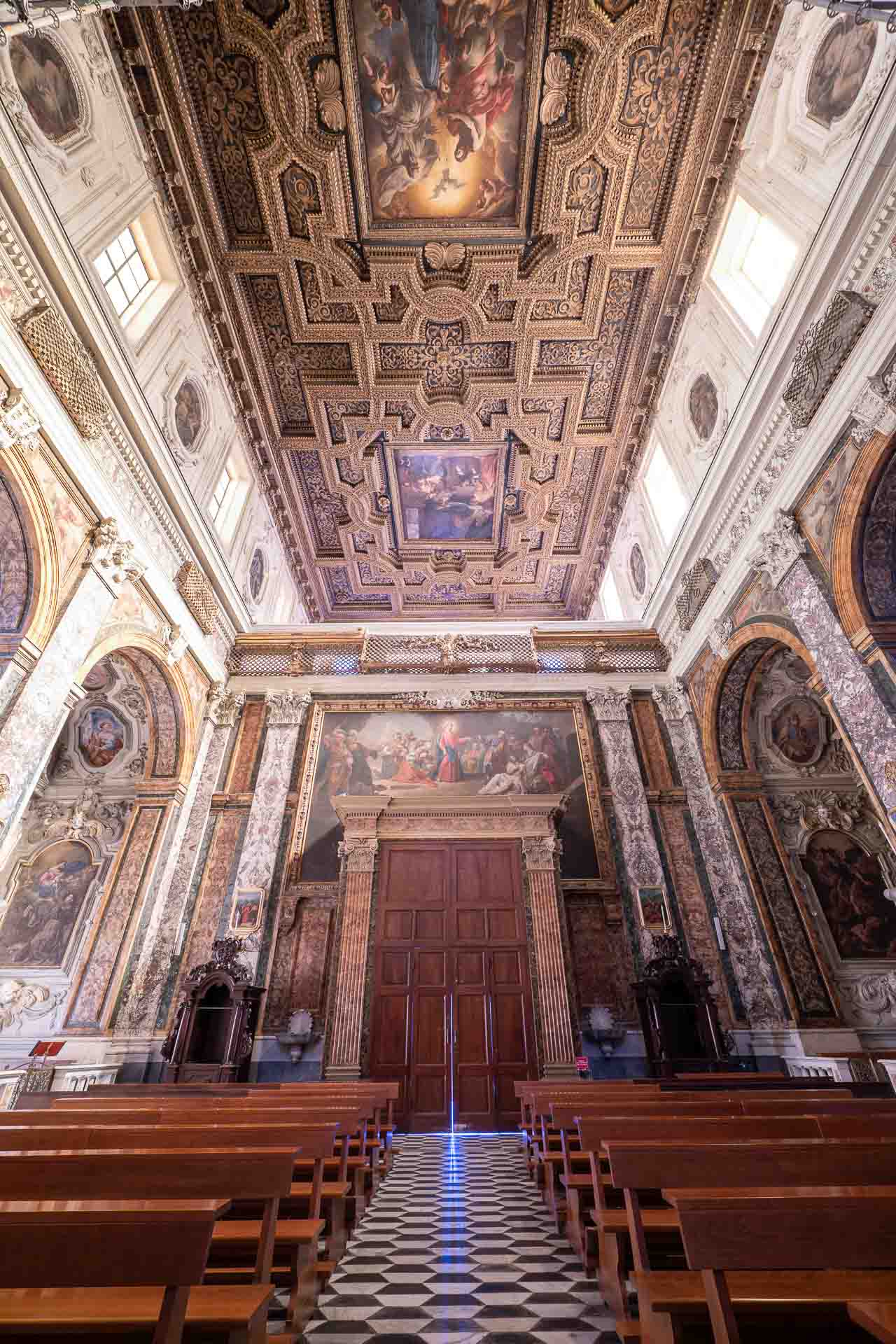
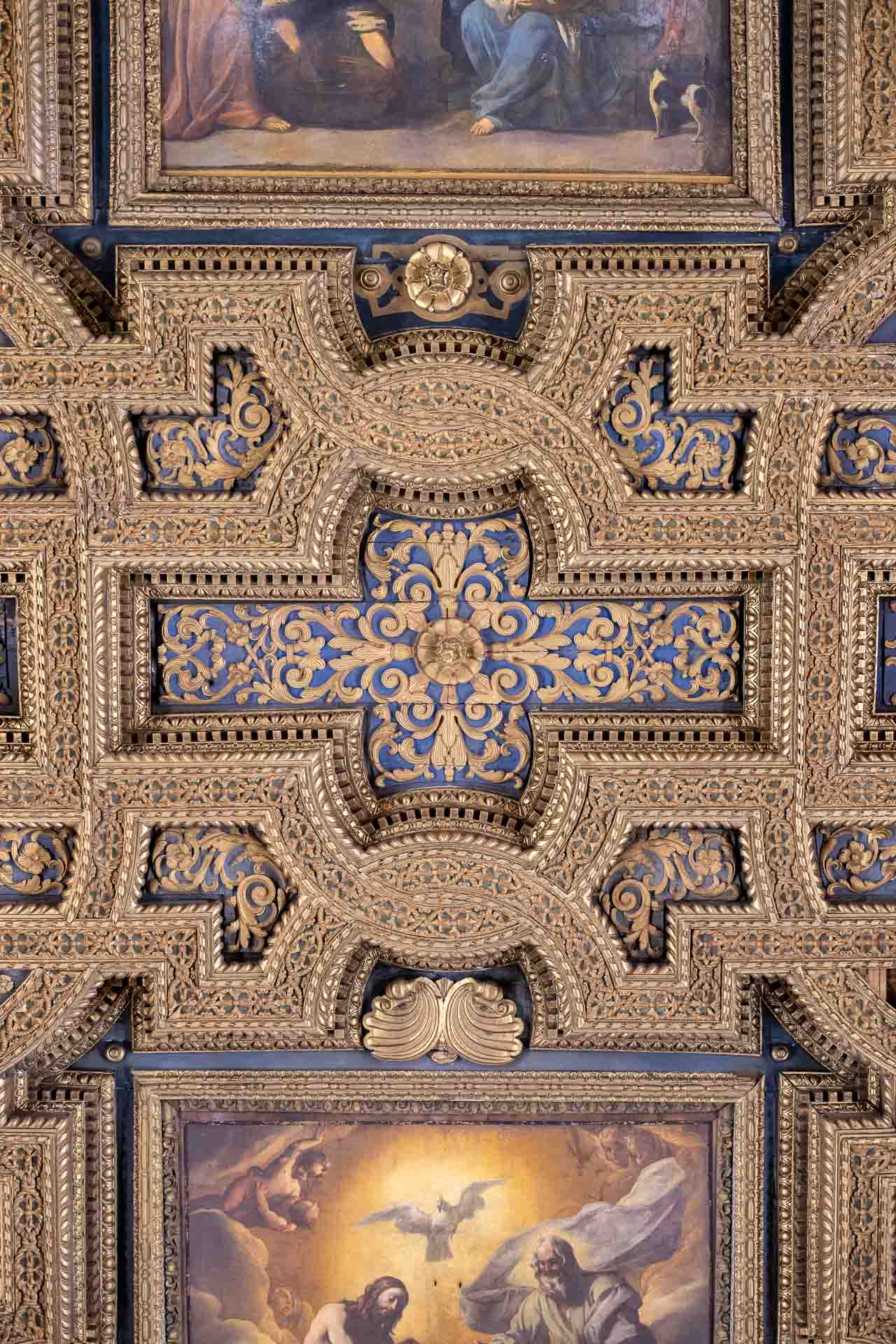
Looking up, the most breathtaking feature is the extraordinary coffered ceiling, designed by Pietro Marino between 1634 and 1639 and later lavishly gilded in pure leaf gold in 1659.
Set within this majestic wooden frame are three famous, stunning paintings by Massimo Stanzione, positioned along the presbytery and ceiling, depicting the Annunciation, the Nativity, and the Coronation of the Virgin. Higher up, between the windows, the pictorial cycle is completed by canvases portraying ten Popes and four early Christian Saints, including the unique figure of Saint Bega, regarded as the patron saint of cats.
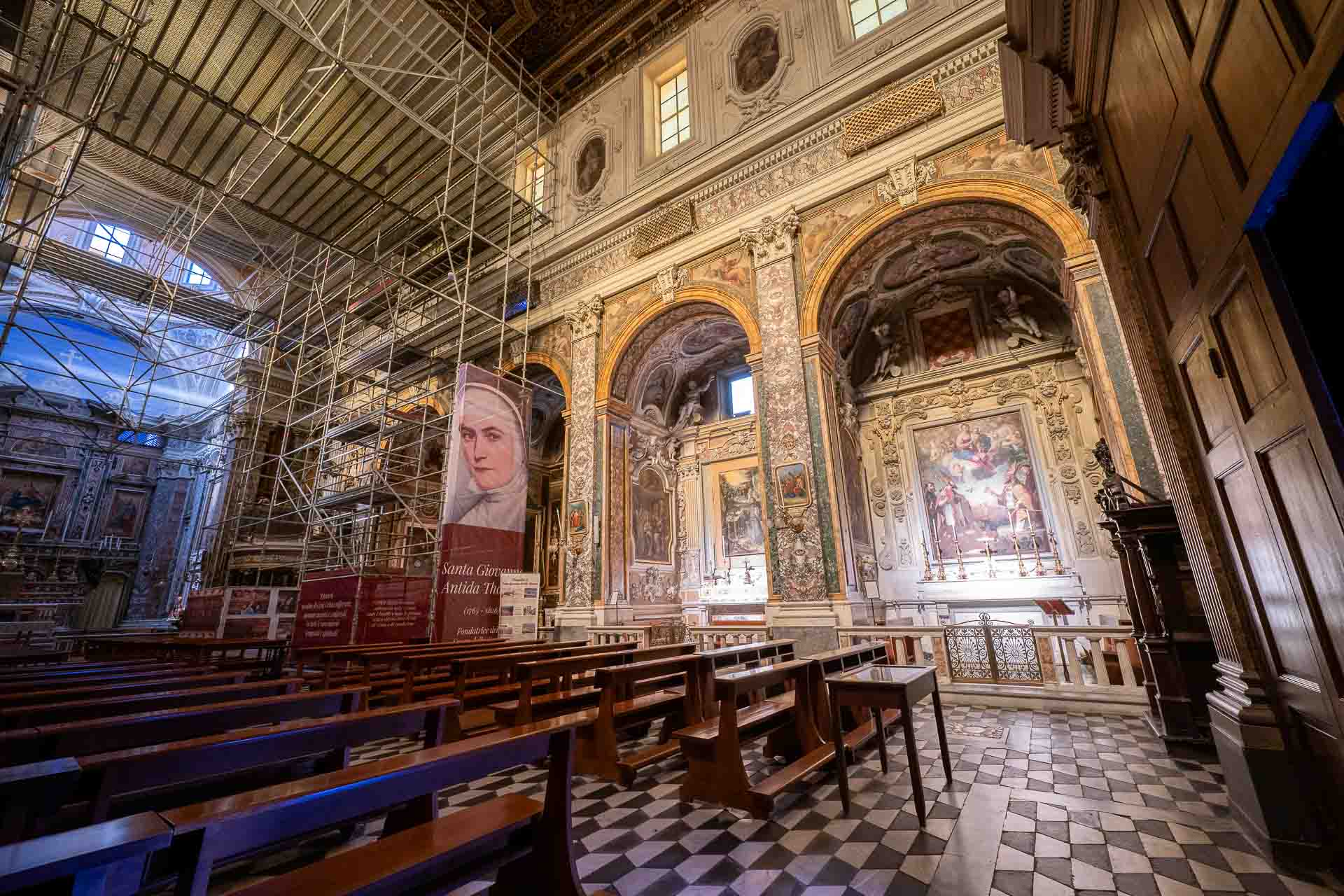
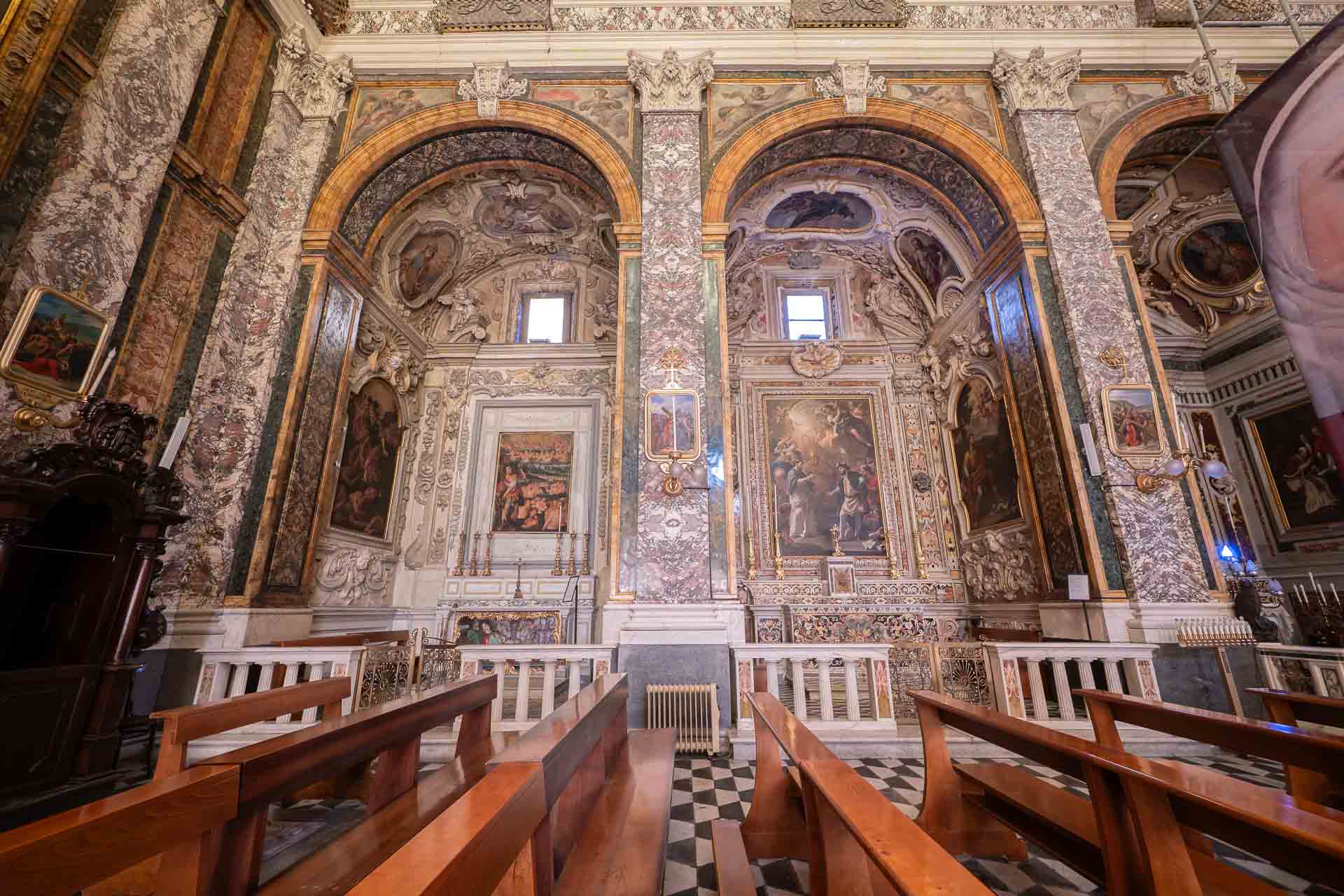
Along the side chapels of the church—five on the right and four on the left lies an extraordinary gallery of Baroque painting.
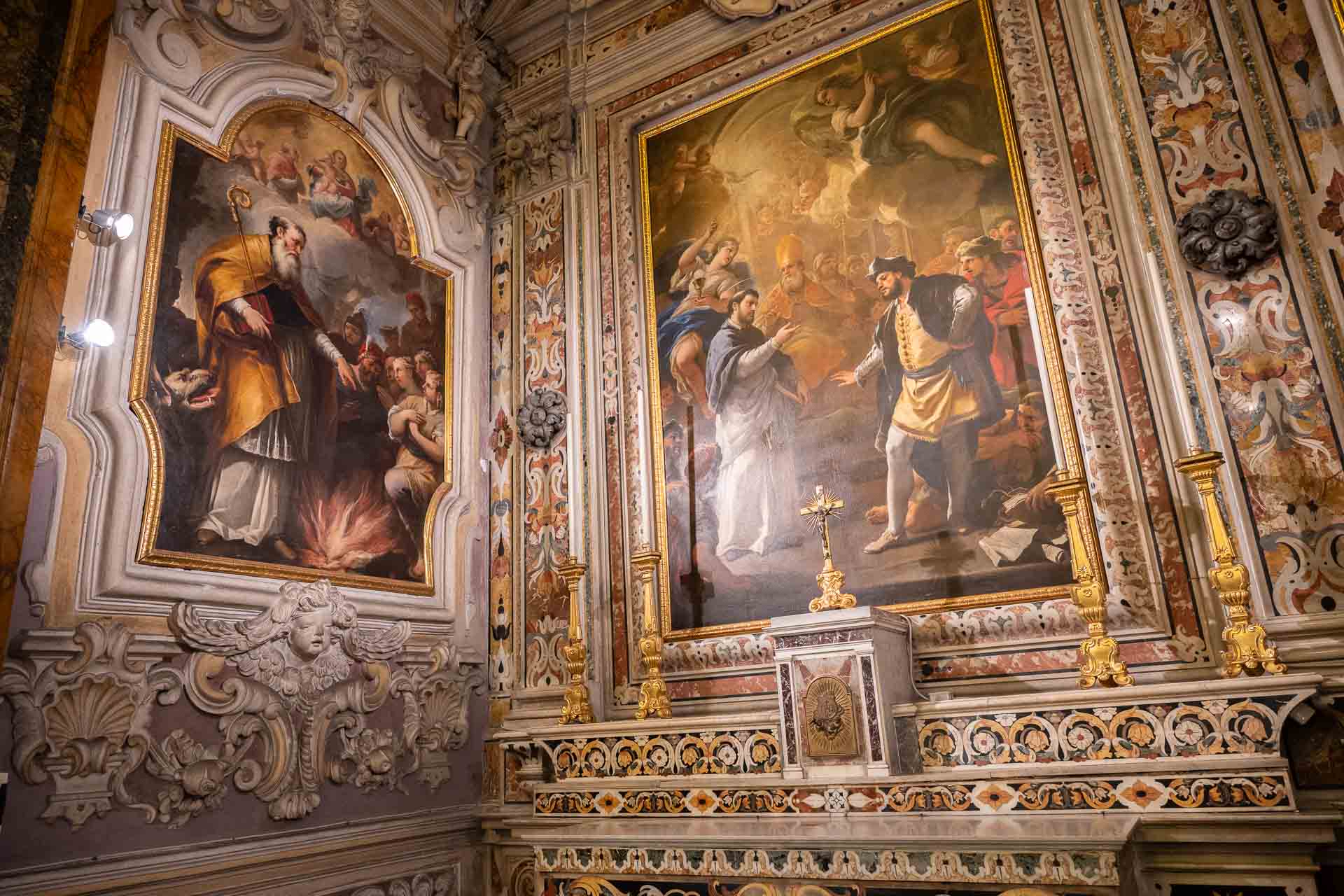
The second chapel on the left, dedicated to Saint Augustine, houses three early works by Luca Giordano, defined by dark tones and strong Caravaggesque chiaroscuro. Above the altar hangs the canvas depicting Saint Augustine Converting the Heretic; on the right wall is Saint Augustine in the Desert; and on the left stands the striking canvas of Saint Patrick, Canons Regular of the Lateran.
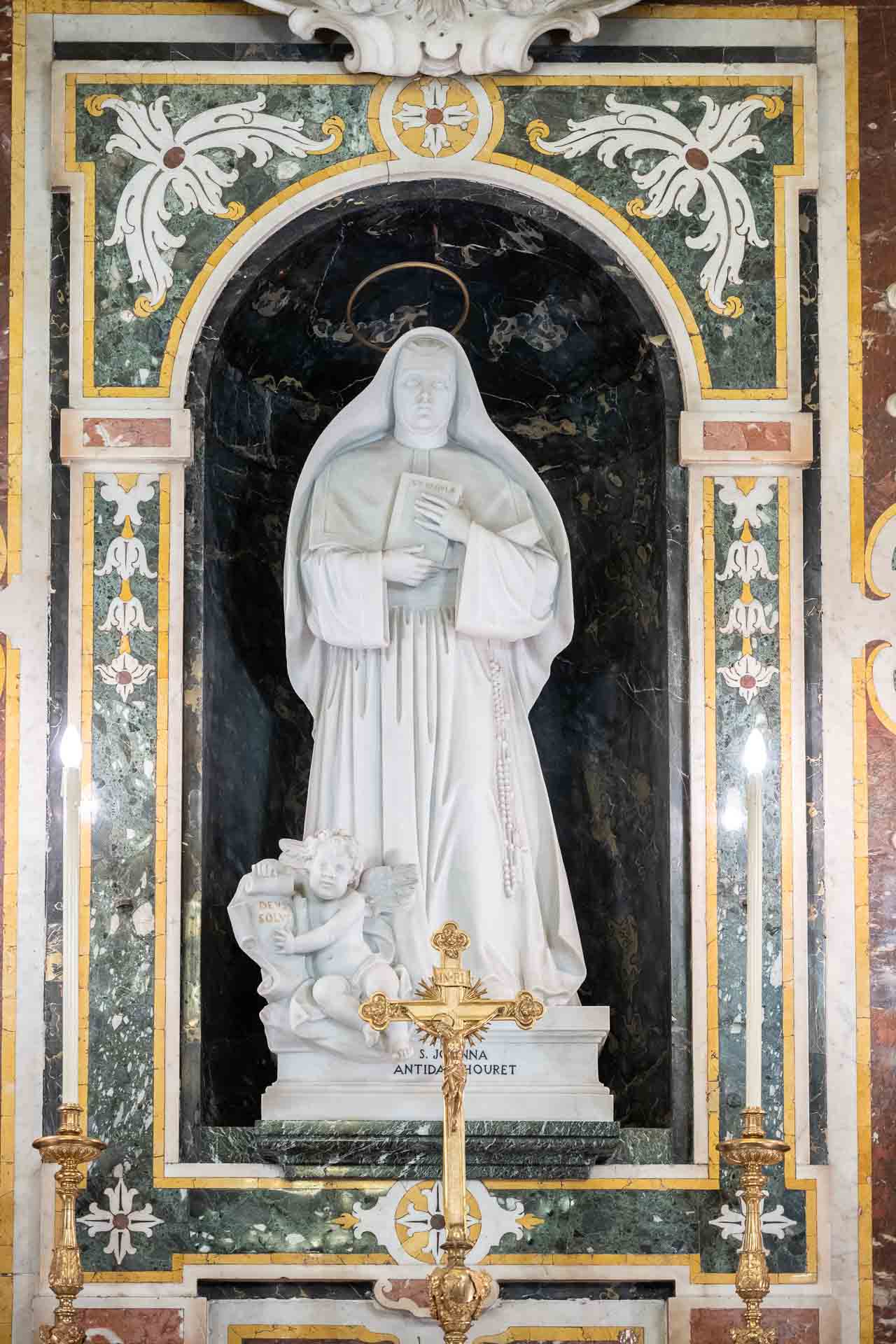
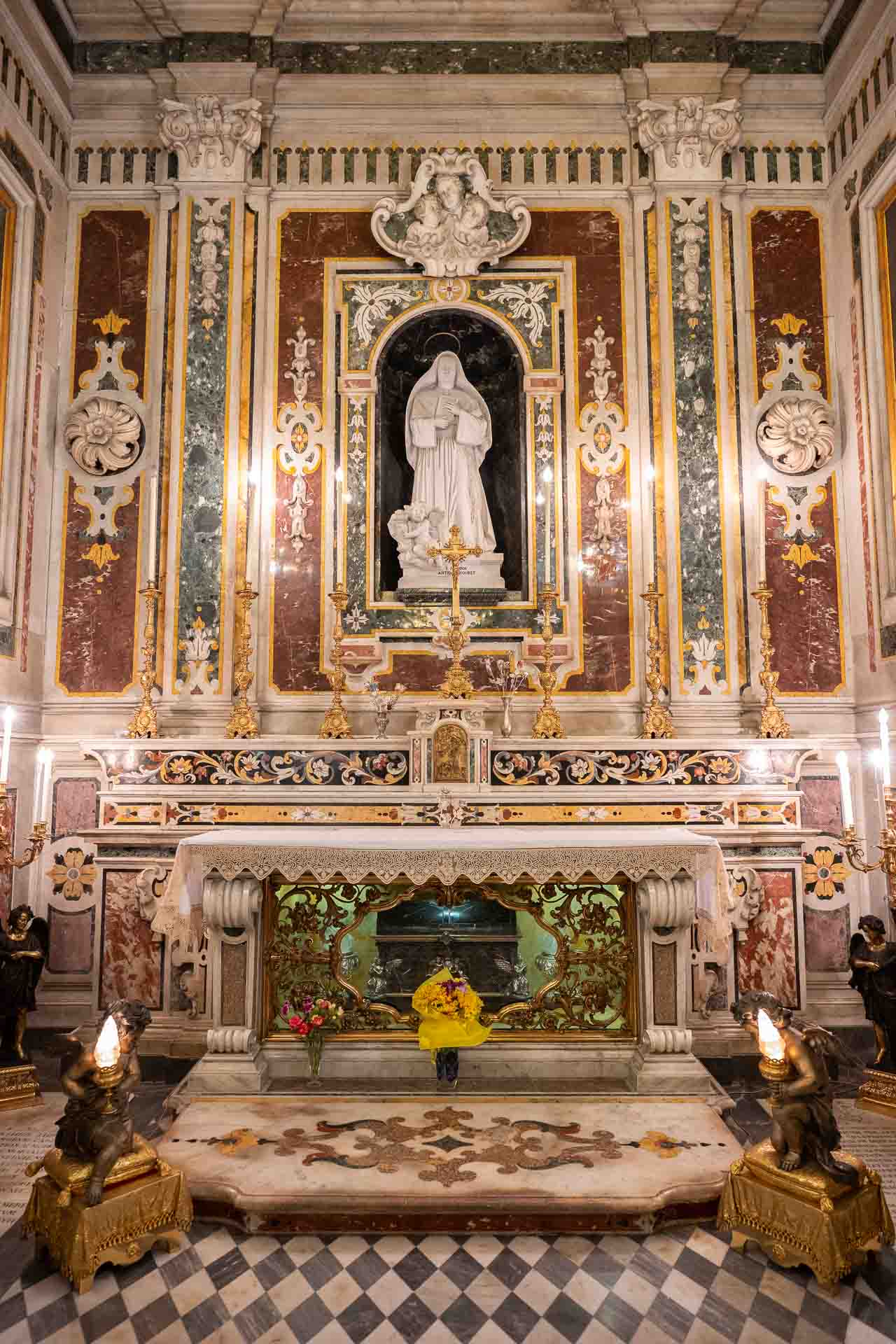
In the third chapel on the left, dedicated to Saint Giovanna Antida Thouret, the urn containing her remains rests beneath a exquisite marble statue depicting the saint. As one of the co-patrons of Naples, her presence is so deeply rooted in local devotion that during the solemn procession of silver busts from the Cathedral to Santa Chiara, her effigy is the very first to exit, standing side-by-side in honor with Saint Januarius.
The church also preserves another cherished object of local devotion: an exceptionally rare wax figurine of the Infant Virgin Mary (Madonna in fasce), considered among the finest and most captivating works of wax modeling (ceroplastica) in the Neapolitan tradition.
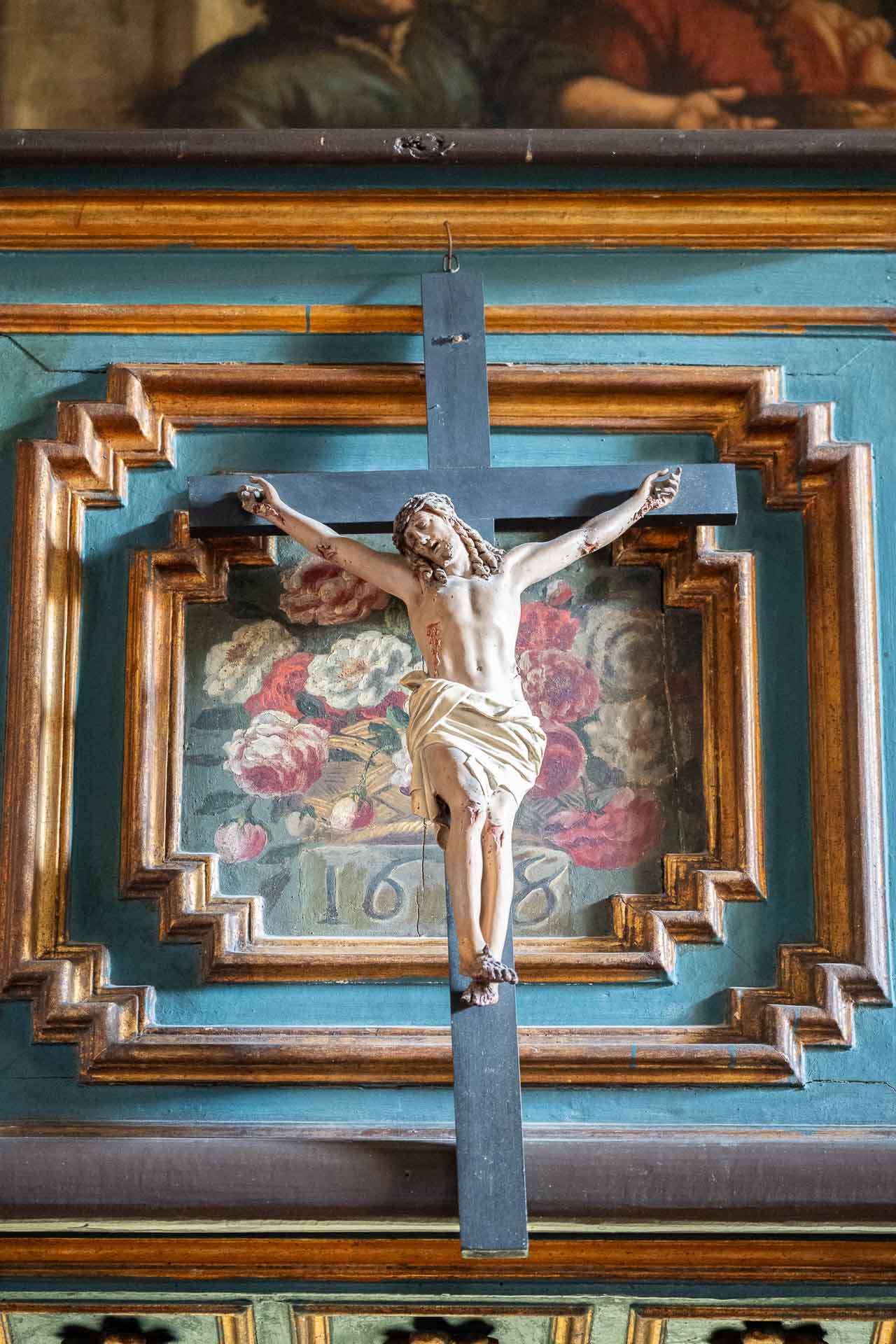
In the Chapel of the Passion, the fourth on the left, the side walls display two further canvases by Luca Giordano, painted during his mature period in 1680: the Ascent to Calvary and the Deposition of Christ from the Cross. Here also stands a singular 17th-century wooden crucifix featuring a rare detail, a fully exposed and visible ear, as though Christ were sculpted in the act of listening to the prayers of the faithful.
The church also boasts two exquisite carved marble medallions (tondi) attributed to Giuseppe Sanmartino, the celebrated sculptor of the Veiled Christ. These medallions harmonize beautifully with the magnificent inlaid marble (marmi commessi) decorating all the altars, completed in 1786 under the direction of architect Nicola Carletti.
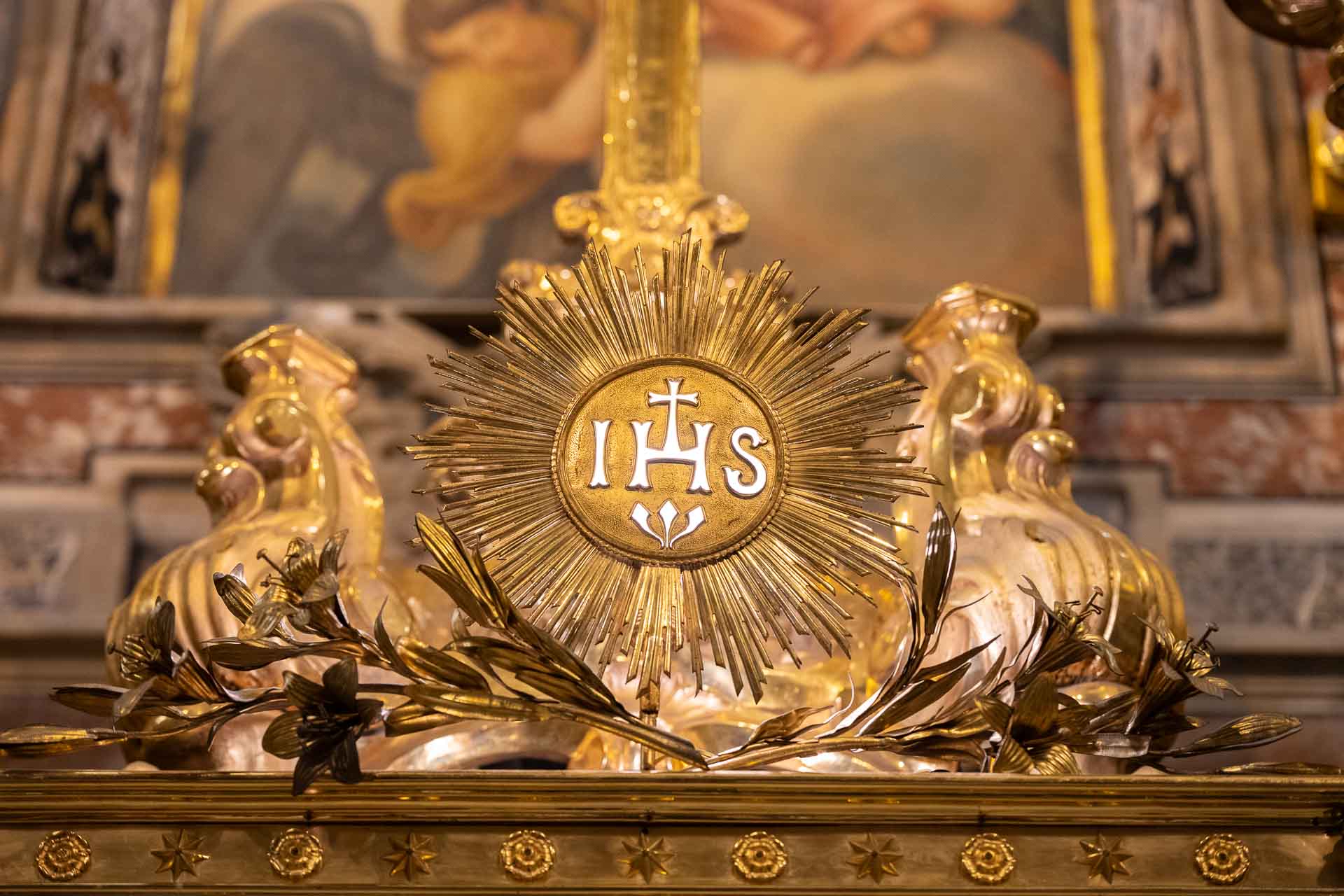
These small pieces of polychrome marble, arranged in intricate floral patterns, echo the splendor of the High Altar, an extraordinary masterpiece created by Giovanni Mozzetti and Francesco Valentino in 1655, in which the artist inlaid the date of creation directly in mother-of-pearl. Among its other movable treasures, the church houses a fine canvas by Antonio de Dominici depicting The Resurrection of Lazarus, alongside works by Micco Spadaro, Giovanni Battista Beinaschi, and Fattorusso.
The church reopened in May 2025 after being closed for seven years, following vital work to secure the majestic wooden coffered ceiling above its single nave. It is currently open to the public, though protective scaffolding remains inside to allow ongoing restoration work on the outer vault.
The School
In 1813, Giovanna Antida established the first free school open to everyone in Naples within the Regina Coeli complex. This gave children from less fortunate families access to education, a privilege that had previously been reserved almost exclusively for the wealthy.
The school remains active within the Regina Coeli complex to this day: the Istituto Scolastico Paritario Regina Coeli offers education spanning preschool, primary, and lower secondary school levels. Its care and management continue to be entrusted to the dedication of the Sisters of Charity alongside a team of lay educators.
To this day, the Institute remains a vital educational stronghold and an indispensable point of reference for the youth and families of Naples’ historic center, keeping the original vision of its founder fully intact.
Casa per ferie
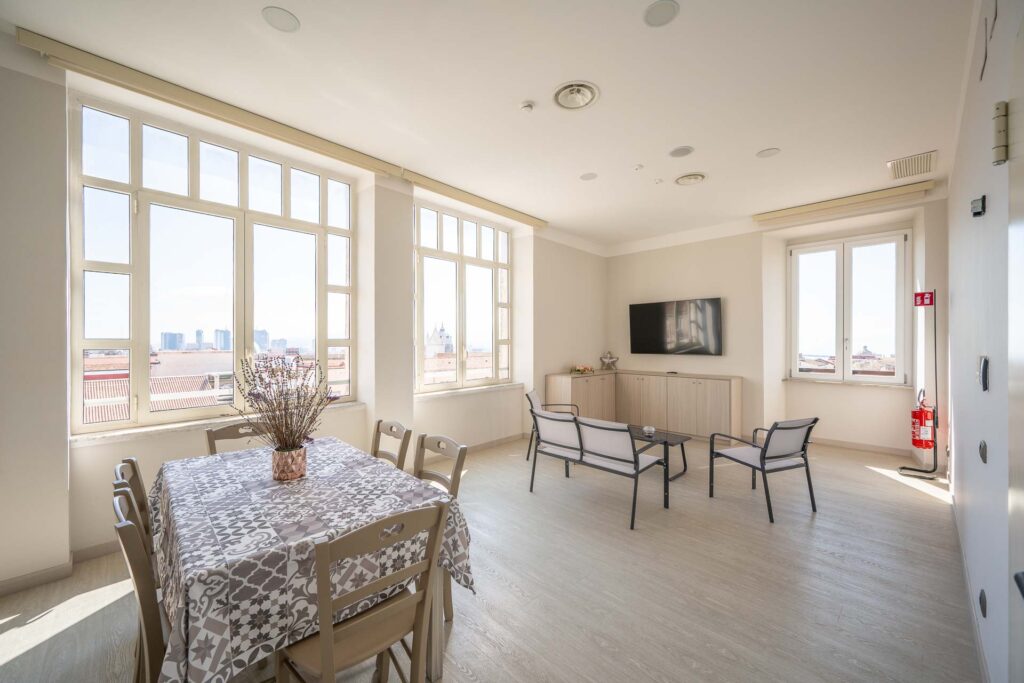
In 2025, an entire floor of the monumental complex was completely renovated to welcome tourists, groups, pilgrims, families, and conference attendees, opening the doors of Casa Regina Coeli to a fully renewed spirit of hospitality through its guest house.
A modern, clean, and comfortable accommodation managed by the Fondazione Opera Pia ‘Casa Regina Coeli’, ideal for anyone seeking a peaceful stay.
Staying at the guest house also means supporting the Foundation’s activities, which include running educational programs for local children.
Visit the section dedicated to the Casa per ferie to learn more about the facilities and services available.