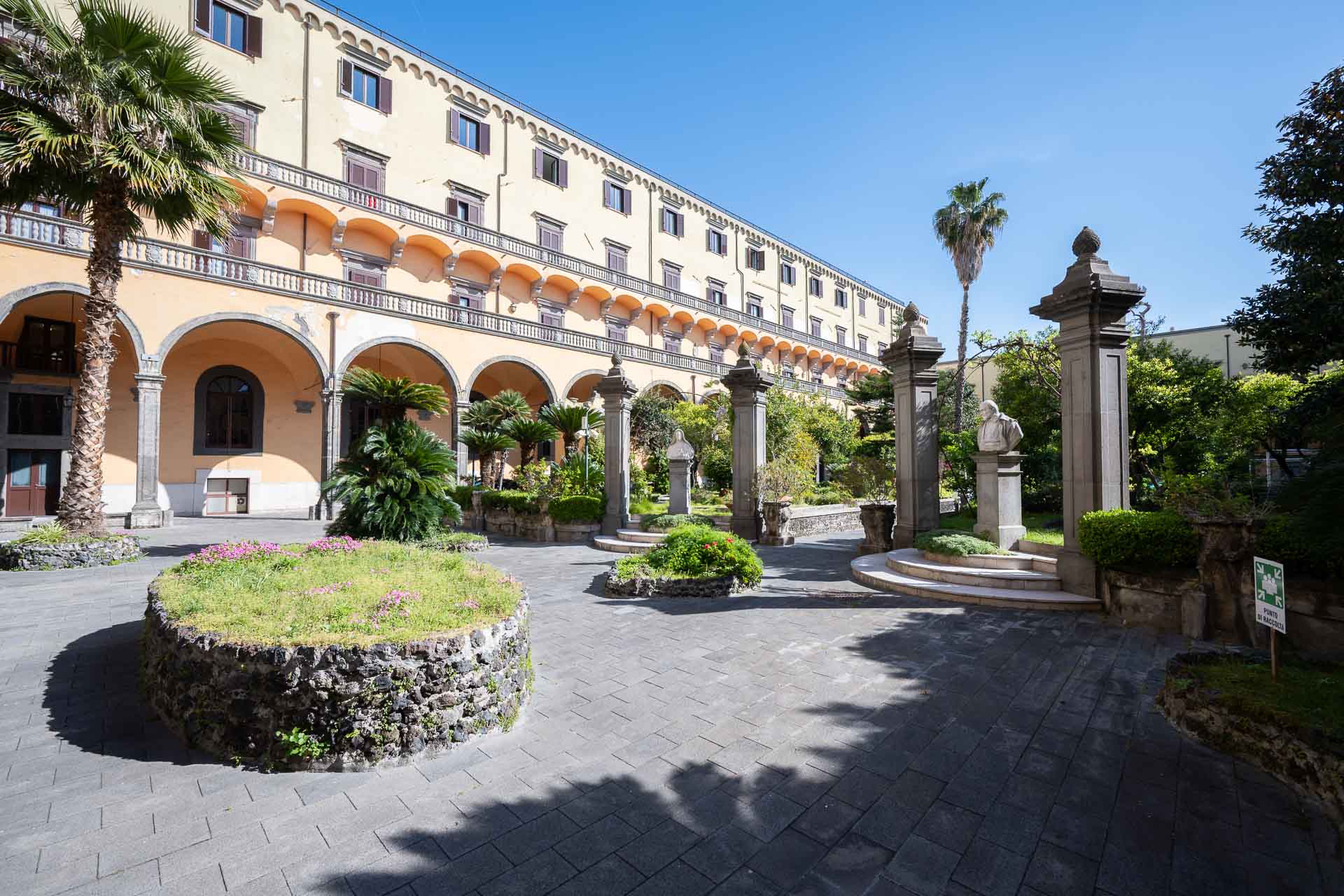

Casa Regina Coeli
The History of the Monastery of Santa Maria Regina Coeli
The origins of the Monastery of Santa Maria Regina Coeli date back to the early 16th century.
In 1518, four Benedictine nuns from the Monastery of Santa Maria ad Agnone chose to adopt the Augustinian Rule, founding a new monastery that became the first home of the Augustinian Canonesses Regular. In 1561, a devastating earthquake destroyed their original convent, leaving the nuns without a home. They found refuge in a noble palace formerly belonging to the Duke of Montalto, near the Monastery of San Gaudioso, situated in the oldest part of Naples’ historic center on the hill of Sant’Aniello a Caponapoli.
In 1590, construction began on the new church within the convent dedicated to Santa Maria Regina Coeli. The design is attributed by some to Giovan Francesco di Palma and by others to Vincenzo Della Monica, with contributions from numerous architects and prominent artists including the renowned Massimo Stanzione. The building was ultimately completed in 1594 under the direction of Luciano Quaranta.
The Regina Coeli Monastery welcomed the daughters of noble Neapolitan families alongside young women who were still uncertain about their future, revealing from its earliest days a calling that went beyond a simple monastery to serve as a haven of refuge, hospitality, and reflection.
Thanks largely to donations from wealthy noble families whose daughters entered monastic life here—such as the Gambacorta family, whose coat of arms is still clearly visible on the handwashing fountain in front of the refectory—the entire complex underwent significant expansions and embellishments over time. These included the creation of the beautiful Cloister in 1682 and the addition of priceless works of art that continue to adorn the monumental complex today, many of which are housed in the Church of Santa Maria Regina Coeli, spanning from the 16th to the 18th century.
In 1809, a royal decree suppressed all religious orders in Naples, leading to the convent being declared state property and the cloistered nuns being transferred to the Monastery of Gesù e Maria.
That same year, at the height of the French decade in the Kingdom of Naples, Emperor Napoleon Bonaparte entrusted the Neapolitan throne to his brother-in-law and general, Joachim Murat (husband of his sister Caroline). Aware of the deep-seated issues of overcrowding and poverty affecting the city’s poorest residents, and acting on the advice of Napoleon’s mother, Murat decided to bring nuns from France to care for the sick at the nearby Ospedale di Santa Maria del Popolo degli Incurabili, adjacent to the Regina Coeli Monastery.
Giovanna Antida Thouret and the Sisters of Charity
Thus, on November 18, 1810, the French religious sister Giovanna Antida Thouret (1765–1826), foundress of the Congregation of the Sisters of Charity, a community that still lives and serves within the monumental complex today—arrived in Naples. Driven by her apostolic vision, she introduced groundbreaking services for the poor at the Monastery of Santa Maria Regina Coeli.
Giovanna Antida, a native of Sancey in Franche-Comté, came from a large family and was orphaned of her mother at an early age—an experience that forged her inner strength and religious vocation from the very beginning. During the French Revolution, she cared for the sick and needy while devoting herself to the education and instruction of young girls. On April 11, 1799, she established the foundation of her new congregation: the Sisters of Charity. When Sister Giovanna Antida Thouret, a woman of formidable strength and resolve, arrived in Naples with her companions, she sparked a true humanitarian revolution dedicated to educating young girls and assisting the city’s most vulnerable. In addition to treating the sick at the Hospital of the Incurables, Giovanna Antida and her sisters took to the streets and ventured into Naples’ bassi—small ground-floor dwellings opening directly onto the street—to bring food, comfort, and medicine to those living in severe poverty.
The Congregation of the Sisters of Charity soon restored the ancient complex to functional use, bringing the monastery back to its original dignity and the church to its former splendor.
Today, the international Congregation of the Sisters of Charity of Saint Giovanna Antida Thouret is active in 32 countries across Europe, Africa, Asia, and the Americas. Within the Church, the sisters embody the charism of charity by offering both spiritual and temporal aid to the poor through an active ministry focused on education, social and healthcare assistance, and evangelization.
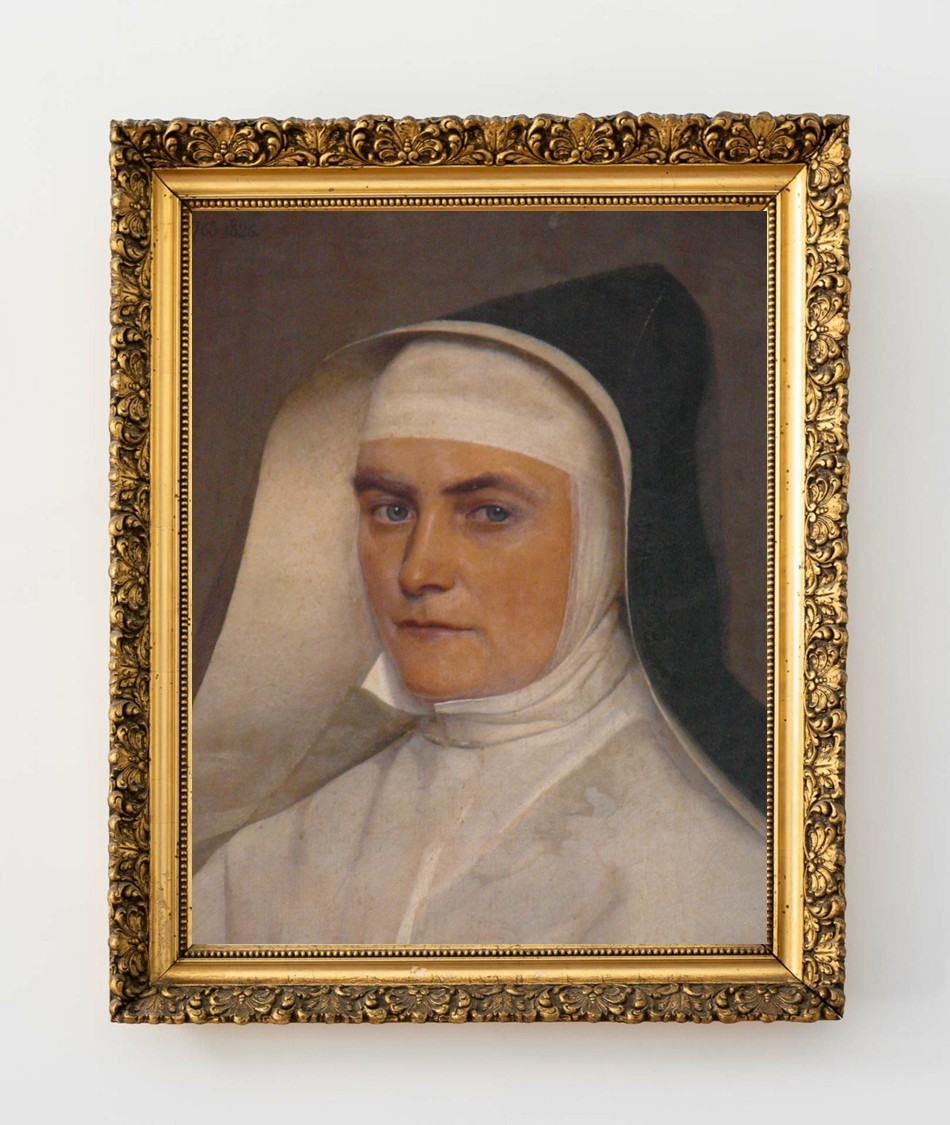
Casa Regina Coeli
Giovanna Antida opened the doors of the monastery, which from that moment on became a true ‘Home’ – just as Saint Giovanna Antida loved to describe it – for poor children, who are welcomed, fed, and educated here, as well as for unmarried women devoted to serving the community.
She cultivated medicinal herbs in the cloister garden, personally transforming them into remedies for the sick inside a pharmacy she established within the Regina Coeli complex, where she also trained her sisters in preparing and administering medicines. Today, this historical pharmacy can still be visited.
With her pragmatic vision and far-reaching foresight, Giovanna Antida realized early on that poverty could not be eradicated by distributing meals and medicine alone. She recognized that a solid education and life training were essential foundations for a healthy community.
Thus in 1813, in Naples, she created the first tuition-free school open to all within the Regina Coeli complex. There, children from both wealthy and impoverished families were taught arithmetic, embroidery, music, and French. The school remains active today as an accredited state-recognized school (Istituto Paritario di Infanzia, Primaria e Secondaria I grado) offering early childhood, primary, and lower secondary education, located in a dedicated wing of the Regina Coeli complex.
The active apostolate of Giovanna Antida and her companions, defined by a hands-on charity of material relief and education, wrote a luminous chapter in Neapolitan history that still shines today. That legacy lives on through the Sisters of Charity, who continue in her footsteps by devoting themselves to educational programs, local elder care, healthcare, evangelization, and community outreach.
Today
“Embracing this same visionary vision, the monumental complex of Casa Regina Coeli, managed by theFondazione Opera Pia “Casa Regina Coeli”, opens its doors today to a new form of hospitality alongside cultural and spiritual engagement. It offers welcoming guest services, accredited private schooling, and public access to the historic and artistic treasures preserved within the complex.
Today, Casa Regina Coeli remains active and open, with the community of the Sisters of Charity continuing their vibrant presence within both the complex and the broader fabric of Naples. The monumental complex offers a tranquil sanctuary where history feels frozen in time, preserved intact for us in all its artistic, spiritual, and cultural beauty.
Discover how to experience Casa Regina Coeli today: enjoy hospitality in the new guest house (Casa per Ferie) created in 2025, take part in guided tours, or host your events and conferences within its historic spaces.